- Thursday, 30 April 2026

Revival of Pokhara’s theatres faces creative challenges
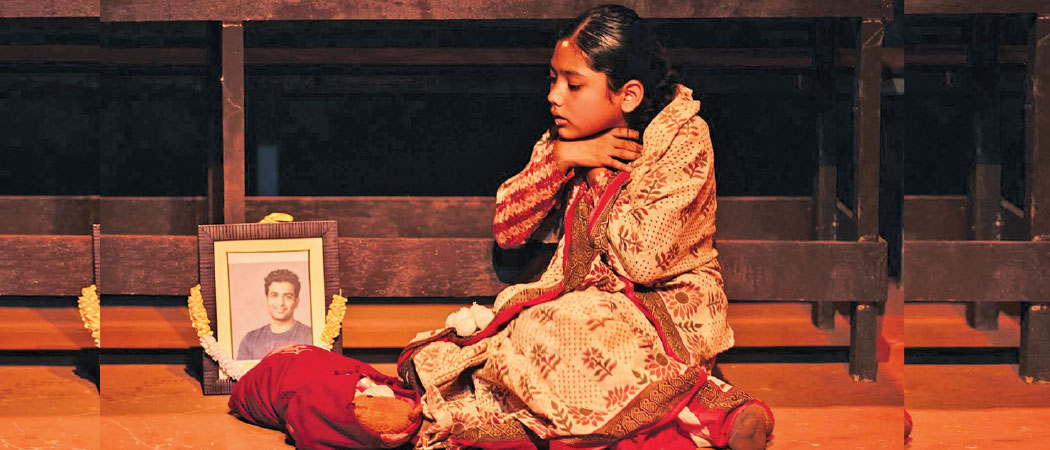

By Santosh Subedi,Kaski, Mar. 27: Theatres in Pokhara, with their long and rich history, have recently become more vibrant.
With the establishment of Pokhara Theatre, what was once a fading local art form has experienced a revival, marked by an increase in stage performances.
The growing participation of younger generations is encouraging; however, concerns remain about the lack of new playwrights.
Former Chancellor of the Nepal Academy of Music and Drama, Sarubhakta Shrestha, highlighted that despite having a well-managed theatre venue, there are very few individuals writing new plays.
He noted that this is not only an issue in Pokhara but across the country. According to him, interest among the younger generation in writing, reading, and understanding the cultural significance of theatre appears limited, which is a matter of concern.
Nevertheless, he acknowledged that the rise in theatrical activities is a positive sign. He said that since the 1970s, there has been growth in the construction of theatres and the production of plays, and this momentum is expected to continue. He also recalled that the 1930s and 1940s were a golden era for Pokhara’s theatre, during which more than ten theatre groups were formed.
However, the onset of the People’s War disrupted this progress, leading to a sharp decline in theatre organisations and diminishing the influence of theatre in the city.
The formal beginning of theatre in Pokhara dates back to 1938, when Bada Hakim Dhan Shumsher staged a play titled Pokharako Chakkar at the White Palace in Mohariya Tole. His enthusiasm is credited with laying the foundation for drama in the region.
Today, Pokhara Theatre is playing a key role in reviving the local stage by regularly staging plays and addressing the long-standing lack of a proper performance venue. Theatre artist Maotse Gurung welcomed this development but stressed the importance of quality productions and effective management. He argued that simply staging plays is not enough; consistent audience engagement depends on maintaining high standards.
Gurung further emphasised that infrastructure alone cannot sustain growth in the sector. He highlighted the need to incorporate modern technologies and promote activities such as workshops, acting training, and discussions to strengthen the theatre community.
According to Pokhara Theatre Chairperson Paribartan Karki, the venue has been hosting regular performances since its establishment eight years ago. He expressed confidence that Pokhara’s former theatrical prestige can be revived, especially given the city’s status as a tourism hub, which offers unique opportunities for cultural engagement.
The theatre has also been organising national and international festivals, school-level drama programmes, and global performances. Nearly a hundred plays have already been staged, indicating a dynamic and sustained growth in the local theatre scene.
Looking ahead, further optimism comes from the construction of the ‘Hansadhwani’ theatre hall by theatre artist Anup Baral on his own land. This new development has generated fresh hope, signalling a promising future for Pokhara’s theatrical landscape.
-original-thumb.jpg)