- Thursday, 30 April 2026

Orange research programme suffers from staff shortage
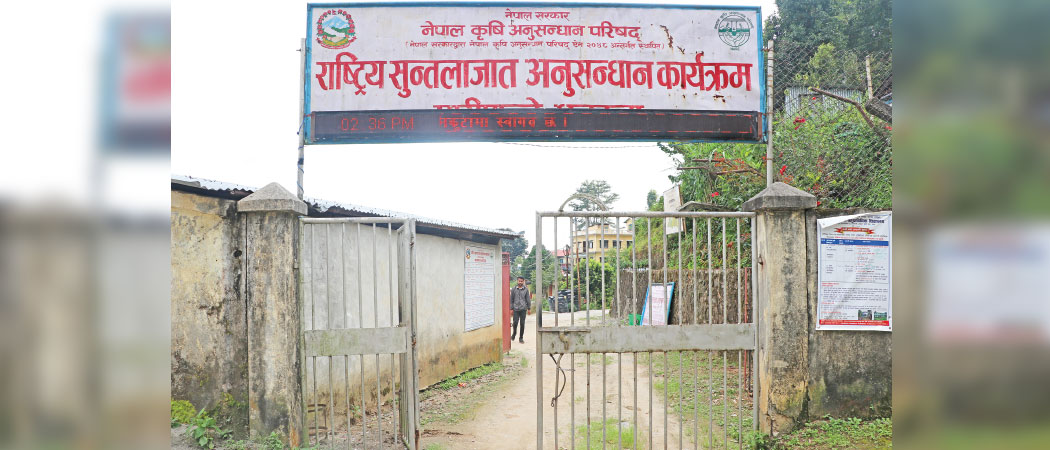
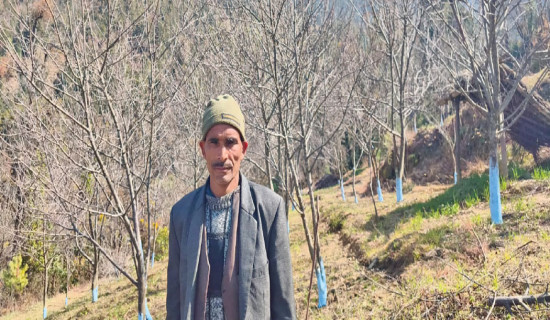
Photo: Kabiraj Ghimire National Orange Variety Research Programme suffers from staff shortage

By Kabiraj Ghimire,Hile, Mar. 26: The National Orange Variety Research Programme is facing serious challenges due to a shortage of agricultural scientists and technicians.
The problem has worsened by the failure to fill positions as per the approved quota and the frequent transfer of existing scientists and technicians to other locations.
Currently, only seven staff members are working at the office, which has an approved strength of 37. According to the office, this shortage has created difficulties in conducting research as well as carrying out regular operations.
The National Orange Variety Research Programme is the only institution in the country that studies and researches the Patle Amilo variety. However, it has been severely affected by staff shortages and transfers.
As a result, research activities at the centre established to test new varieties, diseases, pests, and soil conditions of citrus fruits such as oranges, jujubes, and lemons have become extremely difficult.
Similarly, out of the five laboratories established for testing diseases, pests, soil, and for producing improved plant varieties, four labs including tissue culture, entomology, soil testing, and plant pathology are currently closed due to a lack of scientific and technical personnel.
Senior scientist and office chief Basanta Chalise said that research activities have been significantly affected due to the shortage of manpower. “Although research and other work are being carried out, they are not progressing at the required level in terms of quantity, quality, and speed,” he said.
The programme, which has an approved quota of eight scientists including the chief scientist, currently has only one scientist working in Patle. Four scientists are stationed elsewhere, while the remaining posts are vacant.
Senior scientist Basanta Chalise has taken the responsibility of office chief while Chief Scientist Dineshman Sak is on another assignment. Chalise assumed this role after senior scientist Umesh Acharya was also assigned elsewhere.
Soil expert Shukraraj Shrestha has been transferred since the beginning and another scientist, Ropan Pakka, is also currently transferred.
Of the two senior technical officer positions, one is vacant and another is on transfer. All three technical officer positions are currently vacant. Similarly, all five technical assistant posts are vacant, and out of the total quota of 13 technical assistants, only two are currently working.
The office has been hiring some workers on a daily wage basis to manage operations.
However, due to the heavy workload and staff shortage, even the existing employees are struggling, said Amrit Katuwal, a technical officer at the programme. “We are doing our own work, but we also have to handle responsibilities from other departments. We lack sufficient knowledge about those areas, which creates additional difficulties,” said Katuwal.
Despite the limited manpower, the National Orange Variety Research Programme has continued its work as much as possible.
According to Office Chief Basanta Chalise, the programme has recommended eight varieties of lemon, three varieties of orange, four additional citrus varieties, and one more lemon variety to farmers since 2015 (2072 BS).
Two varieties of Junar are also in the process of being recommended. He added that despite the shortage of staff, regular operations have not completely halted.
Spread over an area of about 20 hectares, the centre is the only institution in Nepal dedicated to the study and research of citrus varieties.
However, it has been severely constrained by staff shortages and the transfer of employees to more accessible locations.




-original-thumb.jpg)