- Thursday, 30 April 2026

Karnali Academy bill passed
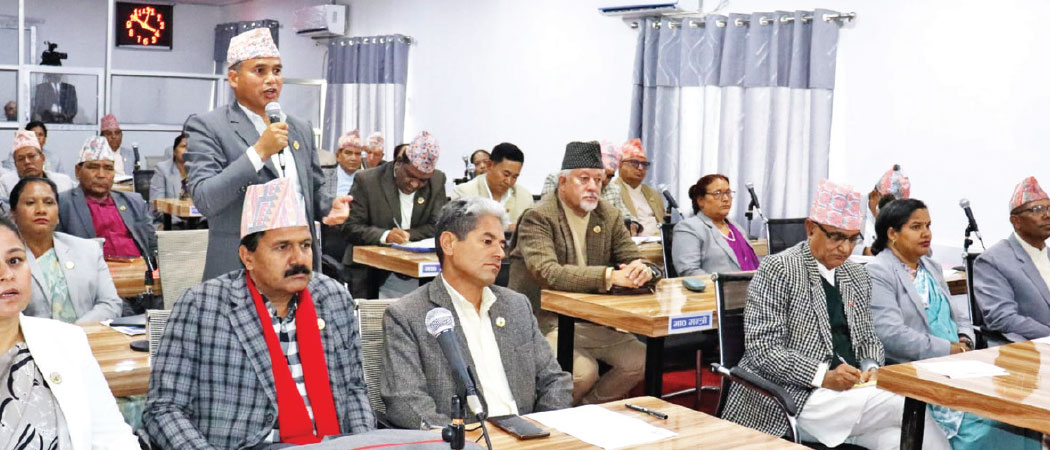

By Lalit Basel,Surkhet, Mar. 26: The Karnali Provincial Assembly has passed a bill to establish and operate the Karnali Academy. The bill was approved by a majority vote during the eighth meeting of the seventh session of the Provincial Assembly on Wednesday. The ruling Nepali Congress and CPN-UML supported the bill, while the opposition Nepali Communist Party (NCP) opposed it.
Minister for Social Development Ghanashyam Bhandari tabled the proposal to pass the bill. While presenting it for decision, Speaker Nanda Gurung announced that it had been approved by a majority vote. Following its passage, the bill will be enacted into law after certification by the Provincial Chief.
Minister Bhandari stated that the Act would facilitate the smooth operation of various academy-related activities in Karnali Province. He highlighted that the legislation is particularly relevant for the people of Karnali, a region rich in historical, cultural and archaeological heritage.
The bill was registered in the Provincial Assembly on June 9, 2025 and tabled on July 6. A general discussion on the bill was held on July 11. It was subsequently referred to a committee with amendments during the sixth session meeting. The bill was sent to the Social Development Committee with 65 amendments, and the committee held nine meetings to deliberate on it.
The opposition Nepali Communist Party (NCP) had called for the bill’s withdrawal. Speaking at the Provincial Assembly, the party’s Chief Whip, Krishna Bahadur GC, objected to the bill being presented, arguing that it had proceeded despite a lack of consensus. He stated that the provisions concerning the service benefits of the Vice-Chancellor would increase the financial burden on the Karnali Provincial Government and therefore required further discussion.
GC argued that, given the province’s declining internal revenue and economic constraints, it would be inappropriate to increase financial liabilities by adding new structures.
He also pointed out that the previously passed Dalit Rights Bill, which aimed to reduce government expenditure, did not include provisions for service benefits for its officials. In contrast, he said, the Karnali Academy bill proposed increased facilities for office-bearers, including the Vice-Chancellor, creating a contradiction in policy direction.
Despite the opposition’s objections, the bill was passed by a majority.
-original-thumb.jpg)