- Wednesday, 15 April 2026

Environment, another casualty of war in Middle East
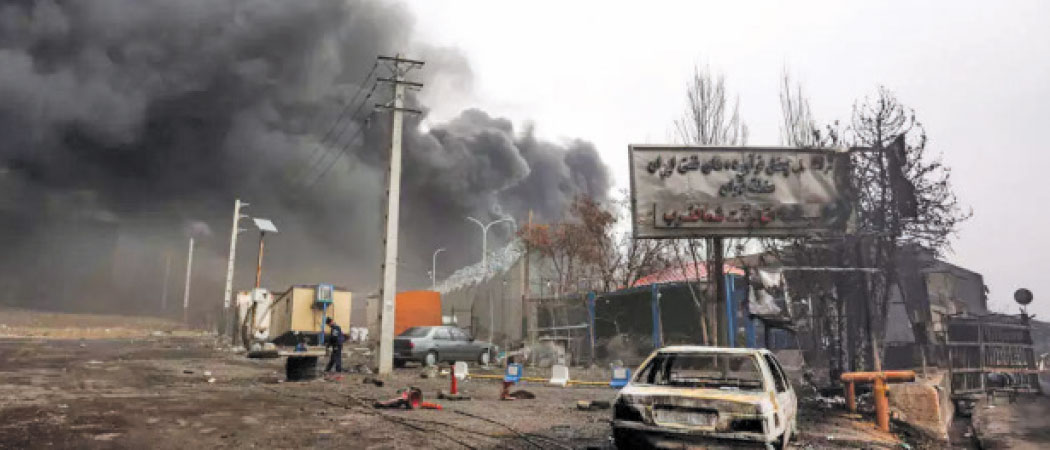
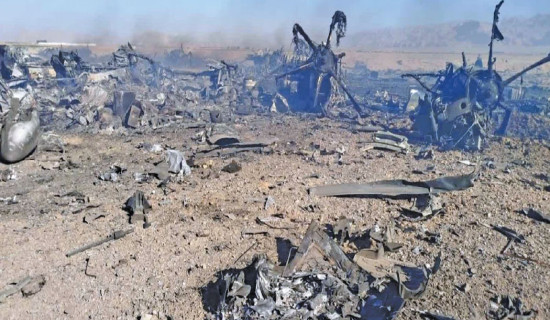
Photo: AFP Experts say that war harms the climate and pollutes the air, water and soil.

Paris (France), Mar. 16: From the jet fuel used in bombing raids to acrid smoke from burning oil depots, the conflict in the Middle East is inflicting a significant toll on nature and the climate.
US and Israeli aircraft use a considerable amount of fuel reaching the Gulf and flying sorties over Iran, said Benjamin Neimark at the Queen Mary University of London.
Deploying stealth bombers and fighter jets around the clock adds a significant amount of planet-warming greenhouse gas emissions into the atmosphere.
"The US Navy also has a significant fleet which will be operating remotely for some time," Neimark told AFP.
"That is a significant number of US troops that need to be fed, housed, and working around the clock. These floating cities all need energy."
This is provided in part by polluting diesel generators, even if most larger aircraft carriers are nuclear powered, an energy source that produces far less emissions than fossil fuels.
But many experts consider everything from the manufacture of weapons and explosives to post-war reconstruction efforts when estimating the total environmental impact of conflict.
According to one study published in the peer-reviewed journal One Earth, the Gaza conflict generated some 33 million tonnes of carbon dioxide equivalent -- an amount comparable to 7.6 million gasoline-powered cars, or the annual emissions of a small country like Jordan.
And by one estimate, the war in Ukraine has caused more than 300 million tonnes of additional emissions -- equivalent to France's annual output.
This estimate, by the Initiative on GHG Accounting of War, takes into account military operations and reconstruction efforts, forest fires, and longer flight routes.
This conflict is playing out on the Strait of Hormuz, a crucial artery for the passage of oil and gas supplies to global markets dependent on energy from the Gulf.
Ships transporting these highly flammable fuels through the narrow waterway -- along with the region's oil and gas refineries and storage facilities -- were "all a target" in this war, said Neimark.
"Clearly this conflict is different," he said. "We have already seen a significant amount of refineries targeted. These toxic flames are deadly and have a severe climate cost."
The oil wells set ablaze in Kuwait in the 1990s during the first Gulf War took months to extinguish and released an estimated 130 to 400 million tonnes of CO2 equivalent.(AFP)




-original-thumb.jpg)