- Wednesday, 3 June 2026

Various festivals being celebrated across the nation along with New Year's Day today
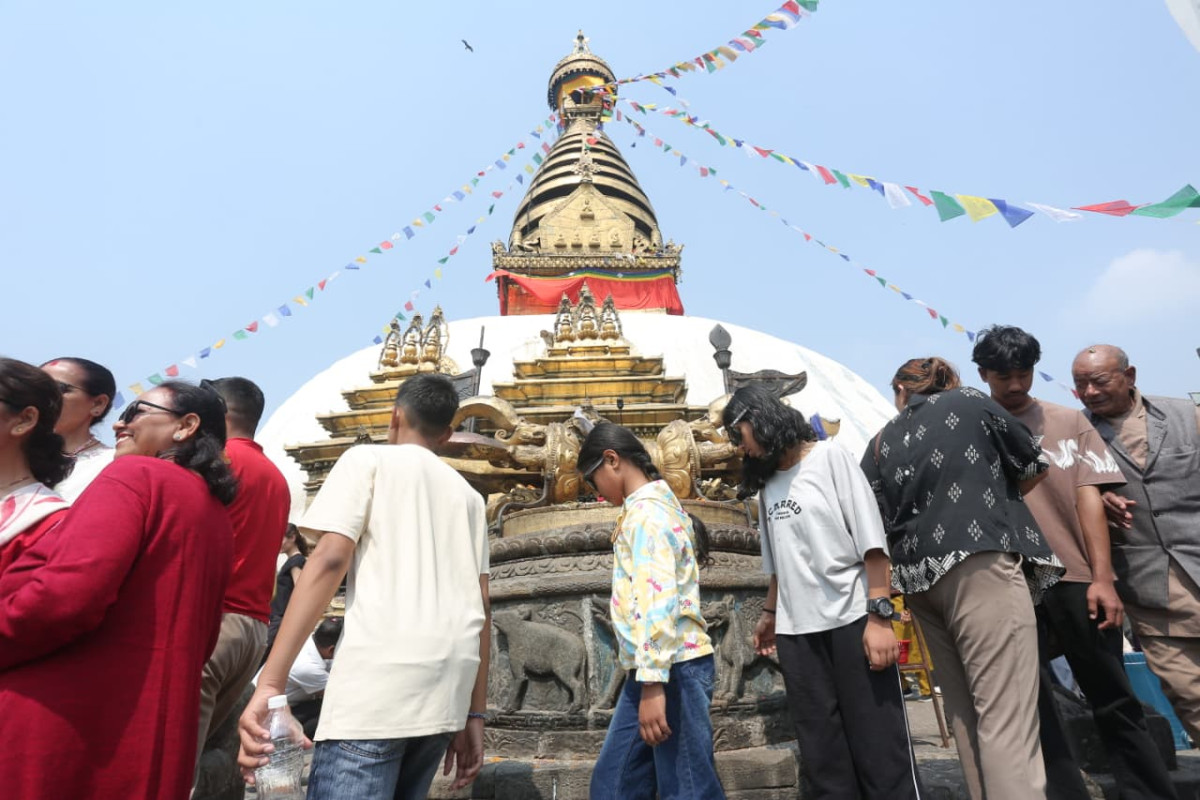
Photo: Anup Pradhan/News Agency Nepal

Kathmandu, April 14: Various cultural festivals are being marked in different regions of the country on the New Year's Day 2083 BS today
The customary Judshital festival is celebrated with much fervor in the Mithila region of the Madhesh province today.
Apart from the districts of the Madhesh province, this festival is also celebrated in the neighboring Madhubani, Jhanjharpur, Sitamadhi, and Sivahar districts of India.
The festival is observed on the New Year's Day of the Bikram Sambat calendar with the oldest person in the family sprinkling the holy water and flower petals offered to the clan deity on the heads of the family members in blessing and partaking the auspicious sweets and cookies. The family elders give blessings to the younger members for their health and happiness.
The holy water is also sprinkled over the plants and on the foot of the trees around the house in the belief that doing this would provide peace and coolness.
Special delicacies like Bari and Karahi are cooked and eaten on the occasion. The youngsters splash mud at each other in celebration. A variety of cultural programs are also held on this day.
Judshital festival is the festival of worshipping nature, according to Maithili literature expert Laxman Jha. In this festival, holy water is applied to both human beings and plants.
On the day of this festival, people do not cook food in the oven. They consume food cooked on the previous day.
Since this festival is associated with reducing the heat in both literal and figurative sense, they do not cook food on this day and consume the food already prepared a day ago.
Satuwain festival
Besides the Judshital, the Satuwain festival is also being celebrated in the different districts of ancient Mithila region of Madhesh Province today. Mithila region is rich in festivals. This festival is celebrated in districts including Mahottari, Dhanusha, Sarlahi, Sindhuli, Bara, Parsa, Rautahat, Siraha and Saptari.
Every household is celebrating the Satuwain festival by having all family members eat 'Satu' first thing in the morning.
Dhruba Raya, a cultural expert from Jaleshwar Municipality–5, said that there is a tradition in Mithila of welcoming the New Year by celebrating the Satuwain festival. Items such as chickpeas, maize, barley and soybeans are roasted and then ground to prepare flour. This flour is mixed to prepare 'Satu' which is consumed by all family members during the Satuwain festival.
Rajbanshi community celebrating Siruwa Festival
Meanwhile, the Rajbanshi indigenous community of eastern Nepal is observing the 'Siruwa Pabani' festival. This is the biggest cultural festival of the Rajbanshi community. The three-day festival is celebrated on the 1st, 2nd, and 3rd of Baisakh month.
Atmaram Rajbanshi from Gauriganj, Jhapa explained that this festival, celebrated not only by the Rajbanshi but also by the Tajpuria and Gangai communities, is observed with Jal Siruwa on the first day, Kado Siruwa on the second day, and Rang Siruwa on the final day.
According to him, there is a tradition in Jal Siruwa of splashing water on each other, in Kado Siruwa of throwing mud at each other, and in Rang Siruwa of applying coloured powder to convey good wishes and mutual harmony.
During Siruwa Pabani, wishes are made for everyone to remain free from illness throughout the year. There is a special tradition of making 'Ghatosari' and singing Ghatosari hymns in public places.
Siruwa Festival is a festival to exchange goodwill. On the occasion, people go to village grounds and rivers for worship, eat traditional dishes, and participate in various programmes that reflect their unique culture.
The Rajbanshi community, which has its own language, attire, and culture, mainly resides in Jhapa, Morang, and Sunsari districts of eastern Nepal. According to the 2021 census, the total population of Rajbanshis is 132,564.
Bisu Parba being celebrated in Sudurpaschim
The people in Sudurpaschim province, the farwest region, are celebrating the Bisu Parba today on the New Year's Day.
With the beginning of the New Year, the Bisu festival celebrated on 1st of Baisakh has increasingly been established not just as a festival but as a symbol of family reunions, social unity, and cultural continuity.
The Bisu Parba has its own significance which reflects social, cultural and emotional aspects of humankind.
Due to the belief that relatives living in the country and abroad must return home at least for a day for the Bisu festival once in a year, there is now increased activity and excitement in the villages. At the borders of the far-western region, the crowd of people returning home from India to celebrate the Bisu festival has increased. Among those returning from India, the number of residents from the hilly areas is significant.
Wearing new clothes, gathering with relatives and family to enjoy delicious dishes, and sharing the joys and sorrows of the year has been a tradition on the occasion of the Bisu festival, said former president of the Federation of Nepali Journalists (FNJ) Kanchanpur chapter, Hari Prasad Joshi.
According to him, during this festival, traditional dishes such as various meat items, malpua, kheer (rice pudding), laun (puri), batuk, and mana are prepared in every household and consumed together by the family.(RSS)
-original-thumb.jpg)
-original-thumb.jpg)