- Wednesday, 3 June 2026

Organic farming boosts income, production in Dang
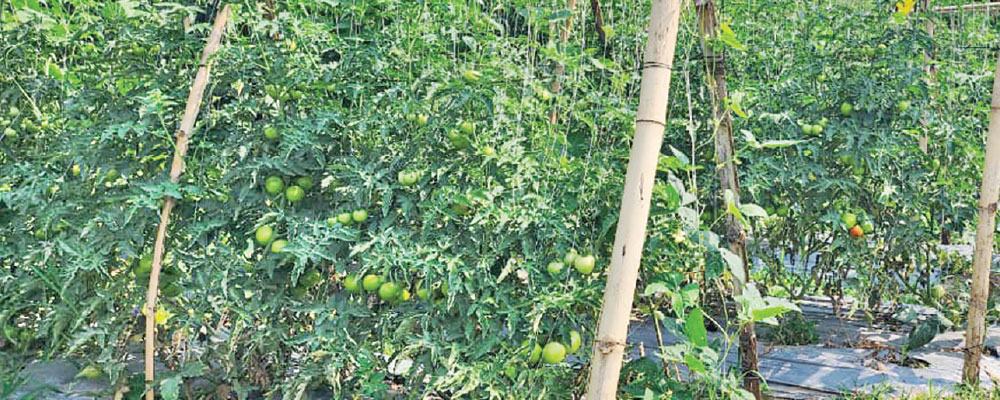

By Our Correspondent, Dang, June 3: Goma Kumari Gurung of Supailakhuti, Ghorahi Sub-Metropolitan City-18, has been engaged in commercial vegetable farming for the past eight years, steadily expanding her production and income through organic farming practices.
Starting with just five katthas of land, Gurung has expanded her vegetable farming area to 15 katthas.
In recent years, the use of vermicompost and organic pesticides has significantly increased both her agricultural output and earnings. She cultivates off-season vegetables including tomatoes, beans, and cucumbers.
In the early years of her farming journey, she relied on chemical fertilisers and pesticides. However, due to rising input costs and unsatisfactory yields, she gradually shifted toward organic farming methods.
According to Gurung, the adoption of mulching techniques, organic pesticides, and vermicompost has led to a noticeable increase in production.
“After covering all expenses, I now earn more than Rs. 500,000 annually,” she said. “During Ashoj and Kartik, vegetable prices are high, so increasing production in that period brings better profit.”
According to her, tomatoes sell for up to Rs. 100 per kg in wholesale during that period. Over the past two years, support from the Innovations in Agriculture and Livestock Value Chains Development (IALVC) project implemented by the Rural Women Empowerment Centre with assistance from Heifer International Nepal has helped her make farming more systematic.
Under the project, mulching techniques, agricultural training, and regular technical consultations have been provided.
"Training, technical knowledge, and regular monitoring have given me greater confidence and energy in farming, which has ultimately enhanced my income,” she said. She added that she no longer needs to search for markets to sell vegetables, as her produce is sold directly from her farm.
Along with vegetable farming, Gurung also produces vermicompost.
According to her, the use of vermicompost has reduced dependence on chemical fertilisers while also improving soil fertility and productivity.
She further shared that organic farming practices have reduced costs and promoted an environmentally friendly agricultural system.
According to chairperson of Rural Women Development Centre, Asmani Chaudhary, various programmes are being implemented under the IALVC project to improve farmers’ livelihoods.
These include skill development in vegetable farming, technical support to increase production, training on organic pesticides and vermicompost production, as well as facilitation in the use of modern agricultural technologies.
“This initiative has played an important role not only in increasing farmers’ production but also in improving their living standards,” Chaudhary said.