- Wednesday, 3 June 2026

572 climbers reach the summit of Annapurna in 76 Years

By Thakur Prasad Acharya, Beni, June 3: June 3 (Jestha 20 in the Nepali calendar), marks the day when humans first set foot on Annapurna.
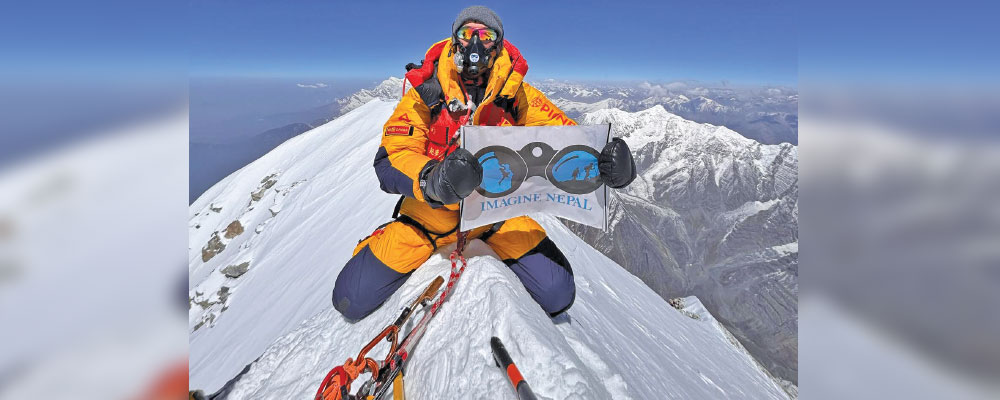
The successful ascent of Annapurna I, one of the world’s peaks exceeding 8,000 metres and located in Narchyang of Annapurna Rural Municipality Ward-4, ushered in the era of mountaineering in Nepal and brought global recognition to the country.
Over the 76 years since the first ascent, a total of 572 climbers, both Nepali and foreigners, have successfully reached the summit of Annapurna I.
According to the publication Mountaineering Facts and Figures released by Nepal’s Department of Tourism on June 2, 488 climbers had summited the mountain by June 5, 2023.
An additional 44 climbers reached the summit in 2025, while 40 more successfully climbed the peak during the current spring climbing season, bringing the total to 572.
Local tourism entrepreneur and campaigner for the Maurice Herzog Trail, Tej Gurung, said that although Annapurna remained relatively quiet until a few years ago, the number of climbers has increased significantly over the past five years.
On June 3, 1950, French climbers Maurice Herzog and Louis Lachenal and two Nepali Sherpas, made history by becoming the first to summit Annapurna I. This marked the beginning of the mountaineering era.
Despite this historic achievement, Annapurna remained largely overlooked for many years, Gurung added.
The pioneering expedition approached the mountain via Dana in Myagdi and Ghasa in Mustang, traversing the foothills of Nilgiri South before reaching Humkhola above Narchyang village and continuing through Bhusket Mela to Annapurna I.
The success of the Annapurna expedition was followed by another landmark achievement on May 29, 1953, when Tenzing Norgay and Edmund Hillary became the first people to successfully summit Mount Everest.
This year marks the 76th anniversary of Annapurna’s historic first ascent. Last year, the rural municipality celebrated the Diamond Jubilee of the climb.
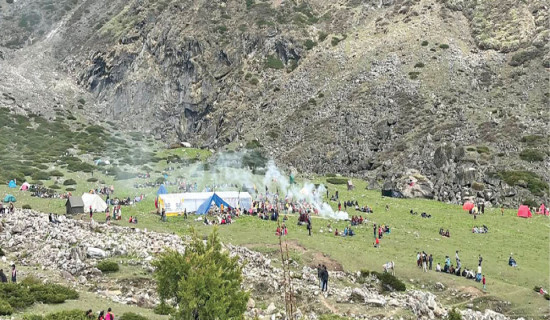
To commemorate the occasion, statues of the first climbers, Maurice Herzog, Louis Lachenal and Nepali expedition supporter Sonam Wangchuk Sherpa, were installed at the Annapurna I Base Camp, along with the establishment of an open-air museum.
To facilitate tourism, temporary structures have been built at various locations along the trekking route from Humkhola to Base Camp.
Tea shops, snack stalls, lodges, and accommodation facilities have also been introduced.
Three shelters have been constructed at Sandhikharka, Bhusket Mela and the Panchakunda Lake area.
Drinking water facilities, toilets and other basic infrastructure have been developed at Humkhola, Futfute Waterfall, Gufaphant, Bhusket and Panchakunda.
The Maurice Herzog Trail, which begins at Humkhola and leads to the Annapurna I Base Camp at an altitude of 4,190 metres, has attracted a growing number of domestic visitors over the past two years.
Chairperson of Annapurna Rural Municipality, Bharat Kumar Pun, said that the local government aims to develop the Annapurna Base Camp area and the Maurice Herzog Trail as the municipality’s principal tourism destination through infrastructure development and promotional activities.
Visitors can travel approximately 22 kilometres by vehicle from Pokharebagar, the municipal headquarters, to Humkhola.
From there, a 21-kilometre trek leads to the base camp area. Attractions along the route include the scenic Futfute Waterfall, the Panchakunda Lake at the base camp, and spectacular Himalayan landscapes, all of which have helped establish the area as a popular tourist destination.