- Thursday, 21 May 2026

Power Of Music
 Surabhi Pyakurel
Surabhi Pyakurel
Surabhi Pyakurel
Music is not just entertainment; it's a lifeline to many of us. It gives comfort, inspiration and emotional release. To those who are going through the stress of academics, societal demands and life in general, music possesses an unobtrusive yet incredible power of making the mood brighter and the mind calmer. Listening to music can also be a kind of companion. Even without singing or performing active actions, it help people work through their feelings and rediscover themselves. Music is embedded in the culture of Nepal. Festivals, celebrations, and everyday life are filled with songs that provide both a time to rejoice and contemplate.
However, music is not taken seriously as an emotional health tool among many youths. Its possibility to facilitate well-being is usually underestimated, even though it could help decrease stress levels, enhance concentration, and become more resilient. Music provides an easy and ready-to-use type of therapy, which can be used alongside other means of emotional support. Psychological studies emphasise that listening to music, humming, or singing activates the reward centres in the brain, releasing dopamine and improving the mood. It serves as a safe way to express emotions, alleviating anxiety and enhancing social relationships when done with other people.
Technology and social media have increased the availability of music exponentially. Even informal activities, such as listening to a favourite song, going to a local concert, or playing an instrument, can have a great emotional impact. Such subtle but regular engagements with music serve to build a feeling of calmness, happiness and hardiness in day-to-day life. Colleges and schools should encourage musical activities as part of the holistic development of the student.
Engaging in music programmes, cultural events and informal singing sessions would enable students to build confidence, creativity and social relationships. These experiences help confirm that emotional expression is a normal and desirable thing and also help reduce the stigma of publicly admitting and dealing with one’s emotions. Listening to music is a subtle yet powerful means of promoting mental wellness among youths, particularly during stress or in doubt.
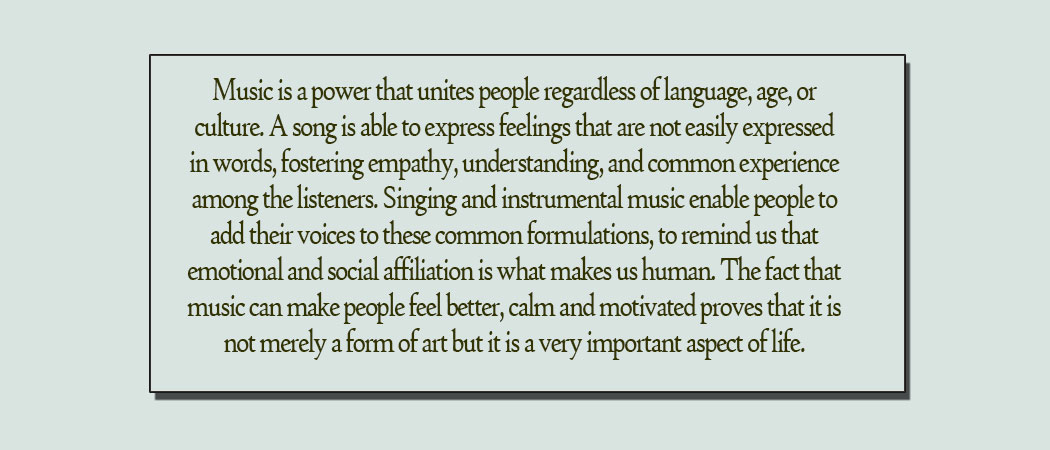
Music is a power that unites people regardless of language, age, or culture. A song is able to express feelings that are not easily expressed in words, fostering empathy, understanding, and common experience among the listeners. Singing and instrumental music enable people to add their voices to these common formulations, to remind us that emotional and social affiliation is what makes us human. The fact that music can make people feel better, calm and motivated proves that it is not merely a form of art but it is a very important aspect of life.
Ultimately, music is more than a pastime; it is a tool for emotional expression, resilience, and connection. With or without active involvement, listening to music with other people can change moods, relieve stress, and promote positive well-being. Music is also a silent relief, a point of view, and a promise in a world where demands are growing and mental issues are escalating. Music enriches our emotional lives and can help us keep intact the social fabric that holds us together.




-square-thumb.jpg)