- Thursday, 4 June 2026

ANFA and NFPA agree to stage A‑Division from April 13
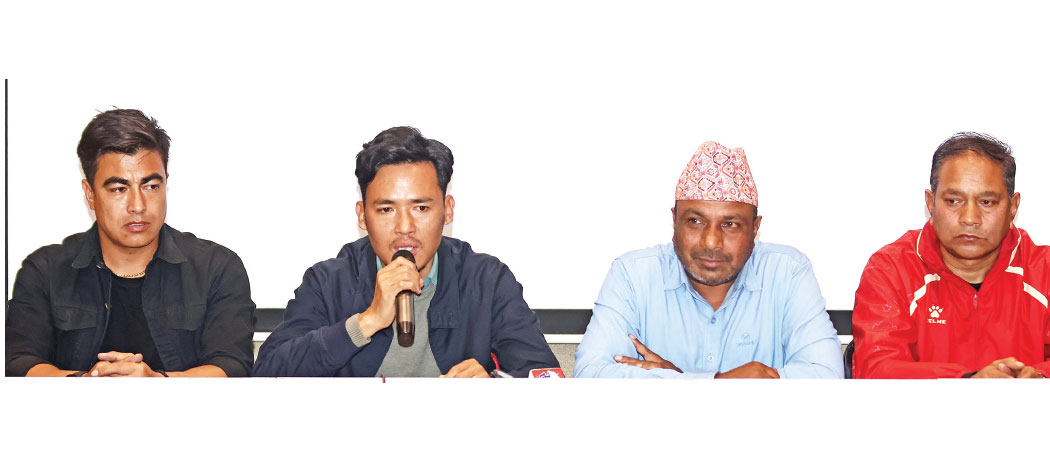

By A Staff Reporter,Kathmandu, Mar. 11: The All Nepal Football Association (ANFA) and the Nepal Football Players’ Association (NFPA) have agreed to stage the opening match of the A‑Division League on 13 April.
The announcement was made at a press conference in Kathmandu on Tuesday. ANFA spokesperson Suresh Shah said the deal covered not only the start date but also other twp demands raised by the NFPA.
Nepal’s top‑tier league has been inactive for more than 1,000 days. On Sunday, the NFPA padlocked ANFA headquarters in protest, demanding clarity. The lock was removed after Tuesday’s agreement.
NFPA president Bikram Lama described the settlement as the end of a long struggle. “For years we were told the league would resume, but no date was ever fixed. We were compelled to escalate our protest, even to the point of locking the ANFA complex. Now, at last, there is clarity,” he said.
ANFA competitions director Sanjeev Mishra confirmed that the calendar for the ongoing National League will be revised and wrapped up as soon as possible.
“The opening match of the A‑Division League will be played on 13 April, with regular fixtures starting from 3 May,” he said.
The last edition of the league was held in 2022, and the long break had raised doubts over its future. Shah added that the fate of Three Star Club and APF Club will be decided once an official ruling is made.
The players also secured agreement on contributions to the Welfare Fund, which will be deposited soon. Shah said one instalment of the player awards will be also paid within March, with further payments to follow.
Clubs call for reform
Separately, First Division clubs have urged ANFA to honour agreements previously signed with them.
At a press conference at ANFA headquarters on Tuesday, Himalayan Sherpa Club president Karma Chhiring Sherpa said clubs were preparing to submit a formal letter of concern.
The clubs expressed dissatisfaction with ANFA’s leadership, calling for reforms and immediate implementation of past commitments.
In a statement issued on Monday, they demanded steps to make football management transparent, organised and professional.
They warned that while football remains hugely popular in Nepal, poor leadership and irresponsible decisions have stalled its growth. Particular concern was raised over the failure to enforce agreements relating to the Martyrs’ Memorial League.
The clubs outlined several key demands, insisting they must be addressed quickly for the long‑term development of the game. They cautioned that unresolved issues dating back three years must be tackled without delay, or they would be forced to take further action in the interests of Nepali football.
-square-thumb.jpg)