- Saturday, 2 May 2026

Election fever grips villages, district centre remains quiet
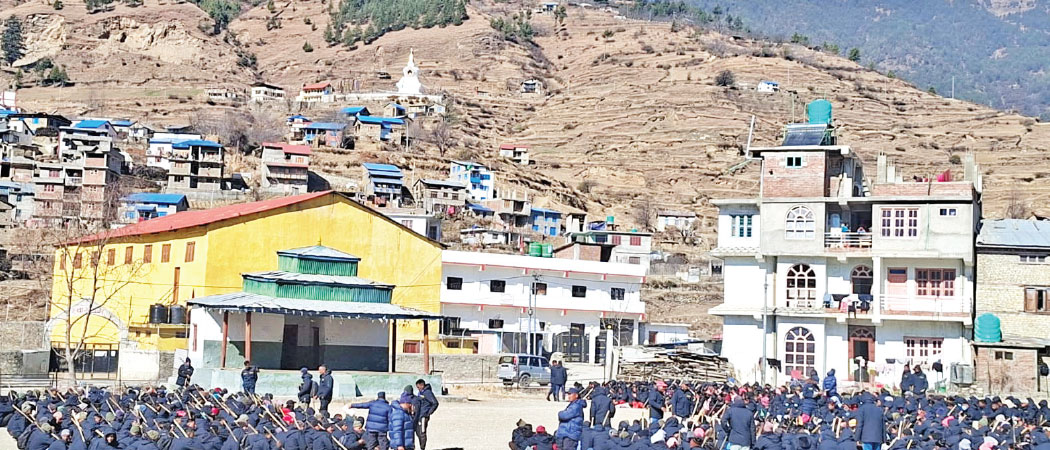
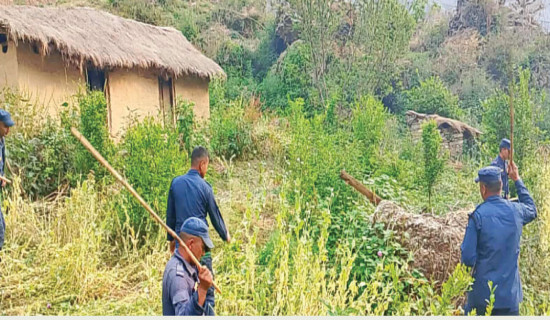
photo: trn Local activists campaigning in rural settlements in Jajarkot.

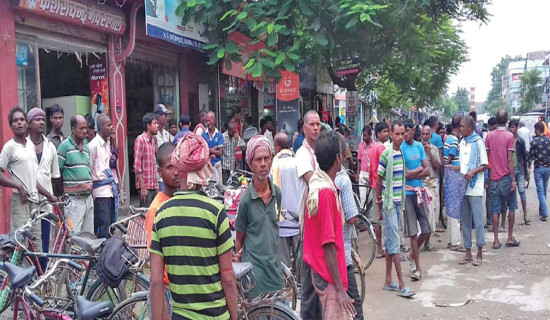
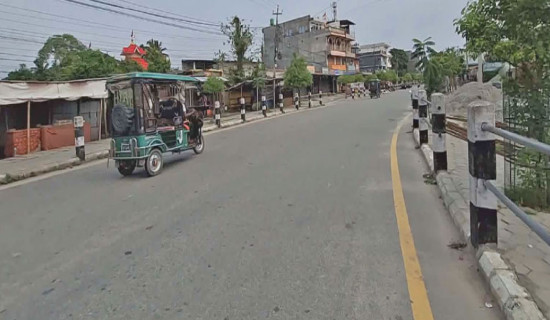
By Basudev Sharma,Jajarkot, Feb. 16: As the date for the forthcoming House of Representatives ( HoR) election on March 5 draws nearer, a striking contrast has emerged across Jajarkot district. Rural settlements are abuzz with activity, while the district headquarters wears an unusually deserted look.
With candidates and party leaders fanning out across the countryside, electoral campaigning has intensified in village squares and roadside meeting points.
The presence of parliamentary hopefuls and their supporters has transformed once-quiet hamlets into vibrant arenas of political debate and mobilisation.
Leaders and cadres from all seven local levels are engaged in a relentless door-to-door campaign, seeking to secure victory for their respective candidates. The flurry of activity has lent the villages a festive air, with many residents observing that rural communities currently appear livelier than the urban centres.
Dambar Bahadur Rawat of Ward No. 13 in Bheri Municipality remarked that the approach of parliamentary elections invariably brings a noticeable influx of political figures into rural areas.
According to him, leaders once again arrive at villagers’ doorsteps armed with familiar agendas, seeking to tilt public opinion in their favour.
He said that as electoral fervour intensifies, candidates campaigning under banners of development and good governance are increasingly being asked when longstanding promises will finally materialise. Voters, he added, question whether the slogans raised in successive elections will ever translate into tangible outcomes. Rawat further alleged that leaders from various parties continue to sow confusion among the electorate.
In their quest for votes, political actors have been accused of offering ‘lollipops,’ attractive but fleeting assurances, while racing from village to village. Although development and good governance dominate campaign rhetoric, many residents appear to have grown sceptical of repeated pledges.
With limited employment opportunities in rural areas, a significant number of locals have sought daily wage labour in India and other third countries merely to sustain their livelihoods. Several residents contend that although political leaders now frequent their villages, such visits are often driven more by electoral self-interest than by genuine commitment to long-term change.
Conversely, Dil Bahadur Giri, also of Ward No. 13 in Bheri Municipality, described the upcoming election as an outcome of the Gen-Z movement, saying it has rekindled hopes for transformation among the populace. He observed that the renewed political engagement in villages has generated a sense of enthusiasm among residents.
Giri said that many voters are inclined to support Khadga Bahadur Budha, the candidate representing Nepali Congress, in the March election.
Local residents have urged candidates to prioritise tourism development, physical infrastructure, drinking water supply, irrigation, and accessible healthcare services within villages. Although the government has allocated budgets to establish 10-bed hospitals in rural municipalities and 15-bed hospitals in urban municipalities, locals complain that insufficient initiative from political leaders has compelled patients to seek treatment in distant cities such as Nepalgunj, Surkhet and Kathmandu.
In the present electoral climate, voters say they will favour candidates who accord priority to education, health services and employment generation. Many emphasise the need for concrete measures to connect thousands of unemployed youths, currently seeking work abroad, to meaningful opportunities at home.
A total of eleven political parties have fielded candidates at the Chief Election Office, and their leaders and cadres are now traversing villages in a bid to consolidate support.
Villages that had fallen silent after residents departed for India in search of work following the festive season have come alive once more. Campaign teams are moving from village to village, striving to ensure victory for their preferred candidates.
-original-thumb.jpg)