- Monday, 8 June 2026

Professional Justice For Counsellors
 Sudip Ghimire
Sudip Ghimire
Sudip Ghimire
The field of psychosocial counselling in Nepal has recently witnessed a significant shift with the emergence of collective voices demanding professional justice and policy clarity. This momentum formally began when the national counsellors conference was held in Pokhara last December, and organised voices emerged. Hot Bahadur Kunwar and Rukmani Pariyar formally submitted a written request for information to Kanchanpur Municipality under the Right to Information Act. The application, registered last November, questioned irregularities in the recruitment process for psychosocial counsellors announced by the municipality. Despite the clear qualification and training requirements mentioned in the vacancy notice, individuals without the six months of psychosocial counselling training were allowed to apply and even participate in the selection process and were selected as counsellors, even though they do not have any training background or counselling education. This problem is occurring in municipalities across the country. As a result, there are serious concerns regarding transparency, legality, and professional ethics in the counsellor's selection process.
The application further questioned why, in vacancies clearly announced for psychosocial counsellors, nurses and health assistants were appointed as counsellors. It also challenged the rejection of certificates issued by institutions affiliated with CTEVT, despite CTEVT being a government-recognised technical authority. The applicants demanded clarification on which laws rendered such certificates invalid and why local governments felt compelled to appoint individuals who clearly did not meet the advertised criteria. These questions were raised with reference to constitutional provisions, the Right to Information Act, and related regulations, highlighting inconsistencies between policy and practice.
Similar requests for information have since been submitted by psychosocial counsellors across the country, reflecting growing nationwide dissatisfaction. Even though all the required qualifications were met in the vacancy announcement for a psychosocial counsellor opened by Balan Bihul Rural Municipality, Saptari, the position was instead awarded to an untrained individual. When the legal basis of this decision was questioned, psychosocial counsellor Kamana Kumari Sah was repeatedly threatened through representatives of various political parties and municipal staff, and her family members were subjected to mental pressure. Following this, the counsellor's association issued an official press release on Magh 13, expressing its objection to the mental violence committed against the counsellor.
According to the CTEVT-endorsed curriculum introduced in 2011, a psychosocial counsellor is defined as a Nepali citizen aged 21 or above who has completed Grade 12 and received at least 750 hours of professional training. After completing this training, counsellors are eligible to provide services for common mental health and psychosocial problems. Certificates issued by CTEVT-affiliated institutions are legally valid, particularly when training is conducted following approved standards. Nepal, like many low-resource countries, faces a shortage of specialised mental health professionals. In this context, building the capacity of psychosocial counsellors has long been recognised as a practical and necessary approach. On this basis, CTEVT has authorised various governmental, non-governmental, and training institutions to run counselling programmes. As a result, nearly three thousand trained psychosocial counsellors are currently working across the country in NGOs, hospitals, rehabilitation centres, and schools. Despite this, the government has failed to create permanent positions for psychosocial counsellors within the public system.
Following the COVID-19 pandemic, the 2015 earthquake, and increasing migration-related stressors, the government began appointing psychosocial counsellors in local governments on a contractual basis. One major initiative is the SAMI Programme, which is implemented nationwide by the Ministry of Labour, Employment, and Social Security. The programme aims to make foreign employment safer and more dignified through counselling, psychosocial support, legal aid, and financial literacy services, with financial and technical support from the Government of Switzerland. Psychosocial counselling is recognised as a core component of this programme.
The SAMI Programme Operational Guidelines clearly define staffing structures, levels, appointment authority, and budget responsibilities. Psychosocial counsellors are categorised at the fifth level, with recruitment authority delegated to local governments. The guidelines also specify minimum qualifications, including relevant bachelor’s degrees or postgraduate diplomas and six months of training from the National Health Training Center. However, in practice, these provisions are being widely violated.
One major issue is that the workforce described in the guidelines barely exists in the labour market. Moreover, the National Health Training Center does not have the mandate to provide training to the general public; it can only train government health staff. To date, no general psychosocial counselling training has been offered to the public by this institution. Despite this reality, vacancy announcements continue to demand qualifications that are practically unattainable, exposing serious weaknesses in government policy planning. At the same time, while one government body (CTEVT) supports training and workforce production, other bodies, including local governments and the National Health Training Center, effectively undermine it. Psychosocial counsellors are caught in the middle of this institutional contradiction.
Due to the unavailability of trained personnel from the National Health Training Center, local governments have begun appointing health assistants and staff nurses as psychosocial counsellors. These individuals often lack counselling competencies and are sent for six months of training only after appointment. Until that training is completed, they are technically unqualified to provide psychosocial services. Advertising for counsellors, appointing non-counsellors, and training them afterward represents a serious policy failure and, as stated by the leadership of the Psychosocial Counsellors’ Federation, amounts to institutionalised corruption. Meanwhile, capable counsellors already available in the market are excluded, while millions of rupees are repeatedly spent on training programmes run by NGOs.
Discrimination is further evident in inconsistent recognition of academic institutions. Graduates from one public university are considered acceptable, while those from another public university are rejected, despite both being government institutions. A similar contradiction applies to CTEVT and the National Health Training Center, both state bodies, yet treated unequally in recruitment processes. Most psychosocial counsellors in Nepal are trained through private or non-governmental institutions affiliated with CTEVT and operating under minimum national standards. However, these counsellors are often barred from even applying for municipal positions, leading to widespread frustration and protest.
Mental health policy development in Nepal has been heavily influenced by a small group of government and non-government actors, often driven by donor agendas rather than national needs. Despite repeated disasters and rising mental health challenges, mental health continues to be treated as a temporary or project-based issue rather than a core public responsibility. Reports of misuse of foreign aid, repeated monopolisation of policy spaces, and conflicts of interest have further eroded trust within the sector.
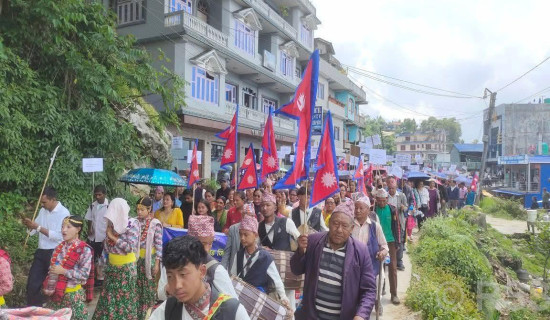
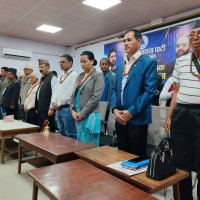
As a result of long-standing discrimination and policy inconsistency, psychosocial counsellors organised a national gathering in Pokhara and formally established the Psychosocial Counsellors’ Federation of Nepal under the leadership of Bijaya Sharan Acharya. Provincial committees have since been formed across all seven provinces, and collective advocacy for professional rights has begun.
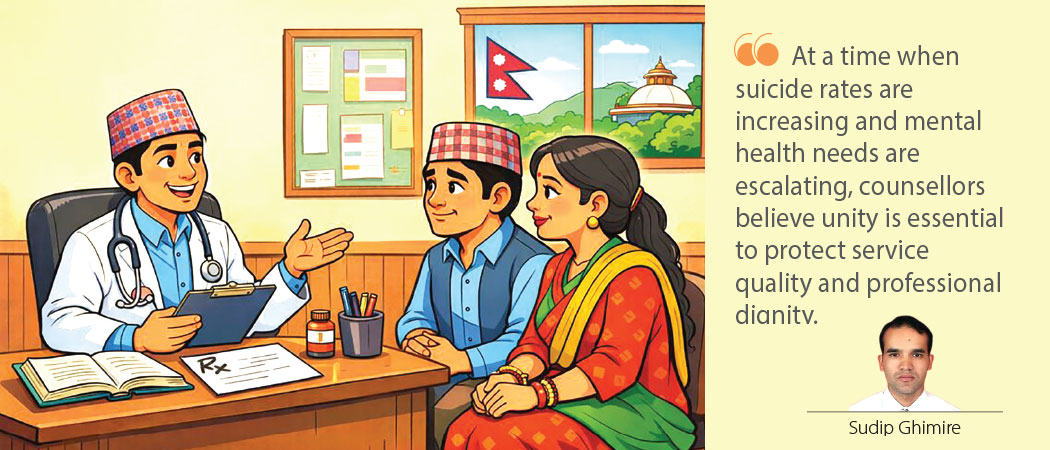
At a time when suicide rates are increasing and mental health needs are escalating, counsellors believe unity is essential to protect service quality and professional dignity. Excluding qualified counsellors in the name of “quality control” is not only unjust but also a violation of human rights. Recognising psychosocial counsellors within national policy and strategy frameworks is no longer optional; it is a necessity.
The author is general secretary at Psychosocial Counsellors' Federation of Nepal