- Monday, 25 May 2026

Climate Struggles of Nepal
 Climate change has affected human life and environment in multiple ways. Indoubtably, this is driven by human activities.
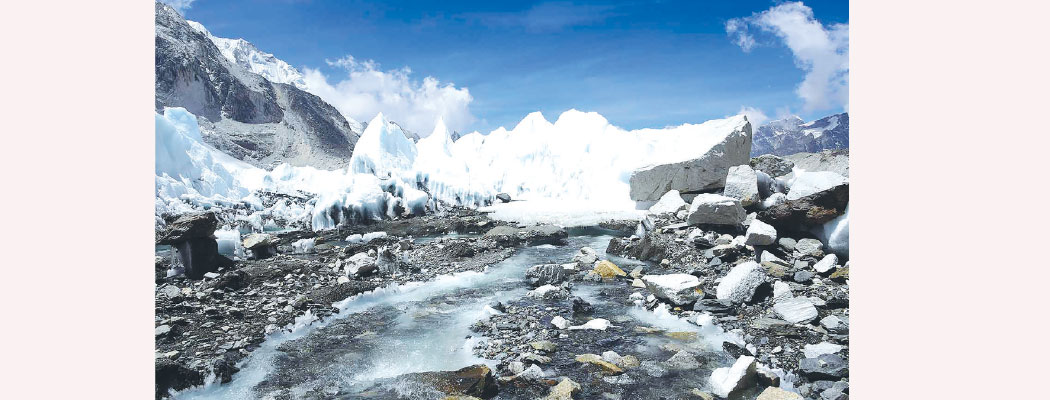
However, climate change does not touch responsible populations only, rather it spreads across the globe. Extreme temperatures have hit all corners of the globe. The snow-capped mountains have melted. The sea level is rising. There are health and economic losses prevalent everywhere. This unpleasant picture itself is an urgent need to accelerate efforts to combat climate change. Worth mentioning here: A stitch in time saves nine!
The recent glacial lake outbursts in Namkha and Thame are exquisite examples of global warming. Irregular rains, landslides, and floods claim lives and huge properties every year. 2021 Melamchi–Sindhupalchok flood, and record rainfall of September 2024 in Kathmandu valley can be taken for examples that have claimed lives, destroyed properties and agricultural land. Forest fires also have engulfed a large number of wildlife habitats in mid and western parts of the country. These crises have led to the disappearance of alpine flora and medicinal herbs and extinction of species like pandas and snow leopards. Heatwaves in Nepalgunj and Dhangadhi in May 2024 reached 44.2°C and 44.1°C respectively, crippling public health. Nepal Disaster Report (Ministry of Home Affairs, 2024), records 32,375 disaster events from 2018 in six years'time. What else can portray the better picture of a soaring number of climate-induced emergencies?
The unstable glaciers like Thulagi and Imja are listed as the most dangerous glaciers by ICIMOD. To everyone’s astonishment, snowfall has declined in high himalayas significantly and rains are irregular and inadequate in mountains and terai belts directly affecting agricultural activities and production. Nepal’s major river systems like the Koshi, Gandaki, and Karnali, now are unpredictable with summer floods and dry-season scarcity affecting northern Tibet and India. The fate of Bihar and Assam in India has changed by repeated flooding, landslides, and crop losses. Dams or reservoir management upstream in China and India also have risked huge damage at once. Nepal and northern India lie in the same seismic zone. Nepal is located between two giant countries India and China.. This geopolitics has turned climate change into a transboundary issue. These impacts reveal exacerbating effects of climate change that are clearly regional in nature.
Food insecurity is another alarming issue as the agricultural products have dropped. Unlike this prolonged drought, agricultural land has been swept away by floods in other parts of the country. The Government of Nepal had to declare an emergency in the Terai region in July 2025 to fight a long-term drought. Several communities have been evacuated due to floods in Bardiya and Sunsari districts. Unpredicted river flows have hit water supply, farming and hydropower badly. Hydropowers suffer damage in monsoon and shortage of water in winter. These crises multiply forced migration, poverty, and indigenous livelihoods.
Despite minimal contribution to carbon emissions, Nepal has been the classic example of a climate vulnerable nation. These transboundary river systems such as the Ganges, Brahmaputra, and Yangtze link Nepal, India, and China invite cooperative management. COP29 resolutions read a strong commitment of developed countries worth $300 billion annually by 2035 for developing countries to help them combat climate change. The UN also requested to work on Sustainable Development Goals (SDGs) so that the situation with the balance in the ecosystem does not further worsen.
Nepal’s mountains, rivers, and valleys stood as symbols of stability until a few years back. Now, they are the witness to the better reality of climate change with glaciers outburst, floods, landslides, droughts, and biodiversity loss. These impacts further have expanded in neighboring countries as well. Strengthening pre-while-post disasters preparedness, expanding forecast and warning systems, and ensuring access to green technologies are essential. Entwined with regional collaboration and the Baku climate finance, Nepal can enhance resilience. The UN has called for global solidarity in sustainable development goals 4, 13 and 17. Every individual can contribute to this pious mission of a sustainable planet by adopting sustainable ways of life.
Deepak Banjara
(Deepak Banjara writes on politics, the environment, and socioeconomic issues in Nepal and South Asia.)







-original-thumb.jpg)