- Sunday, 3 May 2026

Avoiding Road Traffic Accidents In Winter

Winter comes with many festivals. Although mornings remain calm, the landscape becomes misty, people wear warm clothes, and life is a bit slower in every aspect. This season brings recurring, often-neglected seasonal tragedy, mainly due to visibility. Road traffic accidents increase due to a drop in temperature and human behaviour.
The condition of the roads deteriorates and becomes prone to accidents. This recurring pattern has been receiving less attention despite its toll on human lives. Road traffic accidents are preventable with early warning, better human behaviour, and infrastructural improvements. This is not just a traffic issue but a collective responsibility. Let this public health issue be given adequate priority in order to reduce its occurrences.
Visibility
Winter driving is associated with reduced visibility due to mist, fog, smog, and shortened daylight. The dense fog not only hampers judging distances but also makes it difficult to read road signs. The reduced visibility affects reaction time, and a fatal accident may occur in a split of a second. It is our habit to drive at normal speed even during the winter season, trusting merely on instinct rather than caution. All the contributors – environment, behaviour, and road conditions – make winter roads prone to accidents.
The road condition deteriorates during winter due to continuous exposure to mist, fog, smog, and frost. These subtle but dangerous deterioration is often invisible to our eyes. The slippery roads lead to skidding, loss of vehicle control, and crashes with sudden braking and/or sharp turns. In addition, poorly maintained roads exacerbate the problem. During winter, uneven surfaces, inadequate drainage, and potholes, along with slippery conditions, make roads more vulnerable to accidents, particularly for two-wheelers and cyclists.
The road conditions deteriorate due to environmental and infrastructural issues during winter, but road traffic accidents are also associated with human behaviour, which is one of the leading causes. Unnecessary speeding, unwanted overtaking, poor visibility, and deteriorated vehicle maintenances all are all human negligence that contribute to road traffic accidents during winter. During the cold season, winter fatigue is common and makes people drowsy, especially during early morning and late evening, significantly reducing reaction time.
Owing to festivals and social gatherings, alcohol consumption increases during winter. In cold conditions with low visibility, drunk driving increases the chances of fatal accidents that take many lives every year despite strict laws and awareness campaigns.
Pedestrians and motorcyclists are the most at-risk population for traffic accidents. Poor visibility makes them vulnerable to accidents. Pedestrians wearing dark winter clothes are difficult to spot on poorly lit roads. In many developing countries, sidewalks and zebra crossings are often missing or poorly maintained. In such conditions, people are destined to walk closer to the road, increasing the chances of accidents. The most at-risk populations are children and the elderly, and accidents involving them have profound negative consequences. The visibility issue is not only due to weather alone but also owing to increasing air pollution, particularly in the Kathmandu Valley.
Post-accident survival is also affected by winter as cold temperatures worsen injuries, exposes victim to hypothermia, and delay recovery. The decrease in visibility also affects early rescue that may lead to a poor outcome of an incident. In rural and mountainous areas, winter weather can completely cut off access to timely medical care. Many accident victims lose their lives not because injuries were fatal, but because help arrived too late.
Despite the predictable rise in winter road accidents, seasonal preparedness remains weak. Although road traffic accident increases during winter, traffic planning remains the same year-round. There are specific challenges of winter driving; however, road safety awareness remains general and short-lived rather than specific.
It is essential to acknowledge that road safety during winter is a seasonal emergency. In order to prevent such incidents from happening, improvement in road lighting, updating clear signage, and issuing timely public warnings cannot be ignored. At the same time, deploying traffic police during foggy hours can be lifesaving.
It is important to note that collectively, we can reduce winter road traffic accidents. It is the responsibility of drivers to use fog lights correctly, maintain safe distances, check brakes and tires, and lower speeds during winter to avert accidents. Those simple measures, along with avoiding unnecessary travel during extreme conditions, can save lives.
Road safety education
Schools, media, and non-government organisations can play an important role in spreading road safety awareness, targeting the winter season. It is also important to impart road safety education to children, and the media can play a significant role by broadcasting winter-associated visibility alerts and safe behaviours. Similarly, technology can help in the reduction of road traffic accidents. Early warning through mobile alerts and improvement in road infrastructure can significantly reduce accident risks.
Road traffic accidents are predictable risks during winter; however, they often occur due to preventable mistakes. Every winter accident represents not just a statistic, but a family shattered, a future altered, and a community affected.
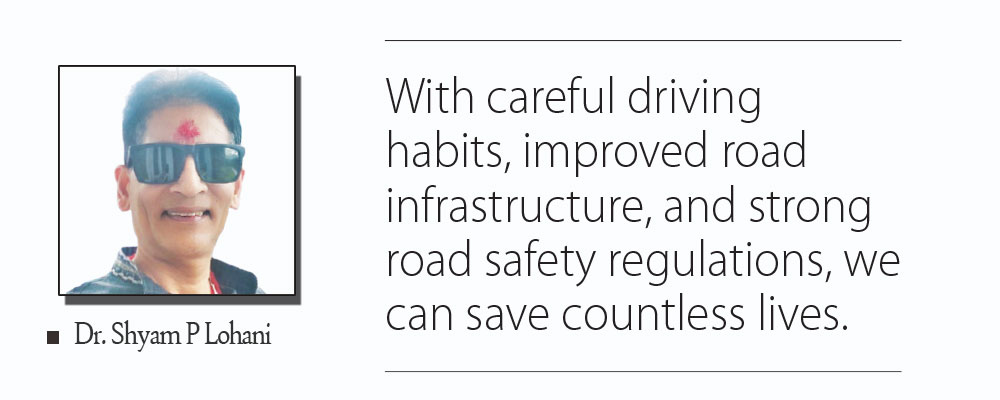
Treating winter road safety as a serious public issue rather than a seasonal inconvenience is long overdue. All concerned should take note that with careful driving habits, improved road infrastructure, and strong road safety regulations, we can save countless lives.
It is, therefore, our collective responsibility to make the winter season memorable, not marked with avoidable tragedy on roads.
(Dr. Lohani is the clinical director at the Nepal Poison Information Centre. lohanis@gmail.com)