- Tuesday, 9 June 2026

Martyrs' Week begins with tributes to Shukraraj
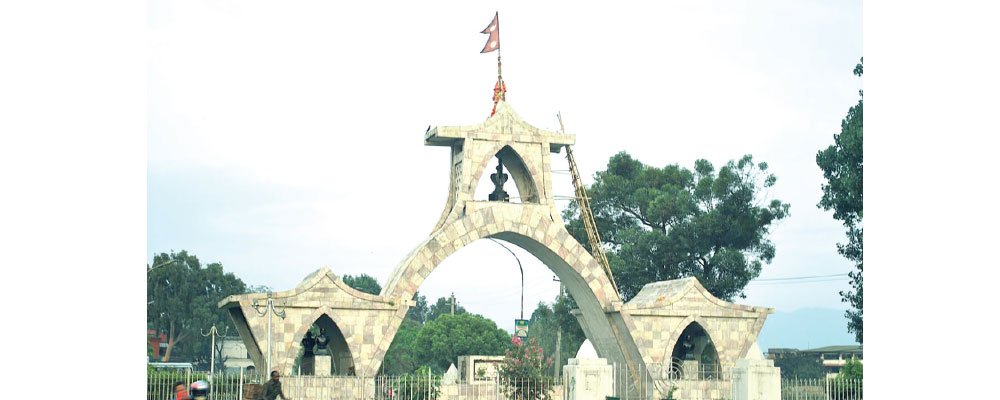

BY A STAFF REPORTER,Kathmandu, Jan. 25: A memorial service was held at Machali, Teku, the site where Shukraraj Shastri was executed, marking the first day of Martyrs’ Week on Sunday. Floral tributes were offered at Shastri’s statue in recognition of his contributions to social awakening and civic consciousness.
The site where Shastri was put to death was preserved by the then Kathmandu Nagar Panchayat in 1978 through the installation of a commemorative plaque.
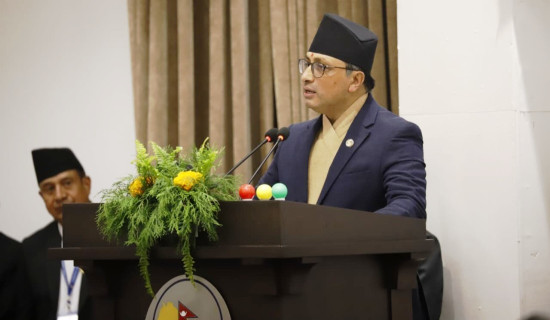
Addressing the memorial gathering, coordinator of the main organising committee and Acting Mayor of Kathmandu Metropolitan City, Sunita Dangol, stressed the need to pass on the real stories of sacrifice, dedication and courageous struggle made by martyrs to the betterment of the younger generation. “Historical events written in books are not meant to be read as mere text. They must be felt and internalised so that citizens are inspired to uphold civic rights and good governance,” she said. Dangol also pointed out Shastri’s multidimensional personality, his political awareness, intellectual depth, contributions to Nepal Bhasa grammar, and writings in children’s literature as important lessons for the present generation.
Ward No. 12 member Pushpa Ratna Prajapati said the struggle during times when freedom of expression was suppressed laid the foundation for today’s freedom of speech. However, he warned against the misuse of free speech. “A time when people could not speak was not right, but neither is the current trend of irresponsible and harmful speech. Freedom of expression must not be abused,” he said.
Nepal Arya Samaj Secretary Krishna Khatibada said Shastri was not directly involved in political movements but firmly believed that an educated and aware citizenry would better understand freedom and political systems. He said Shastri devoted himself to educational, religious and social activities for this very purpose, and stressed the need for coordinated programmes to transfer the legacy of the martyrs to future generations.
Shukraraj Shastri, born in 1893 in Banaras, was an educationist and social reformer who played a key role in Nepal’s civil rights movement.
He studied at Achyutananda Gurukul in Dehradun and later served as a headmaster at an Arya Samaj school in Allahabad, where he began organising Nepali-speaking communities in India around civil rights issues.
After returning to Nepal, he remained under surveillance but formed the Civil Rights Committee in Asan in 1937. While leading a religious awakening campaign against the Rana regime, he criticised the ruling system through verses from the Bhagavad Gita at Indra Chowk, leading to his arrest.
On January 21, 1940, a court led by King Tribhuvan and Prime Minister Juddha Shumsher sentenced Shastri and four others to death. Shastri was hanged at Machali on January 24, 1940, and his body was left hanging for two days to intimidate the public and suppress dissent. Kathmandu Metropolitan City has been organising week-long programmes in honour of martyrs who sacrificed their lives to transfer state power from hereditary rulers to the people.
As part of the schedule, memorial services will be held on January 27 at Sifal, where Dharmabhakta Mathema was executed, and on January 29 at Shobha Bhagwati, the execution site of Gangalal Shrestha and Dashrath Chand.
The metropolitan city has also installed full-sized statues of the four martyrs at the exact locations where they were executed. This year’s Martyrs’ Week will conclude with a rally starting from Shanti Batika on January 30 and ending at the Martyrs’ Memorial Park in Lainchaur, where a final memorial service will be held.