- Sunday, 19 April 2026

The enduring craft of making theki
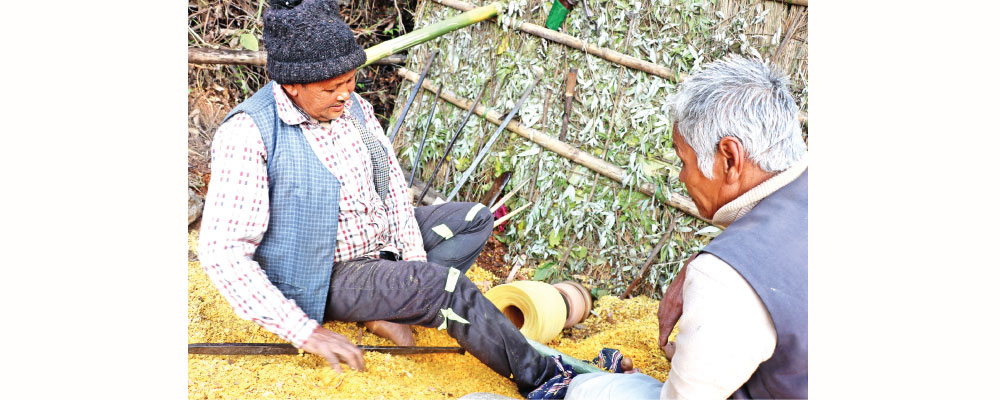

By Kabiraj Ghimire,Hile, Jan. 24: Dirgha Bahadur Paudel of Mahalaxmi Municipality-4 in Dhankuta is engaged in the theki (traditional wooden vessel) business for a few months during the winter. For the rest of the year, he remains busy with agriculture, but for around three months in winter, he is fully occupied with commissioning and selling theki.
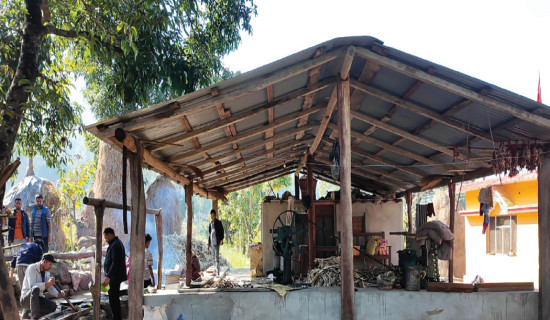
Even after electricity reached villages and various technologies were introduced for manufacturing wooden products, Paudel continues to make theki using only a traditional water-powered lathe (chundaro).
Water brought from a nearby stream is dropped from a height of about five metres using water force to rotate the lathe.
Wood is then placed on the rotating lathe, where skilled craftsmanship transforms raw timber into shape, and theki are produced. This is the traditional method of making theki.
Due to the shortage of chundaro systems and suitable timber, this method is gradually disappearing in many places, but in some parts of Dhankuta, this tradition is still practised. Wood from trees such as dar and jackfruit is considered suitable for making theki.
Paudel said that he produces and sells around one hundred thekis a year, with capacities ranging from three to thirty-six kuruwa. He also makes and sells vessels used for drinking tongba (traditional liquor) as well as harpe (a pot used to keep dairy products).
Theki are sold at the rate of Rs. 300 per kuruwa. Within three months, he does business worth around Rs. 600,000.
Paudel stated that theki made using water power are cheaper than those produced using electricity and other equipment. “When electricity is used, the cost of power and technology is higher. When made using water, electricity costs are saved, and the product becomes cheaper,” he said.
According to him, theki made using water are up to Rs. 100 cheaper per kuruwa than those made using electricity.
There is good demand for theki made from dar and jackfruit wood. However, due to the shortage of timber and chundaro, this technology itself is on the verge of disappearing.
At present, timber has to be brought from Bhojpur and chundaro from Udayapur. In some areas of Dhankuta, not only theki but also grain grinding is still carried out using water power instead of electricity.
Ward Chairperson of Mahalaxmi-4, Shukra Raj Budhathoki, said that in some other parts of the municipality, theki are being made using water power, and two water-run mills are also in operation.
-original-thumb.jpg)