- Thursday, 4 June 2026

Snowless winter turns Jumla’s mountains bare
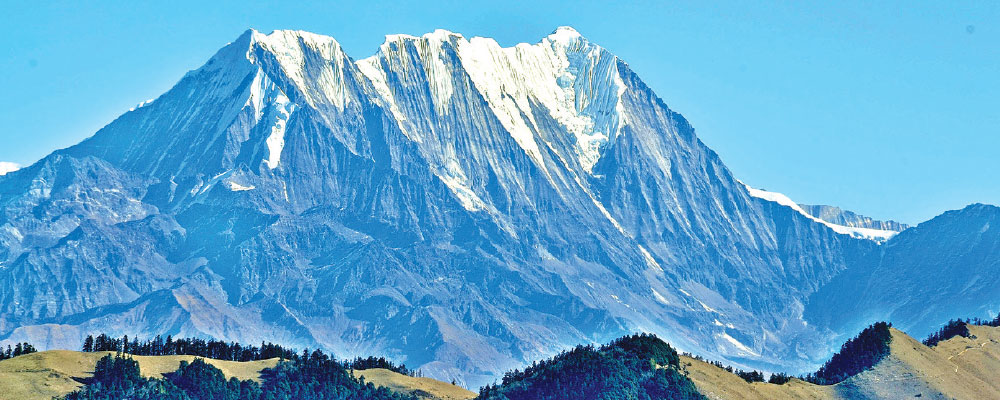

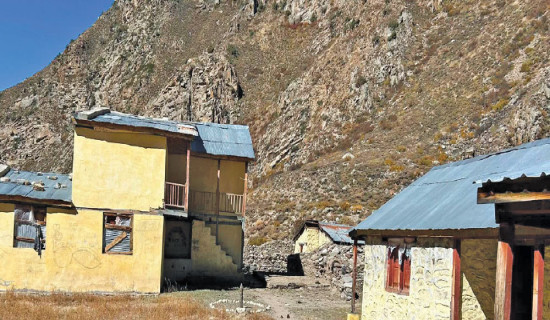
By Naurate Nepali,Sinja (Jumla), Jan. 13: As winter nears its end, the Himalayan district of Jumla in Karnali Province has yet to receive snowfall this season, leaving mountains bare and farmers worried. The Patarasi Himal in Patarasi Rural Municipality and the Kanjirowa Himal in Guthichaur Rural Municipality, which are usually covered in thick snow by this time of year, remain snowless even in mid-January.
Locals said that the mountains, once bright white in winter, are now turning dark and rocky, resembling bare black stones (kala patthar). Normally, heavy snowfall in December and January gives these peaks to their characteristic white cover.
However, with no snowfall so far, even the old snow accumulated in previous seasons has continued to melt. In past years, both Kanjirowa and Patarasi mountains were clearly visible from Jumla Bazaar, gleaming white throughout the winter. This year, patches of exposed rock dominate the slopes. Local resident Saroj Shahi said the disappearance of snow from the mountains is not just a loss of natural beauty but a clear sign of an environmental crisis.
“Melting snow means drying water sources, unstable weather patterns and, in the long run, serious impacts on our entire way of life,” he said. With mountains and surrounding hills looking dry and dull instead of snow-covered, residents say they are experiencing the effects of climate change first-hand.
A serious climate warning
Climate expert Dipesh Acharya said the absence of snowfall and the rapid melting of existing snow indicate that the impacts of climate change are becoming increasingly visible in Himalayan districts.
“Melting mountain snow can lead to long-term problems such as drying rivers, streams and springs, loss of biodiversity and serious risks to the Himalayan lifestyle,” he said.
According to Acharya, rising temperatures and irregular rainfall patterns are key indicators. “In previous years, snowfall was common by this time. This winter, there has been none so far,” he said , adding that exposed rocky ranges where snow should be present are a worrying sign.
The situation in Jumla reflects a broader trend across other Himalayan districts of Karnali, where snowfall has been steadily decreasing. This has made it clear that climate change is no longer a distant threat but a present and growing challenge.
Farmers hardest hit
The lack of snowfall has hit farmers the hardest. In Jumla, winter crops such as barley, wheat, naked barley (uwa) and apples depend heavily on snow, which acts as natural irrigation. This year, however, neither snowfall nor sufficient rainfall has occurred, causing fields to dry out.
Farmer Moti Lal Budha of Guthichaur Rural Municipality-2 said seeds sown in his fields have failed to germinate properly.

-square-thumb.jpg)