- Thursday, 4 June 2026

RSP’s Tsunami Routs Old Parties

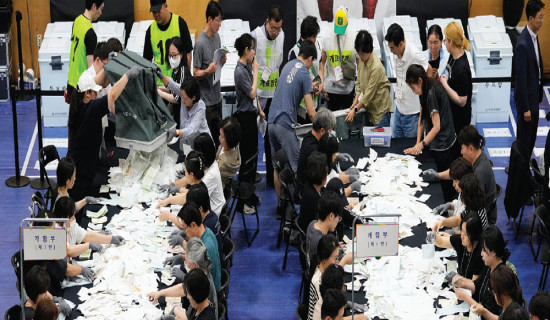
The elections to the House of Representatives (HoR) have delivered a strong message to the political parties: the people mercilessly punish those that play flippancy with their mandate. Based on the initial results of the elections, Rastriya Swatantra Party (RSP) is heading to secure a two-thirds majority in the Lower House. This will be an unprecedented gain for the RSP in the country’s electoral history. This can be compared to the Nepali Congress’s similar success in the first general elections held in 1959. Then, the NC had bagged 74 seats out of a 109-member HoR.
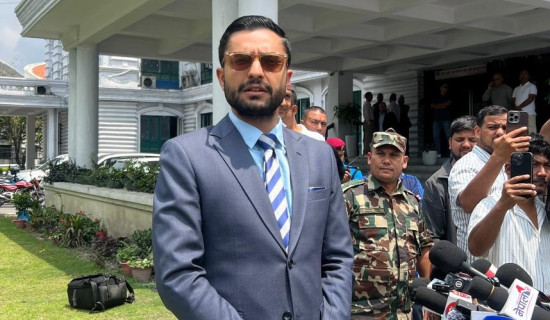
The RSP’s outstanding performance in the election has been credited to Balendra Shah’s soaring popularity among the people of all age groups. As he took a plunge into national politics by joining the RSP, the people began to see their icon in him, as they were disappointed with the traditional parties. Now he has already defeated former prime minister and CPN-UML chair KP Sharma Oli in Jhapa-5 by a huge margin. This will be a big blow to the UML, which has suffered the worst drubbing in its life. The present disaster is worse than the trouncing it faced in the first Constituent Assembly election in 2008.
Spectacular win
Though the RSP’s spectacular win has surprised many, it is consistent with the voting trend if one minutely analyses the past elections. The people have given a large mandate to the parties that led the democratic movements. The NC, UML and erstwhile Maoist Centre rose to the national scene because of their role in the revolution and nationalist stance. The current elections were held in the wake of the Gen Z movement in September last year. Unlike the previous movements, this took place on the plank of good governance. The then government of NC and UML had created ground for thousands of youths to take to the streets by banning the social media sites, which have become a lifeline of digital communication. It was a spontaneous outburst against the misrule, corruption, syndicate and crony capitalism that thrived under the governments of left and democratic parties. They even went to the extent of ‘selling’ their own citizens for their pecuniary interest.
Over 76 people, mostly the youths, were killed in the two-day protest on September 8 and 9. Public and private property worth billions of rupees were gutted and vandalised. The Oli-led government collapsed and the HoR was dissolved. Instead of expressing an apology for the death of innocent people, Oli and his coterie went on to denounce the youth movement, calling the young protesters ‘terrorists’ and ‘foreign agents.’ This is too much for most Nepalis, who converted their anger into ballots in the elections.
They handed a humiliating defeat to the then ruling parties – NC and UML, that had overnight entered into an unnatural alliance to foil an investigation into the Bhutanese refugee scam in which Oli's aides and former prime minister Sher Bahadur Deuba and his spouse were allegedly involved. The RSP has owned up to the Gen Z movement and won the sympathy of the overwhelming number of the masses. Most of the youths, who were part of the Gen Z revolt, are now with the RSP. Some of them have contested the elections with their tickets.
Balen, 35, a rapper-turned politician, has already become a model for youths. His stance against corruption and call for clean government has been well received by the people who have been frequently dismayed and betrayed by the same bunch of leaders. He was elected to the post of mayor of Kathmandu Metropolitan City as an independent candidate in the 2022 local elections. He mopped the floor with parties’ heavyweight candidates. But, upon his election as the mayor of the metropolis, he did not receive cooperation from the deputy mayor and ward chairs who got elected from the major parties. Even the federal government under Oli left no stone unturned to fail him. But what he did in the capacity of mayor has won the hearts of the people. They had also noticed non-cooperation of party-affiliated elected representatives and penalised them in the polls.
The RSP’s landslide has virtually sunk the Nepali Congress, CPN-UML and Nepali Communist Party. For decades, these parties turned politics into their private fiefdom, elevated themselves as contractors and people as mere spectators. But they miserably failed to notice that the citizens have been closely noticing their words and actions. The people have exercised their sovereign right to seal the fate of the parties. The poll outcomes bear far-reaching implications for the parties and national politics as well.
Death knell
The elections have tolled the death knell for Nepal’s communist movement, thanks to the arrogance and egoism of Oli, who dissolved a communist majority parliament twice and kicked out his own influential comrades from the party for their critical approach to the leadership. Like the communists of West Bengal, Nepali communist parties risk being consigned to the dustbin of history. Once the largest communist parties, the UML and the NCP are now ironically struggling to become the national party. Known for their cantankerous nature, they have often indulged in futile ideological disputes and remained out of common touch. They have even beaten the so-called capitalist parties in committing corruption and siphoning off the state resources.
In 2019, when Chinese President Xi Jinping visited Nepal, he had a candid conversation with Nepali communist leaders. Xi noted that the Chinese Communist Party has governed the country not solely because it once led the revolution but because it continuously served the people. He suggested that leading a single revolution does not guarantee perpetual public support; the party must unremittingly dedicate itself to the service of the citizenry. But Nepal’s communist leaders only sought to cash in on their past revolutionary acts and played little role in bringing transformative changes to the life ordinary people. The elections have given them a hard lesson. As you sow, so shall you reap.
(The author is Deputy Executive Editor of this daily.)