- Saturday, 2 May 2026

Prevent Misuse Of Multivitamin Supplements

With the modernisation, the use of multivitamins has become more common than it is necessary. They are often presented in colourful bottles in all pharmacies as well as small town grocery stores with a promise of providing energy, boosting immunity, sharpening memory, and even longevity. People often mistakenly shallow a daily multivitamin in belief of maintaining good health. In doing so, they are ignoring the issue of misuse of multivitamins.
Multivitamins were developed basically to treat nutritional deficiencies. In societies suffering from malnutrition, poverty, chronic illness, or special physiological conditions such as pregnancy, supplementation can be life-saving. Iron and folic acid supplementation during pregnancy significantly reduces maternal anaemia and defects in the newborn baby. Calcium and vitamin D prevent rickets and osteoporosis. Hence, in such particular situations, vitamins can be useful for preventing ailments and are powerful tools of preventive medicine.
Problem
It is important to note that the problem arises when supplementation shifts from need-based to habit-based. People often take multivitamin supplements without any medical condition. Individuals self-medicate supplements even when there is no need for it, such as in cases of a slight feeling of tiredness, hair fall, or even minor illnesses. Aggressive advertising and nowadays social media amplify the belief that vitamins help maintain good health. This trend has boosted the supplement industry, and many people consume multivitamins that may offer little benefit but can sometimes cause harm.
There is a myth that vitamins are free of harm, as they are natural, which is misleading. Vitamins, in fact, are essential in small amounts, but excessive intake can cause toxicity. Fat-soluble vitamins, such as A, D, E, and K, can accumulate in the body and cause harmful effects. For example, high doses of vitamin A can cause liver damage, bone pain, and, in severe cases, birth defects. Similarly, excessive amounts of vitamin D produce high levels of calcium and can cause kidney stones and organ damage. There are evidences that even water-soluble vitamins such as vitamin C and B-complex can cause gastrointestinal disturbances and nerve damage when consumed in very high doses over time.
Aggressive advertising gives a false sense of security that is misleading. People who consume supplements often neglect balanced diets. Fiber, antioxidants, phytonutrients, and healthy fats found in whole foods can not be replaced by a tablet. A balanced amounts of fruits, vegetables, whole gains, pulses, nuts, and dairy products provide vitamins as well as other substances that protect us from chronic diseases. Therefore, supplements containing multivitamins alone can pose a risk of long-term health complications if dietary habit become poor.
In developing economies such as Nepal, where nutritional challenges coexist with rapid urbanisation, the misuse of multivitamins reflects a paradox. People in rural and from marginalised communities still suffer from iron deficiency, anemia, and vitamin A deficiency, whereas urban populations consume supplements indiscriminately. On the one hand, people can buy multivitamins from a grocery store as well as from pharmacies over the counter; on the other hand, many healthcare providers prescribe them routinely even when laboratory evidence of deficiency is absent.
This practice raises both ethical and economic concerns. For people from low- and middle-income families, spending money on unnecessary supplements strains household budgets. This leads to families allocating less funds to nutritious foods, clean water, and preventive healthcare. The elderly population is more vulnerable to this practice, as many of them take multiple medications for chronic conditions such as diabetes, hypertension, and heart conditions. The risk of drug-drug interactions increases when multivitamins are added without medical supervision.
There are many instances when drug-drug interactions can even be life-threatening, such as when vitamin K can interfere with blood thinners like warfarin. Polypharmacy is a great concern among elderly populations, and adding supplements without medical supervision creates more complexity. For children suffering from nutritional deficiencies, supplements may be necessary, but routine use in healthy children is rarely necessary.
The misuse of vitamin supplements was more intense during the COVID-19 pandemic. In hopes of boosting immunity, many people consumed high doses of Vitamin C, zinc, and vitamin D. It is to be noted that high doses of supplementation do not further support immune function in the general population. Several steps are necessary to address this issue. The first and most important is to conduct large scale public awareness campaign. People should be made aware that vitamins are not magic pills and cannot replace balanced diets. The risk of over-supplementation should also be emphasised in health campaigns.
Evidence-based prescribing
Another important aspect is to encourage healthcare providers to adopt evidence-based prescribing practices. Routine and indiscriminate prescribing of multivitamins should be discouraged by respective councils. Counselling patients on dietary improvements over supplementation should be prioritised.
The regulatory authorities should strengthen monitoring of supplement marketing. Misleading and false claims of boosting immunity and enhancing intelligence should strictly be scrutinised. There should be mandatory labelling about recommended daily allowances and potential risks of excessive intake.
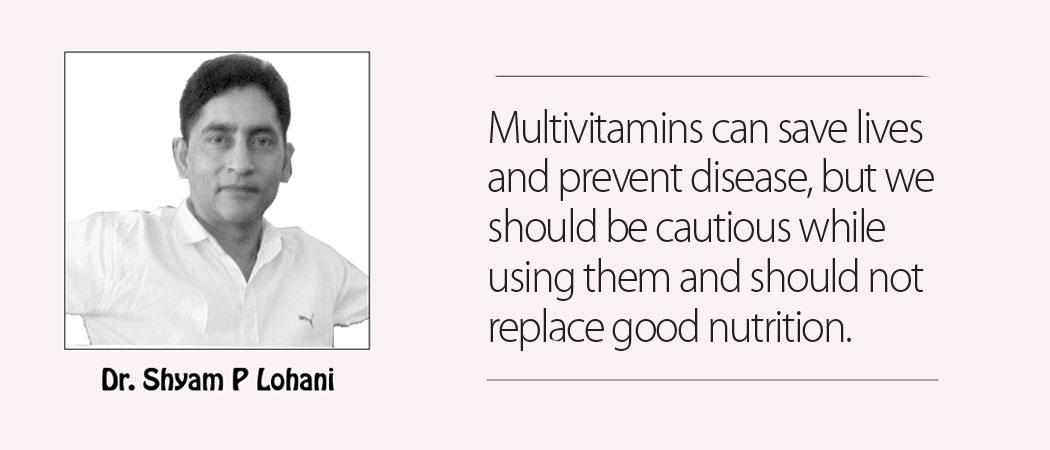
Lastly, we should take personal responsibility. It is necessary to consult a qualified healthcare professional before taking any supplements. It is important to note that a simple blood test can detect whether deficiencies exist. In many cases, improving diets, sleep, and physical activity can be sufficient to resolve symptoms that are often attributed to a vitamin deficiency. Multivitamins can save lives and prevent disease, but we should be cautious while using them and should not replace good nutrition.
(Dr. Lohani is the clinical director at the Nepal Poison Information Centre. lohanis@gmail.com)
-original-thumb.jpg)