- Tuesday, 26 May 2026

School As Zone Of Peace
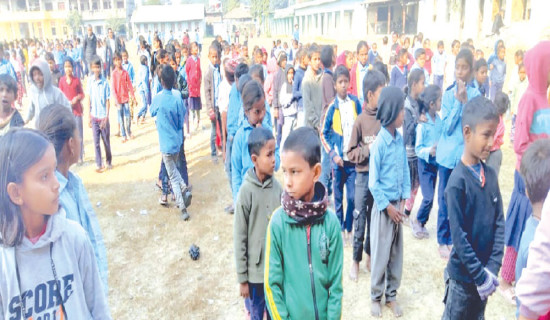
On December 22, Janapakshiya Students' Union, a little-known student organisation, called for the shutdown of schools in the Kathmandu Valley, much to the surprise of parents, children and school operators. The news of shutting down the schools was a bolt from the blue for them. The owners closed their schools for fear of what could befall them.
Likewise, a news report, published in Gorkhapatra Online on January 1, reported that in Kamala Municipality, in Dhanusha district, teachers took to the streets in protest after going without pay for five and a half months because the current fiscal year’s budget could not be passed due to internal disputes among elected representatives.
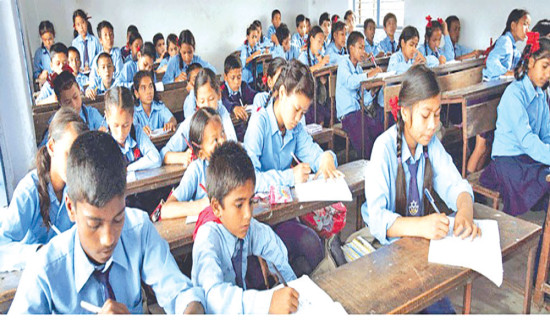
Earlier in April 2025, teachers organised a long protest over unmet promises in Kathmandu. Teachers were demanding a new educational bill that includes facilities for them. While all community school teachers were in Kathmandu for almost a month, students were deprived of their right to education.
Teachers, who are supposed to protect the rights of children, ironically, announced the closure of academic institutions. Sometimes, school closures are announced by school employees demanding their rights. It shows that every interest group seeks to use innocent students to fulfil their demands.
Such an announcement as part of agitation is not a new issue. School children are deprived of their right to education as enshrined in the constitution. It is against the school as a zone of peace (SZOP) and children as a zone of peace (CZOP). During the agitation, the agitators claimed that they were protesting for governance, political reform, and accountability, but the action of closing educational institutions stands in stark contrast to those ideals.
The concept of SZOP is widely accepted, especially in societies that are politically sensitive and affected by conflict. It was initiated by UNICEF in collaboration with Save the Children and child rights organisations to make educational institutions impartial, secure, and unbroken. Schools and school children were victimised during ten years of armed conflict, as many schools were used for political indoctrination, shelter, and other means.
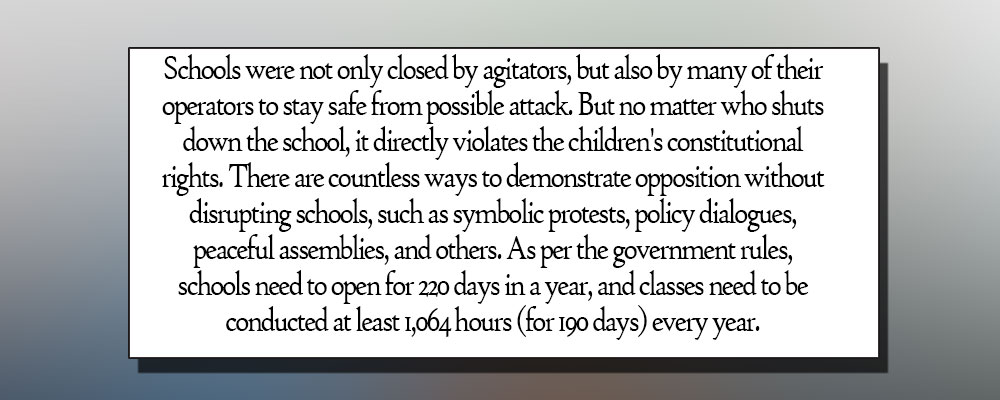
Schools were not only closed by agitators, but also by many of their operators to stay safe from possible attack. But no matter who shuts down the school, it directly violates the children's constitutional rights. There are countless ways to demonstrate opposition without disrupting schools, such as symbolic protests, policy dialogues, peaceful assemblies, and others. As per the government rules, schools need to open for 220 days in a year, and classes need to be conducted at least 1,064 hours (for 190 days) every year.
However, schools are facing difficulty in making this happen because of frequent disturbances in education and the closure of schools. It seems that the agitators who are demonstrating for their rights are completely neglecting the rights of those innocent children. It is an injustice for those voiceless children. Despite moral obligations, there is no particular provision to act against those calls for school closure for different pretexts, making it difficult to prevent such irresponsible acts altogether.
Schools must remain zones of peace. Children are the future; we have to protect them. The SZOP concept is not just a symbolic act; it's an ethical and constitutional imperative. The best way to protect the future is to protect the children’s present. So, don’t compromise in the education of the children.

<p>She is Journalist in The Rising Nepal .</p>