- Thursday, 4 June 2026

Report reveals deep learning gaps among 10 graders
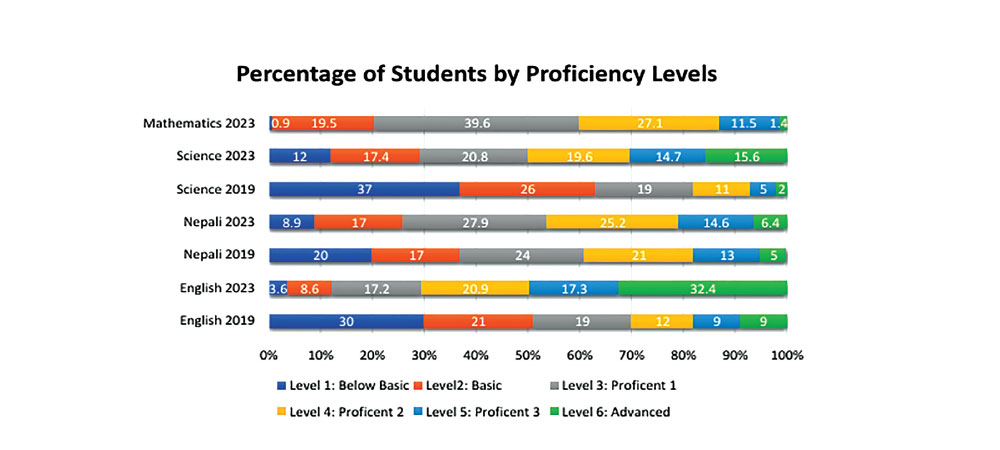
Kathmandu, Jan. 28: A government agency has revealed the ongoing learning gaps among grade 10 students across Nepal. A study named National Assessment of Student Achievement (NASA) conducted recently by Education Review Office (ERO) made public among journalists on Tuesday shows significant differences in learning achievement based on province, geography, school type, gender, and socio-economic background. It also shows slight improvements in Science and English since the 2019 assessment, but a large number of students still fall below minimum proficiency levels, especially in Mathematics and Nepali.
The nationwide assessment, carried out by the ERO under the Ministry of Education, Science and Technology (MoEST), evaluated 43,219 Grade 10 students from 1,800 schools in 76 districts. Students were assessed in four core subjects: Mathematics, Science, English, and Nepali using curriculum-based, standardized tests.
At the national level, the average achievement scores were 500 in Mathematics, 504.83 in Science, 515.11 in English, and 498.68 in Nepali. Compared to NASA 2019, Science scores increased by nearly five points, while English rose by 15 points. However, Nepali scores dropped slightly, showing no improvement in language skills despite curriculum changes.
Mathematics remains the weakest subject. The report indicates that nearly 60 per cent of Grade 10 students are at or below proficiency level 1, meaning they do not meet basic learning expectations set by the national curriculum. Only about 40 per cent of students displayed adequate math skills.
There are significant disparities in achievement scores across provinces. Bagmati and Gandaki provinces consistently show higher average scores, while Karnali and Sudurpaschim provinces lag behind. In Mathematics, Bagmati leads with the highest mean score, while Karnali has the lowest. Similar trends are observed in Science, English, and Nepali.
Achievement scores are significantly lower among students from rural municipalities compared to those from urban municipalities. Urban municipalities have higher mean scores in all subjects, highlighting the need for targeted educational interventions in rural areas to bridge the achievement gap.
Likewise, there is a significant difference in achievement scores between institutional and community schools. Institutional schools have higher mean scores across all subjects compared to community schools.
Notable gender disparities exist in achievement scores. Boys significantly outperform girls in Mathematics, Science and English, while girls outperform boys in Nepali. These findings highlight the need for gender-sensitive educational strategies to address these disparities.
Students living at half an hour’s walk from the school have significantly better results in Mathematics, Science and English. In Nepali, students living closer to the school (up to 15 minutes) achieve the highest scores, while those living more than two hours away have the lowest scores.
The report also indicates students having Nepali as their domestic language achieve significantly better scores across all subjects. Students from Brahmin/Chhetri backgrounds consistently perform better, while those from Dalit backgrounds score significantly lower. These findings underscore the need for targeted educational interventions to address disparities based on language and ethnicity.
Significant differences in achievement scores are observed across ethnic groups and geographic regions. Madhesi students have the highest scores in Mathematics, while Pahade students lead in Science and Nepali. Himali students score the lowest in all subjects, highlighting the need for targeted educational interventions to address these disparities.
There is a positive correlation between parental education levels and student achievement. Students whose parents have higher education levels consistently achieve better scores across all subjects, highlighting the importance of parental education in influencing academic success.
Parental occupation significantly impacts student achievement. Students whose parents are involved in teaching and business achieve higher scores, while those whose parents are engaged in farming and housework score lower. This trend is consistent across all subjects.
Similarly, time management outside school significantly affects achievement scores. Students who spend 2-4 hours on TV/Internet/Mobile, minimal time on household chores, and more than four hours on study/homework perform the best. Balanced time management is crucial for optimizing academic performance.
And study support plays a significant role in student achievement. Students receiving tuition support, collaborating with friends, or engaging in self-learning achieve higher scores. Tailored support strategies are essential to optimize academic performance.
Access to home facilities such as a study table, separate room for study, computer, internet, and other learning resources significantly boost student achievement. Students with better home facilities consistently achieve higher scores across all subjects.
Regular feedback, consistent teacher presence, and effective classroom time management significantly improve student scores across all subjects. The use of digital resources and the internet in classroom activities also enhances performance. Students who do not experience bullying achieve higher scores in all subjects.
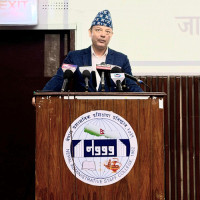
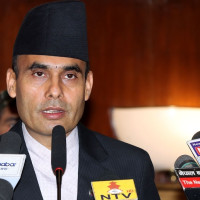
Speaking at the interaction programme with journalists, Jayaram Adhikari, director general of the ERO, said the ERO has suggested for focused efforts to tackle regional and socio-economic inequalities. They have been working school education performance audit with an expectation that the findings provide evidence-based guidance for reforming school education in Nepal.
The ERO has been working under the Ministry of Education, Science, and Technology (MoEST) with the mandate to conduct independent performance audits of schools and institutions. Its primary goal is to assess student achievement levels to promote institutional accountability and enhance the quality of education.

<p>She is Journalist in The Rising Nepal .</p>
-original-thumb.jpg)
-square-thumb.jpg)