- Thursday, 4 June 2026

Treat Menstruation With Dignity
Recently, the world observed International Dignified Menstruation Day, in a reminder that menstruation is a matter of human rights, gender equality, and dignity. Menstrual discrimination still exists throughout Nepal, although discussions about equality between sons and daughters have progressed, and the majority of families no longer discriminate in opportunities, education, or nutrition. Globally, 1.8 billion people worldwide menstruate every month, according to UNICEF Nepal. Despite being a biological process, these people have been facing trouble during menstruation because of widespread gender-based discrimination.
Many South Asian and African cultures view menstruation as shame, impurity, and restriction. Teasing or a lack of toilets makes girls miss school. Girls are unable to live a normal life because of menstruation. While talking about menstrual discrimination in Nepal, Sudurpashchim comes to mind because of the chhaupadi custom, which keeps girls in small huts far from home during their period. In the Nepali community, women are restricted from entering kitchens and temples – a myth that is also common in India. Likewise, myths in Afghanistan falsely claim that washing during periods causes infertility. Menstruating girls in some African communities are forbidden from touching livestock or doing daily tasks.
Harmful practices
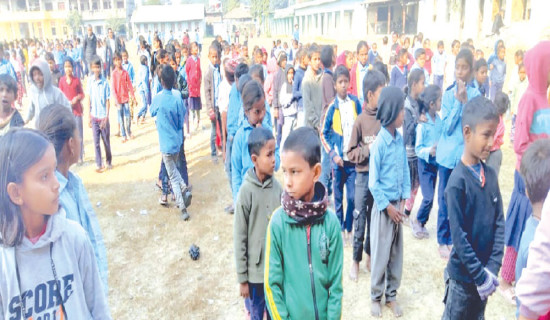
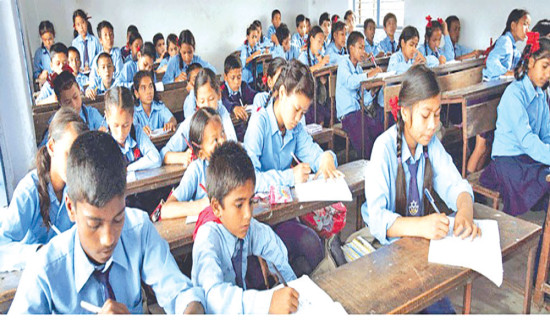
The UN Human Rights Council has repeatedly stated that period stigma and harmful practices violate dignity, equality, health, education, and freedom. According to a UNICEF report, in many low-income countries like Nepal, the education of adolescent girls is disrupted because of menstrual taboos and a lack of adequate crucial facilities, such as water, sanitation, among others. This inadequacy affects girls' experiences at school.
Today, more girls attend school, families value daughters more than ever, and legal reforms promote gender justice. But traditional norms prevail in the case of menstruation. The 2022 National Demographic Health Survey found menstrual discrimination rates of 75.8 per cent in Koshi, 80.6 per cent in Madhes, 68.7 per cent in Bagmati, 64.7 per cent in Gandaki, 61.6 per cent in Lumbini, 74.7 per cent in Karnali, and 69.7 per cent in Sudurpashchim. These figures prove that harmful practices are not limited to Sudurpaschim. Radha Poudel, a campaigner of dignified menstruation, stated that menstrual discrimination is widespread across geography, caste, class and socioeconomic status. The forms of discrimination can vary from location to location.
But the practice of dignified menstruation is still a far cry, said Poudel. Sleeping in Chhaughot during the period is still prevalent in Sudurpashchim. Likewise, in some other parts country, menstruating girls had to sleep in cold and poorly ventilated rooms. They are restricted from entering their bedrooms and touching their siblings. There is a widespread practice of early morning baths, even in winter, under the belief that ritual cleansing is required, and food restrictions are common.
Many girls are told to avoid milk, meat or pickles, depriving them of essential nutrition at a time when their bodies need nourishment. Girls can't enter kitchens, participate in religious activities, and household chores. This is less visible than chhaugoth but equally harmful. Campaigner Poudel said the situation has changed quite now. But, even now, modern and educated women say that they do everything during menstruation except worshiping god, which is also not the practice of dignified menstruation.
Nepal's constitution has embraced the principles and spirit of the Universal Declaration of Human Rights (UDHR) by stipulating 31 fundamental rights of the citizens. They include freedom to live with dignity, the right to equality, justice, education, health, food, shelter, employment, and social security. But menstrual discrimination restricts women from enjoying all these rights. From a human rights perspective, menstrual discrimination violates several fundamental principles. Treating women as impure violates their right to dignity. Restricting food, movement or behaviour violates their rights to freedom and equality. School absenteeism affects their right to education, and harmful practices compromise their right to health.
Forum of Women, Law and Development (FWLD)'s Nabin Kumar Shrestha said different laws, including the Penal Code, criminalise menstrual discrimination, but the centuries-old practices continue to prevail as customs. For dignified menstruation, girls and women must have access to safe and affordable sanitary materials – something indispensable to reduce the risk of infections. Promoting menstrual health and hygiene is an important means for safeguarding women’s dignity, privacy, bodily integrity, and, consequently, their self-efficacy. Awareness contributes to building an enabling environment of non-discrimination and gender equality, one where female voices are heard, girls have choices about their future, and women have options to become leaders and managers.
Empathy
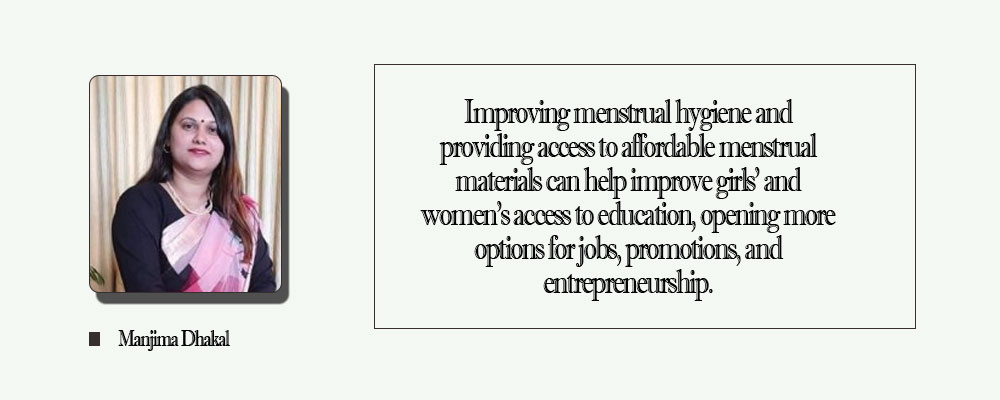
Improving menstrual hygiene and providing access to affordable menstrual materials can help improve girls’ and women’s access to education, opening more options for jobs, promotions, and entrepreneurship, thus unleashing female contributions to the overall economy. Community-based discussions involving mothers, teachers, local leaders and adolescent boys have shown positive impacts in different districts. The creation of champions who can influence society is required for social transformation, Shrestha suggested. Engaging men and boys is essential because menstruation is still seen as solely a woman’s issue. When boys understand menstruation as a natural process, teasing decreases and empathy grows.
Our school curricula discuss only the part of menstrual dignity. Currently, it only covers the part of hygiene. On a policy level, the government should ensure access to free sanitary products in schools, gender-friendly toilets, among other requirements. Despite challenges, Nepal is at a hopeful moment. The increasing visibility of menstruation in public discourse, the courage of young girls to speak up, and the willingness of communities to change – all signal a shift in mindset. Dignified menstruation is ultimately a social transformation, not just a health intervention. It is about respecting bodily autonomy, ensuring equal opportunities and recognising that menstruation is a normal aspect of human life.
(Dhakal is a journalist at this daily.)
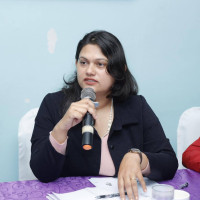
<p>She is Journalist in The Rising Nepal .</p>