- Sunday, 3 May 2026

Annual waterbird count begins
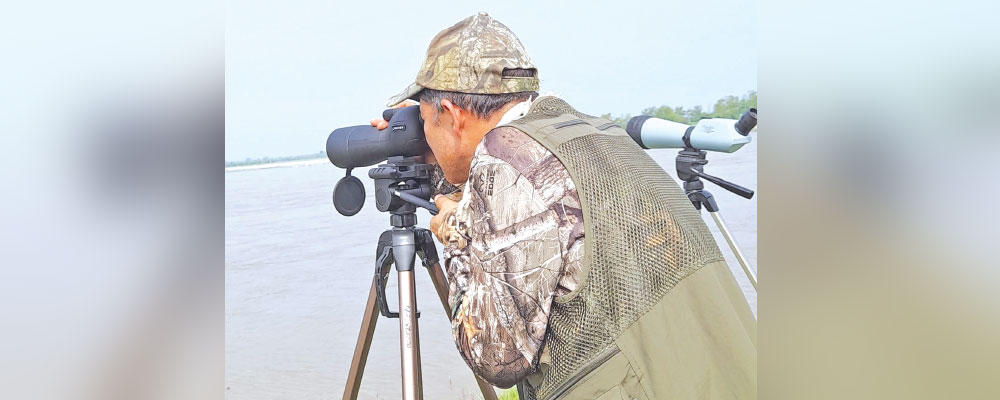
Photo: Baburam Karki Bird observers counting waterbirds during the census.

By A Staff Reporter, Kathmandu, Jan. 4: The annual waterbird census began on Saturday. It is part of the global International Waterbird Census (IWC), one of the world’s longest-running biodiversity monitoring programmes.
During the 16-day count, data will be collected on water-dependent, water-associated, resident and migratory bird species across the country’s wetlands.
According to a press statement issued by Nepal Ornithological Union (NOU) on Saturday, in the IWC that started in 1967, tens of thousands of volunteers and professionals worldwide gather at wetlands each January to count waterbirds. It is a global citizen science initiative that tracks the health of bird populations and the ecosystems they rely on.
From frozen lakes in Europe to tropical mudflats in Asia, the census provides a vital snapshot of the waterbird population.
Nepal joined the census in 1987 and has since become an important contributor to the regional and global effort. Today, around 400 citizen scientists participate in the annual count across the country, coordinated nationally by the Nepalese Ornithological Union (NOU), the statement said.
The NOU provides technical guidance to field counters and is responsible for collating and verifying all data submitted from wetlands nationwide.
Nepal’s diverse wetlands -- ranging from rivers, lakes and reservoirs to marshes and floodplains -- offer ideal habitats for waterbirds. These sites provide abundant food such as fish, insects and aquatic vegetation, while many wetlands within protected areas offer relative safety from hunting and disturbance, it said.
The IWC produces reliable data that help identify key wetlands, monitor long-term population trends and assess the impacts of environmental change.
Over the past six decades, the IWC has been carried out in 189 countries and territories, covering more than 67,000 sites and counting over 1.9 billion waterbirds. This extensive dataset allows conservationists to distinguish genuine population trends from short-term fluctuations, read the statement.
In Nepal, IWC and Annual Waterbird Census data have helped inform major policies and strategies, including the National Wetland Policy 2012, the Protected Area Management Strategy 2022-2030, and the Biodiversity Strategy and Action Plan.
The data are also used by the Department of National Parks and Wildlife Conservation, research institutions and academics to assess wetland health, plan conservation actions and understand the breeding and migration status of waterbirds, the statement said.
Internationally, AWC data support assessments under the IUCN Red List, the Ramsar Convention on Wetlands and the East Asian-Australasian Flyway Partnership.
The long-term data have contributed to the designation of around 1.5 million square kilometres of wetlands worldwide as Ramsar sites and strengthened international cooperation for the protection of migratory species.
Dr. Taej Mundkur, AWC coordinator at Wetlands International, said the dedication of volunteers, governments and partners has helped protect thousands of wetlands and safeguard migratory and resident waterbird species, including globally threatened ones.
Describing the census as a celebration of conservation, prominent ornithologist Dr. Hem Sagar Baral said the Asian Waterbird Census in Nepal represents the country’s longest-running and largest network of citizen scientists. “It is a festive-like occasion where ornithologists, nature guides, photographers, policymakers and the public come together, making it a truly productive wetland bird festival,” he said.
Meanwhile, our Barahakshetra correspondent Baburam Karki reported that bird experts and trained observers began the census early Saturday morning at sites including Dhanushadham in Janakpur, the Kamala River and Ghodaghodi Lake. Observers are using cameras, binoculars and telescopes to identify and count the birds.
The census is being carried out under the leadership of the Department of National Parks and Wildlife Conservation, in coordination with the Nepalese Ornithological Union.
Counts are carried out at lakes and wetlands in and around national parks and wildlife reserves, depending on the availability of observers. Although Nepal has 10 wetlands listed under the Ramsar Convention, bird counting will take place at six of these sites this year due to geographical difficulties, according to the NOU.




-square-thumb.jpg)