- Saturday, 30 May 2026

Reaching Global Audience

Referred to as the fourth pillar of democracy, the media play a crucial role in strengthening democracy by informing, educating and empowering citizens. By exposing corruption and misuse of power, the media makes government institutions and public servants more accountable and ensures transparency. However, they should reach the public; otherwise, they cannot fulfil these key responsibilities. Likewise, in the globalised world, the media of a country should also reach beyond the border, informing the global audience about the happenings taking place within the country.
However, till now, Nepal has been missing this and has occasionally fallen prey to misinformation. There had been several instances in which Nepal was a victim of misleading narratives, as our media failed to counter them effectively owing to limited broadcast reach. But such a situation has now come to an end with the launching of the NTV World Channel the other day. This is a dedicated English-language broadcast channel established with a clear aim of taking our news and perspectives clearly to the international community.
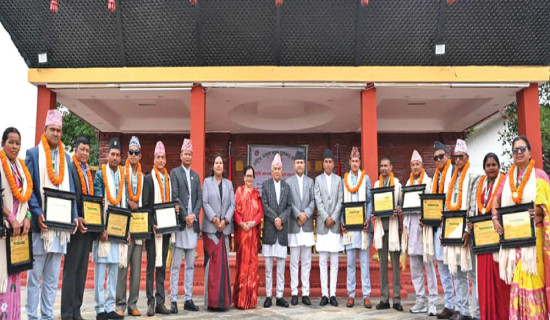
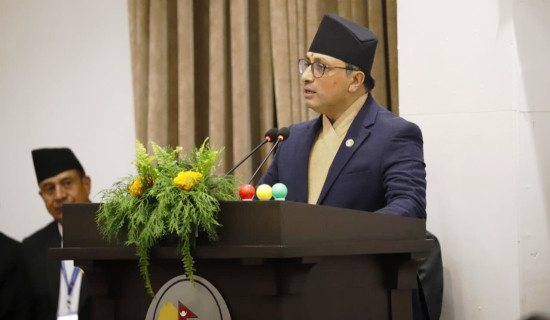
Nepal Television has been broadcasting programmes in English for a long time, but they have failed to reach the international audience. Keeping this in mind, the government had been working to establish the national world channel for a long time. However, due to bureaucratic and logistical challenges, it took years to materialise this. This need for a world channel in the English language has finally been fulfilled after President Ramchandra Paudel formally launched the NTV World Channel on the occasion of the first anniversary of the establishment of the Public Service Broadcasting (PSB) Nepal, the other day. With this, we will now be able to present our news, views and perspectives to the international community more effectively.
News channels with a capacity to reach the global audience will help strengthen international relations, attract tourists and bring in foreign investment. We can promote our tourist destination areas and heritages, lifestyle, culture and foreign policy. Most of our neighbouring countries have their own world channels. For lack of our own, often international communities relied on our neighbouring countries' news channels to get information regarding our issues. But such information could be distorted in the interest of the country airing our news. But with the establishment of NTV World, we can now counter misinformation and disinformation.
That said, the content we air should be strong, creative, innovative and its presentation should be refined and easily accessible. Minister for Communication and Information Technology, Jagdish Kharel, speaking after the inauguration of the NTV World, stressed the need for sustainability and diversity in its content. He suggested including the contents that highlight Nepal's identity. In this digital era, the media can be both bridge and barrier between bilateral relationships. Building a positive image of one's country through dissemination of factual information is a must.
With the advancement of information technology, many news portals and channels have proliferated. So it is difficult to differentiate between factual news and misinformation. Instead of disseminating facts these days, the media tend to sensationalise the issues. During this changing global scenario, the Public Service Broadcast, under which the NTV World functions, has both challenges and opportunities. It has to compete with the private channels, update itself to be relevant. To increase audience and views, it has to be technologically advanced and present wide range of programmes for diverse viewers. The programmes it presents should be qualitative and contemporary. The government's initiative to establish NTV World targeting the global audience is really praiseworthy.

-original-thumb.jpg)