- Thursday, 7 May 2026

Young students trained to make sacred thread
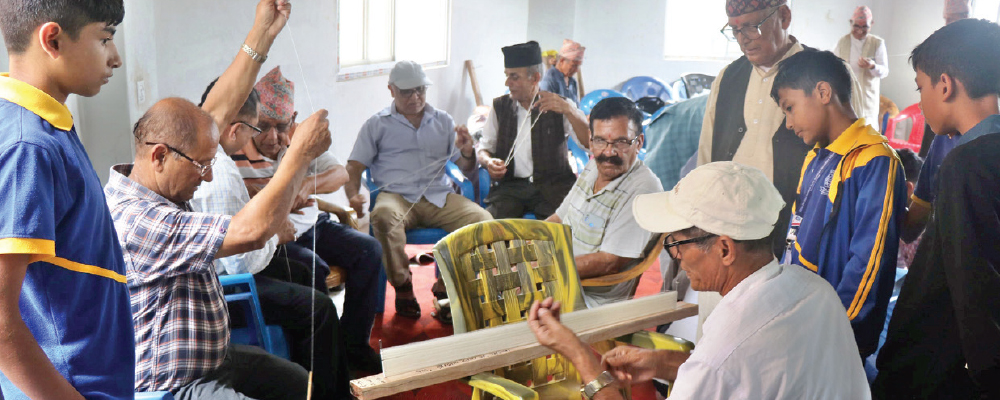

By Rekhiram Rana,Tansen, Aug. 19: With an aim of discouraging the use of imported janai (sacred thread) youths have been trained to make janai in Tansen.
The new and younger generation of students have been taught to make janai. The Active Brahmin Society in the district has taught the new generation to make janai with the aim of discouraging them from wearing machine-made janai.
With the arrival of Janai Purnima, the influence of imported janai has increased in the market.
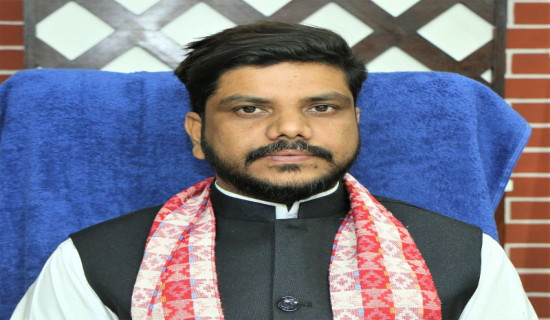
Dharma Chandra Nepal, President of the Society, said that young students had been taught to reduce the impact of imported janai and to make them self-reliant in indigenous janai.
He said that the new generation had been taught to make janai in traditional way to discourage factory produced imported janai.
He said that 39 teenagers, youth, women and elderly people from Tansen had also participated in preparing janai through traditional methods.
Pandit Narayan Aryal said that the training was given to preserve the traditional methods as the culture would not be preserved with imported janai made by machines.
Wooden instruments and Katuwa are used to make janai. The yarn is assembled in Trikhutti.
It is then grouped in chunks of 27 threads. After that is lifted and turned (on the finger). According to tradition, it is customary to take the Katuwa and take spin it on the right.
There is a religious belief that Brahma, Vishnu and Maheshwar stay on the crest of janai. Pandit Aryal said that after the Upanayana (Bratabandha) the tagadharis should not break the janai.
The men from Bramhin, Kshetriya and Vaishya varna (hierarchical group) wear the janai. Every year on the full moon day of Shravan Shukla Purnima, there is a tradition of changing the janai. This day is called Janai Purnima and the duration of the janai changed on this day is considered to be four months.
Earlier, it used to be made at home. Even women used to make it. Religious leaders have said that the younger generation should be taught to make janai through traditional methods. It will bring economic, social and cultural benefits, they said.