- Friday, 8 May 2026

Avert Mushroom Poisoning Risks

Spring signals the start of wild mushroom growing period. Amidst the breathtaking landscapes and rich biodiversity, Nepali communities have held the art of mushroom hunting, gathering an array of fungi for culinary delights. However, beneath the surface of this cultural practice lies a hidden danger: the risk of wild mushroom poisoning. While many species of mushrooms are edible and nutritious, others are highly toxic, mimicking their harmless counterparts in appearance and colour, leading to misidentification and consumption.
In the verdant hills and fertile valleys of Nepal, a long tradition of wild mushroom hunting has captivated the hearts and palates of locals. While mushrooms captivate with their diverse shapes, colours, and textures, not all are benign; some conceal deadly toxins that can wreak havoc on unsuspecting hunters. Mushroom poisoning encompasses a spectrum of illnesses caused by the ingestion of toxic mushrooms that contain harmful toxins such as amatoxins, muscimol, psylocibin, and ibotenic acid.
Myths
The most common myths associated with poisonous mushrooms are related to its identification. The common concept that all white mushrooms are safe to eat is wrong and result in poisoning. Often people think that heating the poisonous mushroom and stirring it with a silver spoon will draw the poison out of it and silver spoon turns black if poisonous, but you should never try this because this is false. Another common misconception is that poisonous mushrooms taste bad and poisonous mushrooms are red in colour. A poisonous mushroom can be of any colour indeed. People often think that mushrooms grown in groups are safe to eat. A few Nepali communities have the misconception that the first picked mushroom should be offered to God so that subsequently picked mushrooms will be safe.
Nepal's diverse ecosystems, ranging from lush forests to alpine meadows, harbour a wealth of mushroom species, each with its own unique flavour and culinary potential. For generations, Nepali families have ventured into the wilderness in search of wild mushrooms, gathering a variety of mushrooms to complement their meals. However, amidst the bounty of nature's offerings, there exists a perilous trap. Toxic mushrooms that resemble their harmless counterparts, poses a grave risk to unsuspecting foragers.
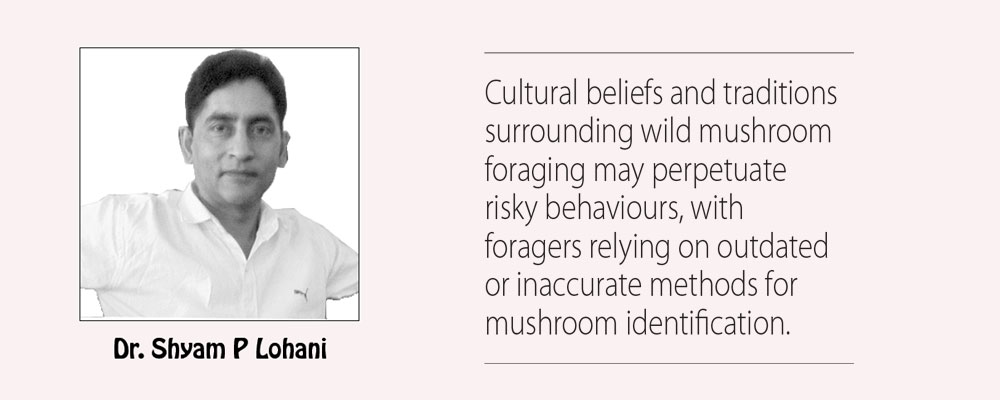
The factors contributing to wild mushroom poisoning in Nepal are multifaceted. Inexperienced hunters may lack the knowledge and skills to differentiate between edible and toxic mushrooms, leading to accidental consumption of poisonous species. Additionally, cultural beliefs and traditions surrounding wild mushroom foraging may perpetuate risky behaviours, with foragers relying on outdated or inaccurate methods for mushroom identification.
Furthermore, environmental factors such as deforestation, habitat destruction, and climate change can influence the distribution and abundance of mushrooms, altering the composition of fungal communities and increasing the prevalence of toxic species. Moreover, globalisation and increased travel facilitate the spread of exotic mushroom species and their associated toxins, posing challenges for public health authorities and healthcare providers worldwide.
The consequences of mushroom poisoning can range from mild gastrointestinal upset to life-threatening multi organ failures, depending on the type and amount of toxin ingested. Different types of mushroom cause different symptoms. Many wild mushrooms cause vomiting and diarrhea immediately; that may result dehydration and lead to emergency room visit. Few other species cause hallucinations and coma. A few highly toxic mushrooms cause no effects right away, but can damage the liver; a liver transplant may be necessary to survive. It is said that longer it takes to show symptoms, most deadly it is. Prompt medical attention is essential in cases of suspected mushroom poisoning, as early intervention can improve outcomes and prevent serious complications.
Despite the risks associated with wild mushroom poisoning, the attraction of foraging for wild mushrooms continues, specifically driven by cultural traditions, culinary curiosity, and poverty. However, the practice of mushroom foraging carries inherent dangers, particularly for inexperienced or uninformed individuals who may lack the knowledge and skills to differentiate between edible and toxic varieties. At the same time, it is not to forget that mushroom can fool even an expert mycologist. Always remember the popular Iris saying “there are old mushroom hunters, and bold mushroom hunters but no old bold mushroom hunters”.
In response to the risks of wild mushroom poisoning, education, awareness, and prevention are vital. Public health campaigns, outreach programmes, and educational initiatives can raise awareness about the dangers of wild mushroom hunting and promote safe practices for mushroom identification and consumption. Moreover, collaboration between healthcare providers, toxicologists, mycologists, and poison information centers is essential for improving diagnosis, treatment, and surveillance of mushroom poisoning cases. Rapid identification of toxic mushroom species and timely administration of antidotes and supportive care can save lives and reduce the burden on healthcare systems.
Unseen danger
Wild mushroom poisoning represents an unseen danger lurking in the natural world, posing a risk to those who venture into the realm of wild mushroom hunting. Furthermore, wild mushroom hunting in Nepal is a cherished tradition immersed in cultural heritage and culinary tradition. However, the risks of mushroom poisoning loom large, threatening the health and well-being of Nepali communities.
In conclusion, by raising awareness, promoting education, and promoting collaboration between stakeholders, we can decrease the risks of mushroom poisoning greatly and ensure that our fascination with fungi does not come at the expense of our health and safety, and ensure that this time-honoured practice continues to enrich the lives of Nepali families for generations to come. Let us step cautiously, with respect for the mysteries of the mushroom kingdom, and enjoy its wonders sensibly.
(Dr. Lohani is the executive director at Health Concern. lohanis@gmail.com)