- Saturday, 9 May 2026

Efforts on to preserve heritage sites in Maimi
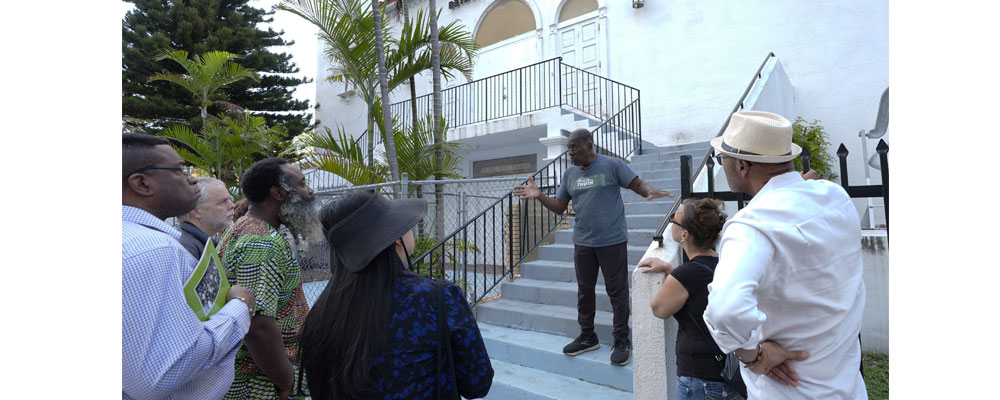

Miami, Mar. 16: Neglect, abandonment and destruction have been the fate of thousands of segregated cemeteries across the country where African Americans – from former slaves to prominent politicians and business owners -- were buried over many decades.
In the past few years, growing awareness and the discovery of graves underneath parking lots, schools and even an Air Force base have spurred preservation efforts among state and local governments as well as community members who want to rebuild ancestral links that are spiritually crucial.
In Washington, D.C., members of a historically Black sorority recruited an expert who helped find the 1919 burial site of one of the sorority’s founders, hidden from view in an overgrown, badly neglected section of Woodlawn Cemetery.
In Miami, Jessie Wooden bought a historically segregated Black cemetery also suffering from neglect. He and his brother, Frank – who works as caretaker – have a powerful motive for trying to restore the cemetery: it houses the gravesite of their mother, Vivian, who died when Jessie was an infant.
When sites of sacred cultural memory are desecrated, it adds additional trauma to the indignity of being segregated even in death, said Brent Leggs. He is executive director of the African American Cultural Heritage Action Fund and senior vice president of the National Trust for Historic Preservation.
Those groups have played major roles in bringing awareness to the threats to cemetery preservation, such as vandalism, abandonment, ownership disputes and development. The groups provide technical expertise, as well as legal and preservation advocacy.
At Lincoln Memorial Park Cemetery in Miami’s Brownsville neighbourhood, community members now stop by to say thanks and bring cold water to workers who are weeding, cleaning and repainting crypts, some dating to the late 19th century.
After Jessie Wooden serendipitously met an aunt when he was in his late 40s and learned about his mother's resting place, he tried to visit but found the vast graveyard overgrown, snake-infested and surrounded by debris.
Now, when he comes to work, he walks past the crypts and spreading banyan trees to pray at his mother’s grave.
Marvin Dunn, emeritus professor at Florida International University and historian of race relations in Florida, remembers childhood visits to his great-grandmother’s grave for yearly spring clean-ups, when he helped out marking the site with Coke bottles.
Dunn’s great-grandmother’s burial grounds belonged to a church, and those cemeteries have been more likely to survive, he said. But where entire communities were uprooted, privately owned cemeteries on newly valuable land were often sold to developers with little to no objection – leading to hundreds of thousands of Black graves that might never be found again.
In 2022, Congress passed the African-American Burial Grounds Preservation Act as a program within the National Park Service; efforts are ongoing to ensure funding. Last year, Florida passed a bill to fund restoration of historic Black cemeteries.

-square-thumb.jpg)