- Sunday, 26 April 2026

A Global Call For Climate Justice
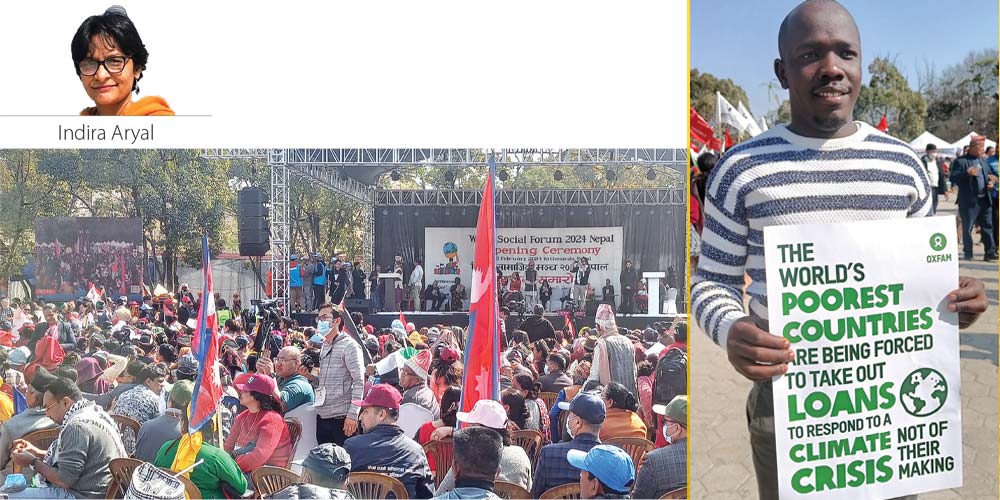
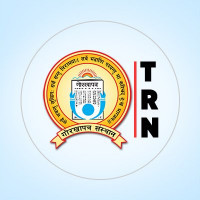
Kiprotich Peter, a youth activist from Kenya, believes that taking loans to combat the climate crisis is not the solution. Instead, he advocates for developed nations to assist developing countries in finding sustainable solutions. Peter conveyed this message during his participation in the World Social Forum in Kathmandu, Nepal, held from February 15 to 19, 2024. He used the platform to highlight the climate crisis, recognising Nepal's own struggles with its impacts.
Holding a placard that reads, “The world’s poorest countries are being forced to take out loans to respond to a climate crisis, not of their making,” Peter emphasises the need for grants, not loans, for countries like Kenya and Nepal.
Despite contributing little to greenhouse gas emissions, they suffer the worst impacts of climate change, including droughts and floods. Peter's message resonates as a call for climate justice and solidarity among nations. Calls for climate justice echoed resoundingly amidst the gatherings of activists from 92 countries.
Mausami, from Bangladesh, working with a global platform in her country, brought attention to the severe challenges faced due to climate change. She described Bangladesh as disaster-prone and shared the unbearable suffering experienced, especially by those in coastal areas.
"The situation in the coastal belt, particularly for minority groups and women, is extremely distressing," Mausami expressed during the WSF. She emphasised the difficult journey women undertake, walking three to five kilometres to collect safe drinking water, often encountering harassment from men or boys along the way. This struggle leads to women experiencing vaginal infections and complications during childbirth from using salty water for hygiene during menstruation.
Mausami pointed out the frequent natural disasters, like two to three cyclones, that worsen the already tough conditions. She passionately called for justice, stressing the importance of everyone receiving fair treatment in the face of the climate crisis. She emphasised the urgent need for collective action to address the significant injustices experienced by her country and its people.
Harjeet Singh, a climate change activist from India, used the side forum of the Global Climate Justice Assembly, “Mountain in Peril: Together for People and Planet,” at the WSF to shed light on the detrimental effects of climate change and the alarming proliferation of fossil fuel plants by developed nations. "We must persist in our fight for climate justice," he asserted.
Singh addressed the audience from the perspective of a mountainous country, emphasising the direct link between melting glaciers and the continued use of fossil fuels.
"The impacts you're seeing are a direct result of these actions," he said. Singh stressed the importance of holding accountable those countries responsible for exacerbating climate change. He urged for a collective effort to address the consequences and ensure accountability for the well-being of all communities affected by the impacts of climate change.
Why WSF
Since its establishment in 2001, the WSF has served as a guiding light for social movements, trade unions, and activists worldwide to unite, exchange experiences, and forge strategies for transformation. The convening of the Kathmandu Forum marks a momentous milestone, highlighting the enduring resilience and rich diversity inherent within global solidarity movements.
Over 1,252 organisations from 92 countries actively participated, both in person and virtually, in the five-day forum. This event showcased thematic panels, self-organised activities, and cultural programmes and provided ample opportunities for networking and collaborative action.
The Forum encompassed a diverse array of thematic panels, assemblies, and activities spanning 13 distinct themes. These include critical topics such as climate change, economic inequality and the global financial system, gender equality and women's rights, labour rights and migration, as well as peace, justice, and human rights.
Kathmandu declaration
The civil society organisations working in Nepal on climate change issues crafted the Kathmandu Declaration, ‘Together for Climate Justice’. This declaration stresses that actions to tackle climate change, like reducing emissions and adapting to its effects, must be fair and just. It highlights the importance of considering the needs of marginalised groups, such as women, children, people with disabilities, and indigenous peoples.
These groups should have a say in decision-making about climate issues. The declaration also calls for sharing the responsibilities and benefits of climate action fairly among countries, considering their historical contributions and future impacts.
The declaration raises concerns about the rapid melting of the Himalayan glaciers due to climate change, which affects billions of people who rely on them for water. It urges international efforts to prioritise action and investments in mountain regions to address this threat.
The declaration also criticises the current global financial system for not adequately supporting developing countries in their efforts to address climate change. It calls for urgent reforms to ensure that money flows transparently and fairly to help these countries transition to sustainable development and cope with climate-related damage.
Moreover, the Kathmandu Declaration emphasises the need for immediate action to reduce greenhouse gas emissions and mitigate the effects of climate change. It stresses the importance of using scientific evidence to guide decision-making and urges all countries, businesses, and individuals to speed up their efforts to cut emissions. The declaration also emphasises the importance of global cooperation and solidarity in addressing the climate crisis, protecting vulnerable communities, and preserving the environment for future generations.
Geeta Pandey, Director of Policy Advocacy and Research at the Karnali Integrated Rural Development and Research Centre (KIRDARC) in Nepal, expressed the opportunity to join forces in confronting the dire impacts of climate change. Their work in Nepal mirrors the challenges experienced by regions worldwide, highlighting the shared struggle against these devastating consequences.
The far-reaching impacts of the climate crisis stress that its effects span from the highlands of Nepal to lowlands across the globe. She underscored the importance of safeguarding not only islands and mountains but also the interconnected ecosystems in between. However, Pandey lamented that, despite global commitments, many states, influenced by industry pressures and corporate interests, have yet to fulfil their obligations. This failure to act effectively leaves humanity vulnerable to catastrophic temperature rises.
In light of this urgency, Pandey called for collective action and decisive measures. She highlighted how this WSF has amplified the voices of affected communities and advocated for concrete steps to address the injustices perpetuated by climate change.
Pandey pledged to continue advocating for accountability from governments and corporations while striving for more just and sustainable solutions that benefit all, particularly the poor, marginalised, women, girls, and individuals of all genders.
Climate actions must not reinforce existing social inequalities but instead create opportunities for access to information, resources, and opportunities for all. Pandey critiqued the modern economic system for prioritising private ownership and profit, which often leads to extreme extraction of natural resources and environmental degradation. Addressing climate justice requires not only systemic change but also a fundamental reevaluation of humanity's relationship with the planet and with each other.
(Aryal is a journalist at The Rising Nepal.)