- Sunday, 26 April 2026

Malaria far from eradicated in Nepal
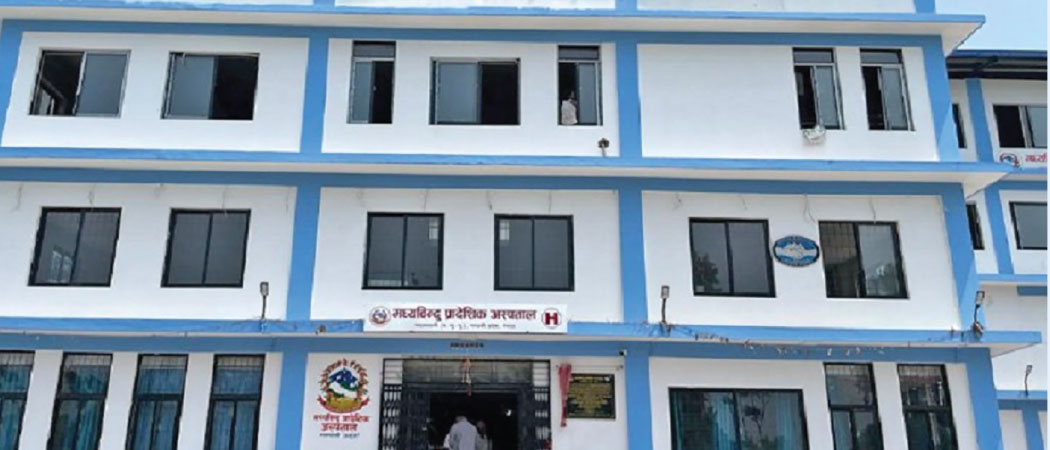
Photo: TRN Madhyabindu Provincial Hospital, Nawalpur.

By Bomlal Giri,Nawalpur, Apr. 26: Nepal has marked 100 years of sustained effort to combat malaria. According to the Malaria Strategic Plan 2014–2025, the country had set a target to become malaria-free by 2025.
However, the continued influx of malaria cases from countries such as India has made it difficult for Nepal to achieve this goal. Although the number of cases in Nawalpur has slightly decreased compared to the previous fiscal year, malaria has not yet been eliminated.
According to the Provincial Public Health Office, while three cases were reported in the fiscal year 2020/21, seven cases have been detected in the first nine months of the current fiscal year.
Laboratory Technician Inspector Dilliram Tiwari informed that four cases were detected in Binayi Triveni Rural Municipality, Ward Nos. 2 and 5, one in Gaindakot-6, one in Hupsekot Rural Municipality-4, and one case involved a person who had arrived from outside the district.
In the fiscal year 2024/25, a total of 10 malaria cases were recorded.
Information Officer Chhabilal Subedi informed that all identified malaria patients were male and all cases were imported.
According to him, more than 95 per cent of malaria infections reported in Nepal in recent years have been imported, primarily from India and other countries. The office had previously recorded six cases in 2021/22, six in 2022/23, and four in 2023/24.
According to Dr. Ramesh Prasad Acharya, Medical Superintendent at Madhyabindu Provincial Hospital, common symptoms include fever occurring daily or every other day, sweating, headache, fatigue, chills, nausea, abdominal pain, dizziness, muscle and joint pain, and vomiting.
He noted that despite these symptoms, the number of patients seeking regular medical check-ups remains very low. He also pointed out that Nepal’s open border with India continues to pose a significant risk to malaria elimination efforts.
Malaria is a communicable disease transmitted through the bite of an infected female Anopheles mosquito. Among the five types of malaria affecting humans, Plasmodium falciparum is the most severe and can be fatal if not treated in time, according to medical experts.
According to the Provincial Health Office, preventive measures include filling stagnant water pits around homes, using mosquito nets, applying mosquito repellents or electric devices, and wearing long-sleeved clothing.