- Sunday, 10 May 2026

Education on tea technology begins
.jpg)

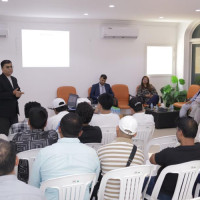
By Kokila Dhakal,Ilam, Dec. 3: After 160 years of tea cultivation in Nepal, the technical education related to tea has been started for the first time in Ilam. This study is considered very important in the field of Nepali tea, which has become a part of foreign exchange earning among exportable goods.
Preparing the quality tea that foreign tea connoisseurs like is a technical task. Up to now, Nepalis have been preparing tea based on what they have learned from going to India and other countries. Deepak Khanal, chief of Ratna Kumar Bantawa Polytechnic Institute in Sankhejung, Ilam, said that they have started technical education for preparing quality tea in Nepal from this year.
According to Khanal, 40 students from all over the country are studying tea technology in this school for the first time.
He said that the tea technology class has been started at the pre-diploma level as apprenticeship modality. The two-year course on tea technology had already been approved.
“In this education, students will study in the school for the first three months. After that, there will be practice of tea technology in the industries,” he said. Khanal said that 80 per cent of this education will be conducted in tea factories and 20 per cent in the school.
For practical education for students, arrangements have been made in 15 tea factories of Ilam, including Tinjure Tea Producers Cooperative Society of Ilam, Highland Tea Producers Cooperative Society, Himalayan Shangrila, Kanchenjunga Tea Estate, he said.
“There is no teaching of tea related technology anywhere in Nepal. There is an obligation to invite technicians from India for the production of quality tea,” he said.
“If skilled manpower is produced in Nepal, that manpower can be consumed in the tea industries that have opened in the country.”
Sharad Subba, owner and technician of Ilam-based Jasbire Tea Industry, who has been making tea of many flavours, including golden, golden pearl, oolong, white, said that Nepali tea is made in all industries based on what he has learned from others.
Until now, Nepali industries are making tea especially by learning from India. In some industries, Indian citizens are tea technicians. The Ministry of Social Development in Koshi Province has supported teaching tea technology this year.
As long as the support of the Ministry is received, the students who take this education will be able to study without any expenses.
Rabin Rai, General Secretary of the Central Tea Cooperative Federation, said that studying tea technology in Ilam, which is the main area of tea, is an exciting topic for the tea sector as well.
“Nepali tea, which has won gold medal in the world, requires skilled manpower to produce more quality tea,” Rai said.
“It is expected that the manpower that comes out not only from training but also from education will fulfill that.” The tea cultivation, which started in Ilam in 1920 B.S., has now reached more than a dozen districts of the country.