- Saturday, 30 May 2026

Hetauda-Kathmandu road littered with plastic waste
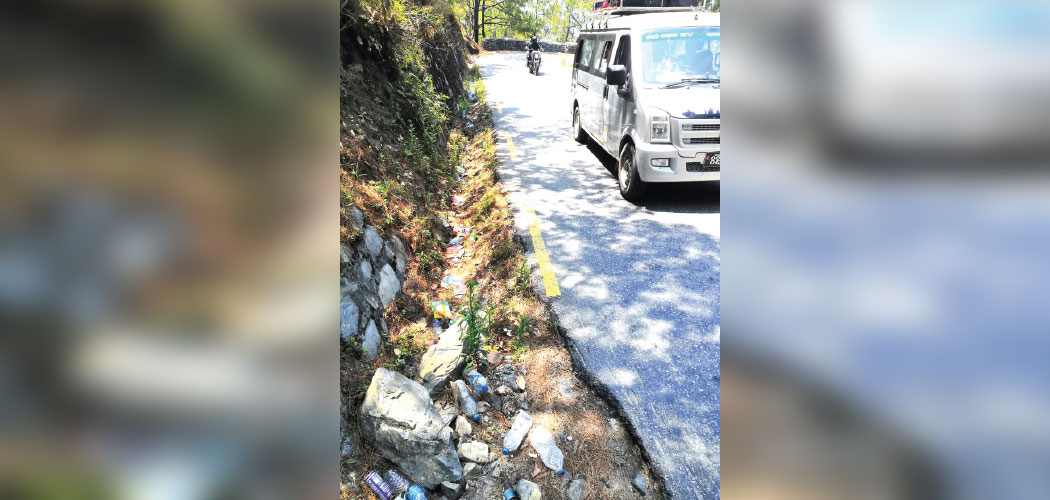

By Anil Parajuli,Hetauda, May 10: The Hetauda-Kathmandu road section is becoming increasingly polluted as passengers continue to throw plastic waste carelessly from moving vehicles.
Instant noodle packets, chips wrappers, gutkha sachets, water and juice bottles, plastic cups and packaging materials of various food items can now be seen scattered along the roadside, contributing to growing environmental pollution.
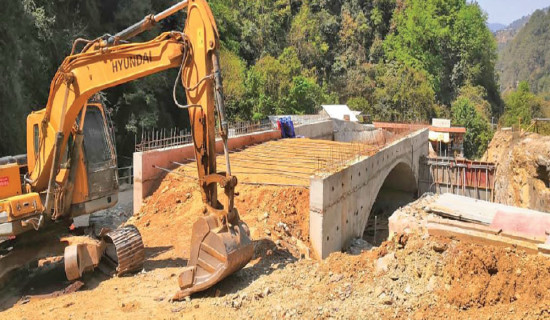
The amount of waste along the roadside has increased after the blacktopping and upgrading of the shorter road linking the federal capital Kathmandu with the provincial capital Hetauda.
Bal Krishna Dahal, a passenger travelling between Hetauda and Kathmandu, said plastic waste along the road has increased significantly in recent times.
“Earlier, such waste was not very visible, but now plastic and bottles can be seen scattered along the road almost every day,” he said, adding that the lack of dustbins along the roadside has worsened the problem.
Driver Bibek Neupane, who regularly drives on the Hetauda-Kathmandu route, said drivers often request passengers not to litter. “Passengers throw waste directly from vehicle windows. Even when we try to stop them, not everyone listens,” he said.
Environmentalist Dr. Balram Bhatta expressed concern that plastic waste thrown along roadsides eventually reaches streams and rivers, causing long-term environmental problems.
He stressed the need for awareness training on environmental issues for drivers, conductors and roadside business operators. “Passengers can be encouraged to dispose of waste at designated places,” he said.
He added that local governments should also install separate dustbins along the roads.
Bharati Kumari Pathak, Bagmati Province Assembly member and member of the Industry, Tourism and Environment Committee, said clear policies are needed to reduce the growing problem of plastic waste along roads.
According to her, the provincial government, local levels and concerned agencies should coordinate to conduct awareness programmes.
Rapti sanitation campaigner Apil Ghimire said waste reduction would not be possible unless individual behaviour changes. “There is a need to develop the mindset that ‘my pocket itself is my dustbin’,” he said. He also suggested reducing the use of plastic materials during travel.
Hidam Lama, Chairperson of Bhimphedi Rural Municipality, acknowledged that plastic waste along the roads has become a growing problem. He said settlements along the roadside are also being affected by plastic waste thrown by passengers.
Recalling incidents where passengers threw plastic bags containing vomit out of vehicle windows, which even entered nearby houses, Lama said the issue had become a serious concern.
According to Police Inspector Bachhuram Phuyal of the District Traffic Police Office, Makawanpur, around 1,300 vehicles travel daily along the shorter route connecting Hetauda and Kathmandu.
He said large vehicles are required to keep dustbins, but smaller and private vehicles generally lack such arrangements.
Locals said plastic waste has become increasingly visible along the Bhaise-Bhimphedi-
Kulekhani-Phakhel-Pharping and Bhaise-Kulekhani-Sisneri-Dakshinkali road sections, which connect Hetauda and Kathmandu through Makawanpur.
Passenger Sandip Sapkota accused concerned authorities of failing to pay adequate attention to waste management along the roads. According to him, some hotel operators also burn plastic waste in certain places, causing further environmental pollution.