- Saturday, 6 June 2026

Bardibas prioritises development of infrastructure
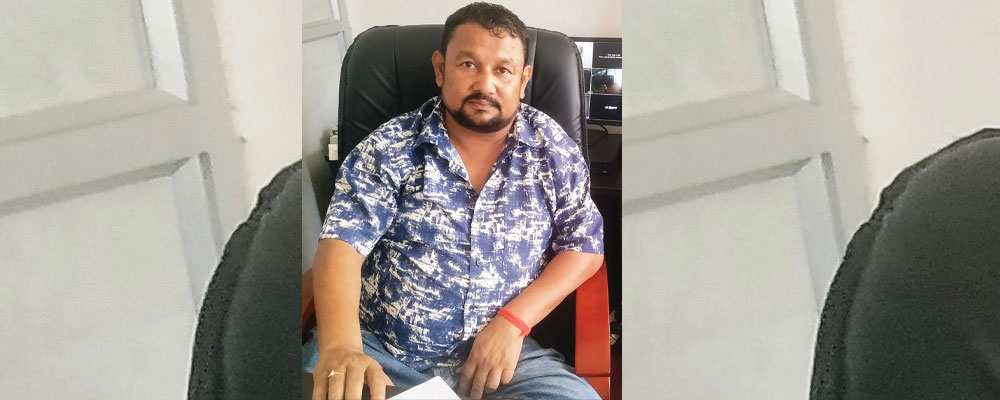
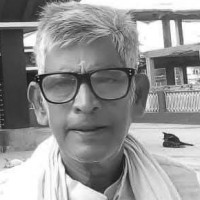
Bardibas Municipality gained a lot of attention during last year's local election because of mayoral candidate Prahlad Chhetri. He was first nominated by the Nepali Congress (NC) but the party later rescinded his candidacy. But, rather than stepping back, Chhetri chose to stand as an independent and won. Then, in his inaugural address, he announced that he would not accept any facilities like vehicles and residence his position awarded him, further boosting his popularity. Chhetri re-entered NC in May this year though.
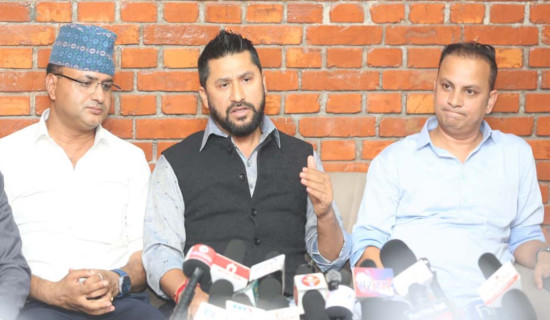
Now, a year and a half into his term, how has he been able to take the municipality forward and coordinate with his former rivals? The Rising Nepal's Bardibas correspondent Rabindra Upreti asked these questions to Mayor Chhetri. Excerpts:
During the election, you used to say that you would speak through actions rather than words. Well, it has been over a year since you won. What have you done during this time?
It would be better if Bardibas's denizens, those in the media, and intellectuals evaluated my works, not me.
Nevertheless, I would like to share that we have prioritised the development of infrastructure. We have blacktopped one road in all 14 wards of our municipality. We have also constructed eight kilometres of road from Kalapani to Parsaidhap in the areas bordering Sindhuli district.
These areas previously did not have any road. We are preparing to call for tenders to build bridges over the Ratu River to connect Rajavaas to the BP Highway, and over the Jangaha River near Lopchan Tole.
Construction of a bridge over the Hattimara River has begun. The river has been called the sorrow of Bardibas, and the municipality is constructing the bridge with its own resources.
We are also focused on health and education.
In sum, over the last year, we built 25 kilometres of paved and unpaved roads, constructed buildings for four schools and recruited 78 teachers. Bardibas is the first local level to appoint a school headmaster through open competition.
Despite numerous surveys since the Panchayat years, many families living in Bardibas still lack land ownership certificates. How much longer will they have to wait to get them?
We do not want to play with people's sentiments in the name of land ownership. We are trying to solve the problem on the basis of law and regulation.
The discrepancy between law and ground reality has been stalling progress here. The people, landless and those living in unorganised settlements, have been found to be utilising more land than is legally allowed. We cannot go against legal provisions but we also do not believe in seizing land that the people have been living on and using for generations. The municipality is working to untangle this knot and has passed a local law for this.
With the increase in services at the Bardibas Hospital, people complain that irregularities have also increased. Why has this happened?
There is no alternative to health. That is why we worked to reform the health sector as soon as we assumed office. Accordingly, we started specialist services at the Bardibas Hospital. We also implemented health insurance, introduced free ambulance and hearse services and added to the nutrition allowance provided to new mothers.
The hospital was in a state of ruin. But now, it has been providing numerous services to the locals, and to marginalised and disadvantaged communities. Madhes Province's Ministry of Health and Population and Health Directorate have both awarded the hospital for its excellent work.
But we consider the dissatisfaction expressed as constructive feedback and promise to continue improving and developing the hospital.
You say you have expanded irrigation by digging wells and conducting deep boring. Yet, maize planted on 40 Bighas of land in Tuteshwor dried up. Rice production also declined. Why did this happen?
Not only Bardibas but the entire Madhes Province suffered a drought this year. The areas with irrigation facilities suffered less. As for Tuteshwor and other dry areas, we are holding discussions with local farmers about how best to provide irrigation there. We are also in talks with the federal and provincial governments to provide relief to drought-affected farmers.
Furthermore, considering the depletion of groundwater in Madhes, we are working to build recharge ponds at various locations in the Chure region.
What plans has the municipality introduced to promote tourism and hospitality, which could be the economic backbone of Bardibas?
Bardibas cannot develop and prosper without tourism. We have enough roads here, are a hub for hotels and will soon be connected to the Kurtha-Jayanagar railway. But, a lack of destinations nearby, has kept tourists at bay. Even those that have come have not stayed for long, which has prevented hotels here from profiting.
So, to ensure that tourists come here and spend at least one night, we have begun work to construct a fun park in the municipality and build a lake on 32 Bighas of land at Patuko near the BP Highway. We have carried out various works to attract religious tourists to Maisthan and Tuteshwornath too.
The local government has allocated budget to identify, protect and develop tourism destinations and work with tourism and hotel entrepreneurs.
What challenges have you faced while working?
It is not easy to be an elected representative. People will react to both your action and inaction. You will find both support and opposition.
However, since I became the mayor of Bardibas, the federal and provincial governments have been deducting the budget provided to our municipality. The grant provided to Bardibas in the fiscal year 2022/23 was Rs. 40 million less than the grant provided in the fiscal year 2021/22. This had already affected our pace of work. But then, this fiscal year, our grants were cut by a further Rs. 170 million. This has saddened us greatly.
Both the centre and province should understand that the local levels will fail if the budget cuts continue.
-original-thumb.jpg)