- Monday, 11 May 2026

Deal struck to open Gaza border for aid
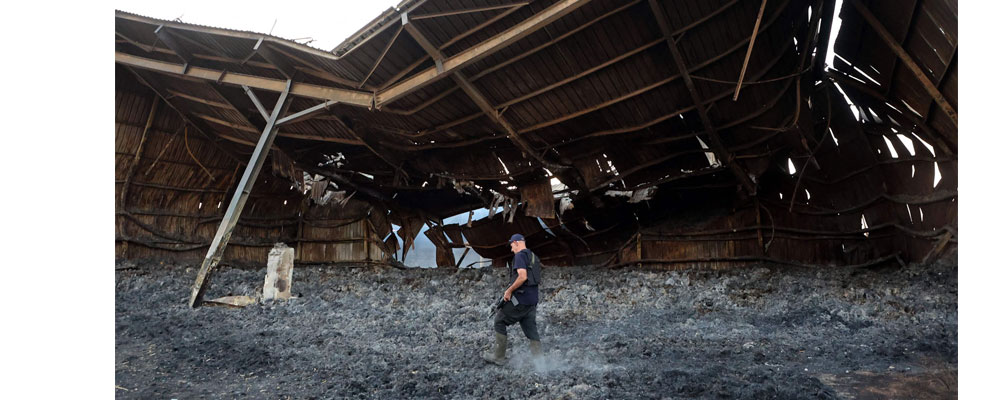

Gaza Strip, Oct. 20: US President Joe Biden on Wednesday unveiled a deal to allow desperately-needed humanitarian aid to enter war-torn Gaza, where one million people have fled their homes amid withering Israeli air strikes. After face-to-face talks in Israel and intense telephone diplomacy with Egypt, Biden said a limited number of trucks would be allowed to cross the shuttered Rafah crossing from Egypt into Gaza from Friday.
It would be the first international relief to enter Gaza since October 7, when Palestinian militant group Hamas launched shock raids into Israel, killing 1,400 people, mostly civilians, and seizing about 200 hostages. Since then, Israel has besieged the Palestinian enclave, launching wave after wave of air strikes, enforcing a blockade and deploying tens of thousands of troops to the border in preparation for an expected ground assault.
The United Nations and humanitarian groups have begged for the military stranglehold on Gaza to be eased, to allow supplies of water, food, fuel and medicines to enter. Top UN humanitarian official Martin Griffiths on Wednesday said the situation in Gaza was dire, with hospitals overwhelmed, more than 3,000 Gazans killed and 12,500 injured. "The pace of death, of suffering, of destruction" he said "cannot be exaggerated." Despite the devastation, more than 100 trucks have been queued for days on the Egyptian side of the border waiting to enter Gaza.
Israel fears that aid deliveries could be used as cover to bring in weapons, or could be diverted into the hands of Hamas -- which governs the enclave. Israel has already hit the border crossing with multiple air strikes since this phase of the decades-old conflict began. Egypt controls the border and fears throwing open the gates would bring tens of thousands of refugees to its territory. After what he described "blunt" negotiations and a telephone call with Egyptian President Abdel Fattah al-Sisi, Biden indicated that about 20 trucks would enter Gaza to start with, with more to come if all sides agree. "We want to get as many of the trucks out as possible," Biden said aboard Air Force One.
"If Hamas confiscates it or doesn't let it get through... then it's going to end, because we're not going to be sending any humanitarian aid to Hamas," Biden said. Israeli officials said the deliveries would be limited to "food, water and medicine", and that the effort was conditional on aid not being used by Hamas. The UN's Griffiths estimated that about 100 trucks per day were needed to meet the needs in Gaza. - Fog of war - Biden had made a visit to Israel Wednesday, expressing solidarity following the Hamas attacks, trying to gauge Israel's war objectives and hoping to prevent a spillover into regional conflict.He warned Israel to be cautious as it tries to remove the threat from Hamas. "After 9/11, we were enraged in the United States.
While we sought justice we also made mistakes," he said. After decades in which Israel has gradually improved ties with its neighbours, the Hamas attacks and Israel's furious response have rekindled old tensions. Anger spiked on Wednesday, with protesters pouring onto the streets in cities from Tripoli to Tehran after a strike on Gaza's Ahli Arab hospital.
The Hamas-run health ministry in Gaza claimed 471 people had died as a result, while blaming an Israeli air strike. Israel denied responsibility, saying an initial investigation showed the strike was caused by a malfunctioning rocket fired by Palestinian militant group Islamic Jihad. Like Hamas, Islamic Jihad is proscribed as a terrorist group by the United States and other Western governments.