- Monday, 11 May 2026

Food Safety Aspects Of Microwave Heating
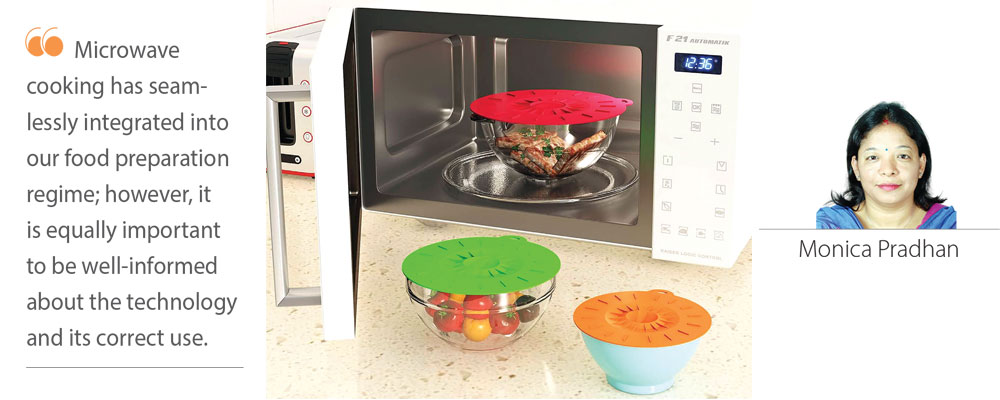

The harnessing of microwaves as an alternative source of clean energy for cooking is one of the technological revolutions that touches the lives of millions every day. With life getting busier with passing time, food habits are changing. The trend of purchasing frozen meals, takeaways, and precooked meals is increasing. With its quick and convenient heating system, the microwave oven has become an indispensable cooking appliance today. While the earth battles with global warming, innovations like this are also substituting carbon-based fuels to a large extent. The first microwave oven dates back to the mid-20th century. Household applications started in 1971 after their regulation by the US Food and Drug Administration (US FDA). Speculations and psychological prejudices about using radiation-based technologies at home, however, prevail. As consumers go on board to use emerging technologies, it is equally important to be well-informed and clear about any concerns and misbeliefs around them. Research publications globally have presented findings that limit the type of plastic containers that can be used for heating food in microwave ovens, citing health impacts. Likewise, the potential risk of microbial cross-contamination has also been validated. It is therefore important to be aware of the possible food safety issues associated with handling food in a microwave oven.
Microwave heating process
Microwaves are electromagnetic waves with a frequency in the range of 300 to 300,000 megahertz that can pass through glass, plastics, and ceramics but are reflected by metals. During the operation of a microwave oven, electromagnetic radiation emitted by magnetrons is absorbed by dissolved salts in food (ionic interaction), causing water molecules to vibrate (dipolar interaction). Subsequent collisions and rotations of ions cause food to get heated.
The US FDA Code 21 CFR 1030.10 specifies the frequency of radiation to fall within 890–6000 megahertz for the operation of a microwave oven. The code also limits the microwave radiation that can leak from an oven throughout its life span to 5 milliwatts (mW) per square centimetre, at approximately 2 inches from the oven surface. This limit is far below the level known to cause harm to people; however, food safety risks associated with the choice of heating container and microwave oven operations prevail.
Food safety concerns
The chemical risks associated with the use of plastics during microwave heating of food are a major public concern today. Possible migration of monomers and plasticizers from plastic containers into microwave-heated food could lead to the formation of acrylamides, a potent carcinogen.
The most common plastics used for microwave cooking are polypropylene (PP) and crystalline polyethylene terephthalate (CPET), which have melting points of 210–2300 °C. The temperature of food in a household microwave oven of 600 to 1200 watts normally reaches up to 1000 °C. However, parameters like wattage, heating duration, viscosity of food, and the presence of high fat and high sugar can raise the temperature of foods, thus accelerating the chance of microplastics migration. Phthalates, a plasticizer and a common component in takeaway containers, plastic wrap, and water bottles, are known to disrupt the human metabolic system upon ingestion. Bisphenol A (BPA), another component of hard plastic, has been the subject of long-term toxicological studies by the FDA. In July 2012, the FDA amended its regulations to prohibit the use of BPA-based polycarbonate resins in infant milk bottles and sippy cups.
Another potential food safety issue during microwave heating is the possibility of uneven heating and the presence of cold points in food. The FDA guidelines on the use of microwave ovens issued in 2015 warn about the survival of foodborne pathogens due to uneven heating in microwaves, especially in foods like meat, fish, or dairy that are contaminated. Furthermore, microbial hazards could arise from poor hygiene conditions within the microwave oven. Traces of food on the interior surface due to spattering during cooking or inadequate cleaning are a potent source of cross-contamination. Moreover, if the same oven is used for thawing raw meat and fish, the chance of cross-contamination by pathogenic bacteria like E. coli and Salmonella could prevail.
Safe way ahead
In 2005, the World Health Organisation issued a comprehensive guideline for handling and preparing food in microwave ovens to ensure safety. In this context, the United States Department of Agriculture (USDA) also provides guidelines for permitted materials to be used as containers, operating conditions, the minimum temperature of food, thawing instructions, etc. Heat-resistant glass, glass ceramic wares, and oven cooking bags are common containers safe to use in the microwave. “Microwave safe” or “Safe for microwave use” code is found in containers intended for this purpose. Another symbol that signifies microwave-safe materials is the three squiggly lines stacked on top of each other within a square box. Any heating container, however, should not be repeatedly used over a long period of time.
The role of regulatory authorities in market monitoring in this regard, to detect the sale of any fraudulent goods, is crucial to ensuring public safety. Equally important are statutory advisories issued in the public interest to help consumers make the correct choices.
Risk due to uneven heating of food can be avoided by stirring the food midway in between consecutive heatings to eliminate cold spots. Large cuts of food need to be avoided to ensure maximum penetration by waves.
The Food Safety Code of Practices for Food Services issued by the Ministry of Health, Qatar, requires the temperature of the coldest point of food to reach 750 °C while reheating cooked food. The USDA recommends a standing time of at least 3 minutes for the temperature of the food to get homogeneous after microwave cooking.
Cross-contamination in the oven can be prevented by ensuring that the oven is kept clean at all times. Food should be covered during heating to avoid spattering, which is highly evident in broths and gravies. The use of vinegar water, lime water, or a mild cleaning solution is recommended for ensuring oven hygiene. In institutional settings like hotel restaurants, schools, or offices, cleaning effectiveness can be assessed by regular swab tests.
Conclusion
Recent times have been a testament to adapting to innovations. While embracing technologies, assurance of their safety is paramount. Microwave cooking has seamlessly integrated into our food preparation regime; however, it is equally important to be well-informed about the technology and its correct use. In a time where opinions are shaped by invalidated information coming from all quarters, the role of regulatory bodies and consumer forums to ensure a relevant level of public awareness of emerging technologies is vital. Integration of global advisories and research findings into national policies is the way forward towards ensuring food safety.
(The author is a food technologist.)


-square-thumb.jpg)