- Monday, 11 May 2026

International scientific meet on lightning kicks off
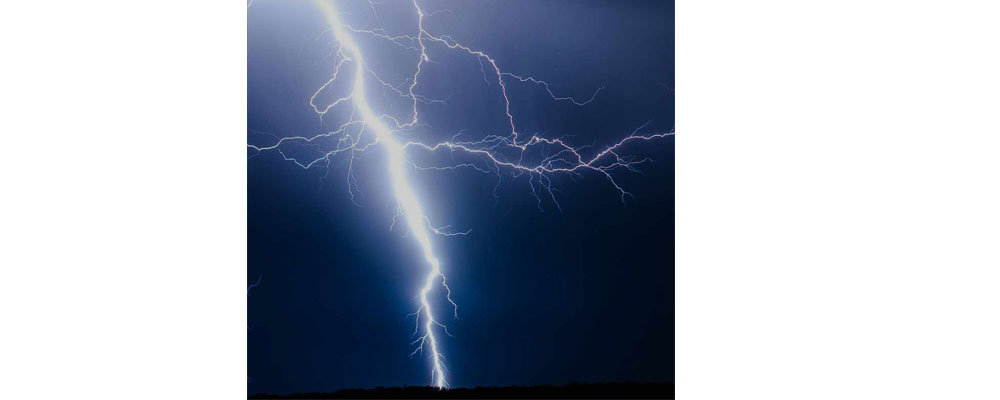

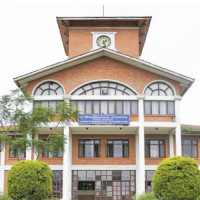
By A Staff Reporter,Lalitpur, Oct. 5: A three-day international conference on “Lightning Electromagnetics and Applications of Semi-conducting Materials” started in Lalitpur on Wednesday.
A least 100 participants including experts from Nepal, India, America, Brazil, France, Sweden, Israel, Australia, Bangladesh and Pakistan are attending the conference.
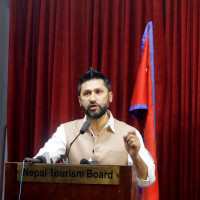
The conference aims to share and discuss the latest research findings on lightning electromagnetics and their impact on state-of-the-art technology and the wide scope of applications of semi-conducting materials including sensing lightning activities, said Professor Shriram Sharma, Chairperson of South Asia Lightning Network.
According to Sharma, Nepal is ranked fourth in terms of lightning risk among countries where research on lightning has been conducted. Over the past seven years, lightning cases were particularly high in 2015 and 2016, followed by a slight decrease in 2017. However, the cases increased again in 2018 and 2019 before experiencing a decrease in 2021, he added.
“In a year, there are around 32 to 36 lightning cases recorded per square kilometre. Jhapa and Morang are identified as high-risk districts for lightning in Nepal. Fortunately, most lightning incidents in these regions occur at night, resulting in no recorded casualties.
In terms of casualties, Makawanpur is regarded as the most perilous district in the country,” Prof. Sharma said.
Every year, about 100 people lose their lives and around 300 sustain injuries in the country due to lightning. Makawanpur alone records eight to ten cases of casualties, according to the National Disaster Risk Reduction and Management Authority (NDRRMA) report.
Kathmandu poses a lower risk of lightning incidents due to the presence of concrete buildings, which offer greater safety against lightning strikes, Prof. Sharma said.
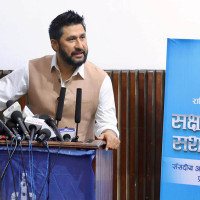
According to Dr. Prem Raj Dhungel, the Executive Director of the South Asian Lightning Network, there are preventive measures that can be taken to protect against lightning. He emphasiess the need to shift from traditional thinking and instead look at the issue with scientific and technical approach.
“For example, placing an iron rod or any metal rod on the roof of the house can help safely discharge lightning toward the ground. It’s also advisable to avoid using electronic devices during lightning storms and to stay indoors during such times,” he said.
Speaking at the programme, Professor Colin Price from Tel Aviv University in Israel said that obtaining long-term lightning data can be challenging, but he emphasised that the number of lightning incidents is on the rise worldwide. He cited Africa as an example, where lightning cases have increased by 40 per cent from 1950 to the present day.
“Thunderstorms have a significant impact on climate change because lightning produces Nitrogen Dioxide (NO2) and Ozone (O3) gases, which are potent contributors to global warming,” he added.
The conference aims to bring scientists and researchers working in apparently different fields to understand each other’s scope and identify the areas of collaborative research.
The conference also seeks to provide an opportunity for scientists, engineers, and scholars from developing countries to get acquainted with the advances made in this field. Forty-four scientific papers will be presented during the conference.
According to Prof. Sharma, 28 out of the 44 research papers are being presented from Nepal. He pointed out that Nepal currently lacks a comprehensive lightning-related information system, and significant efforts towards mitigating lightning impacts are lacking in the country.