- Monday, 11 May 2026

Closure of Sanskrit schools creates Purohit scarcity
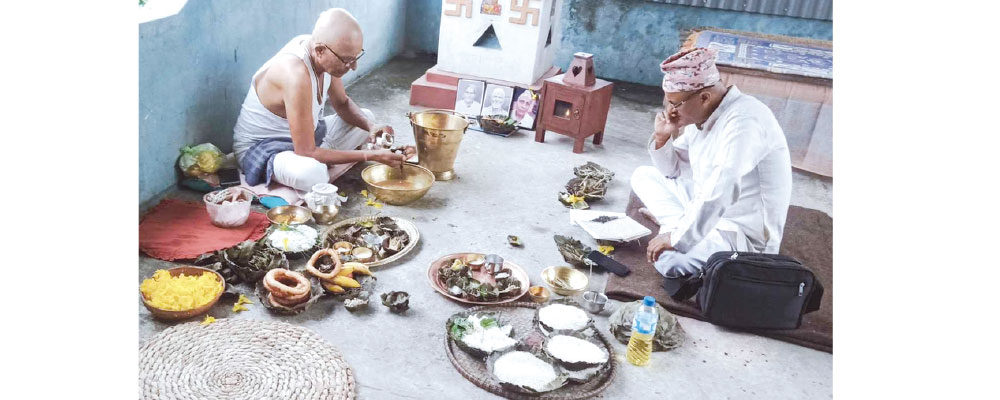

By Hari Prasad Koirala,Urlabari, Oct. 5: Sohra Sraddha, a 16-day period in the Nepali calendar when people pay homage to their ancestors, has begun and eastern Morang is facing a shortage of Purohits to perform the rituals.
Religious scholars and people with an understanding of the matter say that this is because of the closure of Gurukuls and Sanskrit schools, educational institutions that produce Purohits. Many Sanskrit schools of the district have converted themselves to normal secondary schools while Gurukuls have been forced to shut their doors due to a lack of finances.
Dayaram Subedi, a Pandit of Kanepokhari Rural Municipality–6, expressed his dissatisfaction with the situation. “We have three levels of government. They spend thousands of rupees on all kinds of trainings. But none provide any support for priesthood.”
Locals of Urlabari, Pathari Shanishchare and Kanepokhari told The Rising Nepal that they found it difficult to get Purohits and religious officiators during Sohra Sraddha, Teej, Rishi Panchami and the month of Swasthani.
Purohits say that it takes around four hours to perform all the rituals of Sohra Sraddha for one family. And religious customs dictate that one priest must not officiate Sohra Sraddha for more than one family in one day. However, Purohits have had to break this rule because there are too many people who demand services and too few people to provide them.
Kuber Prasad Dahal, a Purohit in Kanepokhari–7, said, “People call us saying that they have to perform the Sraddha (homage ritual) of their father on a particular day but have not been able to find a priest. Some come to our homes. We tell them that we cannot perform Sraddha at two places on one day but, in the end, we have to.”
“Also, when brothers divide their property and establish separate households, each of them requires an individual Purohit. Since there are very few new people entering the field, older priests have to take up more workload,” Dahal explained.
Dahal said that he was performing up to three Sraddhas a day and was fully booked for the whole Sohra Sraddha season this year.
Chiranjeevi Gautam of Pathari Shanishchare Municipality–3 said that even those that did not pay attention to religion at other times of the year choose to remember their ancestors during these 16 days. “Despite changing lifestyles and priorities, the number of people practicing Sohra Sraddha has not decreased. If anything, it has gone up,” he said.
“We are not getting new Purohits while the existing ones are growing old and unable to officiate religious and cultural functions,” Raju Kafle, a priest in Urlabari, remarked.
Badri Prasad Bhattarai, a Purohit said that the closure of institutions that imparted Sanskrit and religious education in the name of secularism caused this problem. “How can we expect to get new skilled Purohits without institutions to produce them,” he questioned.
Purohits and locals alike worry that this scarcity will grow more severe if Sanskrit education and Gurukuls are not revived and preserved.