- Wednesday, 3 June 2026

Agro Professionalism

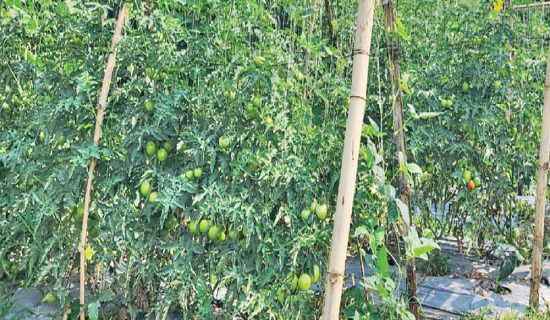
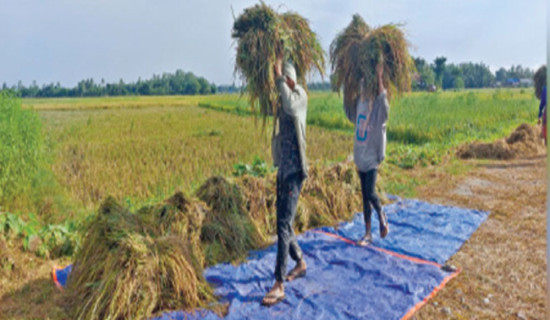
Agriculture continues to be the mainstay of Nepal’s national economy despite the increasing share of manufacturing, service and financial sectors in the GDP. It caters employment to around 65 per cent of population and contributes 27 per cent to the GDP. However, agro sector has failed to receive due priority with adoption of free market economy that made the successive governments to cut subsidies to the farmers. As a result, Nepali agro products are unable to compete with heavily-subsidised imported food, fruits and vegetables. Once the country used to export food in India and other countries but now it imports food worth billions of rupees annually from abroad. As millions of youths have left for foreign countries in search of better jobs, a huge swathe of fertile land has remained fallow. This is an irony for the agricultural country.
Our vulnerability comes to the fore when the southern neighbour imposes restrictive measures against the export of food items. Just a few days back Nepal government requested India to provide one million tonnes of paddy, 100,000 tonnes of rice and 50,000 tonnes of sugar after the latter banned the export of non-Basmati white rice. Nepal’s request came in view of avoiding the potential shortage of food in the upcoming festival season. In order to boost the agriculture sector, there is need for an integrated approach. This calls for bringing appropriate policy and regulations to promote investment, incentive, innovative technology, skilled human resources and market access to the agro products. In order to attract youths towards agriculture, it must be commercialised to create gainful employment for them.
A news report, published in this daily on Sunday, highlights that the country is unable to utilise and retain technical human resources essential to boost production and productivity of agriculture. More than 200 educational institutions that are running across the country offer a variety of courses and degrees in agriculture. They produce thousands of professionals annually but most of them prefer to go abroad in the absence of opportunity at home. In the mid-1950s, the School of Agriculture under the Agriculture Ministry introduced first course of agro education - Junior Technical Assistants (JTAs). Now universities and colleges conduct short-term, pre-diploma, diploma, Bachelor, Master’s and PhD courses in agriculture. The Council for Technical Education and Vocational Training (CTEVT), Agriculture and Forestry University (AFU), the Institute of Agriculture and Animal Science (IAAS), Purbanchal University and Kathmandu University, among others, are imparting higher level education on agriculture.
With the rise in the agriculture campuses, the students have choice to pick colleges as well as courses as per their interest but this has also affected the quality of education. This requires downsizing the institutions for production of quality human resources. Another glaring problem is the inadequate number of quotas for a Master's degree in agriculture. Consequently, around 80 per cent of undergraduates have gone abroad for pursuing higher education and earn a decent living. Therefore, the opportunities should be provided to the new graduates to check brain drain. Many technical institutions brought the motto of ‘Earning while learning' to engage students in the respective agriculture areas. But they need more rewarding platforms to utilise and upgrade their knowledge after completing their course. The concerned universities should invest in agro-research to build their capacity so that they keep abreast of the latest knowledge, practice and trend in the agriculture technology.