- Wednesday, 3 June 2026

Administrative Federalism


Nepal formally became a federal state with the adoption of new constitution in 2015 but it has faced numerous challenges in implementing the administrative federalism in the absence of required laws, and financial and human resources. The national charter has laid greater emphasis on inclusive federalism that calls for decentralisation of powers in the key areas of services and public goods – politics, security, finance, administration, education, health, social security and natural resources. But the state restructuring process has hit a snag as the federal parliament has not produced the laws to enable the provinces and local units to execute their rights and authorities. The government has prepared Federal Education Bill and will present it in the parliament soon but the stakeholders have criticised it regarding the management of the private schools.
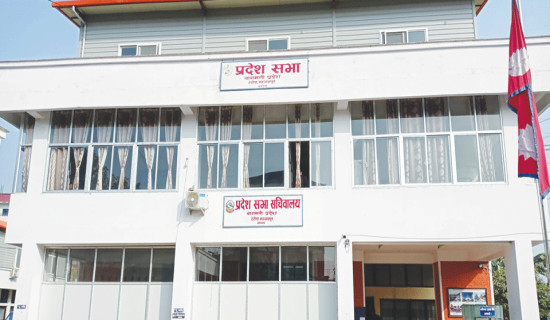
So is the case with the proposed Bill related to Federal Civil Service Act. Civil service employees’ unions affiliated to major and minor parties are now up in arms against some of its provisions. As the vital legislations are in limbo, provincial governments are struggling to perform at full steam. Two separate news reports published in this daily Wednesday underlined the need for endorsing the Federal Civil Service Act in earnest to institutionalise administrative federalism. One news report highlights that Karnali Province faces difficulty in maintaining administrative efficiency and the delivery of services to the people. Currently, the province does not have principal secretary. This has affected the decision-making process as well as hampered the implementation of the annual programme, policy and budget.
It is an irony that the Karnali Province, considered the country's economic backwater, saw eight principal secretaries come and go within the span of five years. No principal secretary has served office longer than 13 months. Economic Affairs Ministry has also witnessed eight secretaries in the last five years. Now it is also without a secretary. Endowed with abundant natural resources, the province is in the need of competent administrative and technological manpower to unlock its huge potential. The federal and provincial governments should create atmosphere conducive for the civil employees to complete their full tenure after they are deployed in provinces and local units. Administrative federalisation needs a new set of organisations so as to create new working culture, procedures and standards. In order to fix the administrative anomalies, the lawmakers from ruling and opposition parties must be serious about enacting the Federal Civil Service Act without delay.
Against this backdrop, Minister for Federal Affairs and General Administration Aman Lal Modi has said that the government would table the Act in the federal parliament in near future to sort out the problems facing the new federal set-up. According to him, there would be an arrangement to keep employees in the office as per the determined quota and those working in remote areas will be transferred to urban areas. Although Minister Modi insisted that the Bill has been prepared with the consultations with the concerned stakeholders, it should make efforts to take the agitating employees into confidence so that it will not face further hitches while putting in the parliament for the deliberations and decision. The timely approval of the Bill is necessary to pursue administrative reforms in line with the constitution's vision that underscores the judicious allocation of means and resources by promoting the sound inter-governmental relations. Therefore, a robust and decentralised public administration must be in place to enforce the rights and duties ascribed to the provinces.