- Wednesday, 3 June 2026

Rain Soaks Terai

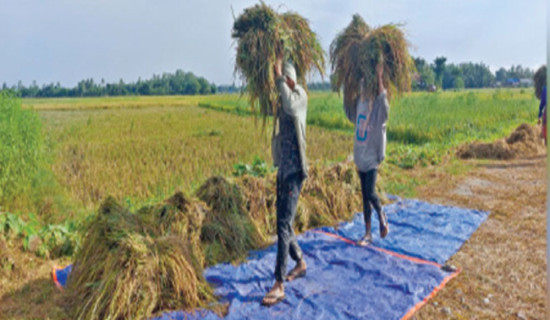
The Tarai region has received a much-needed respite from a prolonged drought as rainfall finally graced the districts since Sunday. The Department of Hydrology and Meteorology (DHM) attributes this welcome precipitation to a low-pressure system near Nepal in Bihar, India, and a shifted monsoon trough. Climate change's alarming effects on rainfall patterns serve as a reminder of ongoing environmental shifts, disrupting the traditional predictability of monsoons and other weather events. This disruption poses challenges for sectors like agriculture and infrastructure, impacting people's lives. Meteorological updates show that nearly all parts of the country, including provinces like Koshi, Madhes, Bagmati, Gandaki, and Lumbini, are experiencing varying degrees of rainfall. This rainfall offers a positive turn of events for drought-affected areas in Madhes Province, where farmers and residents were facing extreme heat and water scarcity. Despite the relief, concerns persist about the adequacy of rainfall for agricultural revival, particularly for paddy plantations in the Tarai districts.
Senior meteorologist Govinda Jha highlights that the current rainfall may not sufficiently moisten the soil for effective paddy cultivation. Yet, there's optimism, as he suggests that two more days of continued rainfall could alleviate this concern. While recent rainfall has been somewhat beneficial, it remains vital to evaluate whether it can drive the desired resurgence in the agricultural sector. Agricultural experts exercise caution regarding the rain's ability to truly address the agricultural setback from the prolonged drought. In Mahottari district, a significant portion of cultivable land remains unplanted due to the drought's impacts. Around 80 per cent of the district is designated as drought-affected, underscoring the severity of the crisis. Partial paddy plantations and continued land barrenness raise questions about the upcoming agricultural season's productivity. Beyond agricultural implications, the erratic monsoon has caused transportation issues, exemplified by a blocked road in Baisari of the Beni-Jomsom Korola Road section.
Landslides have led to road closures, disrupting travellers and causing traffic chaos. Inadequate accommodation and food for stranded passengers highlight the unpreparedness for such events. The heavy rainfall-induced disaster has also led to the tragic loss of human lives and property. As per the news report published in this daily on Monday, the rain-induced disasters have already claimed the lives of 35 individuals, while 27 others remain missing since the commencement of this year's monsoon season. In this complex situation, it's crucial for authorities and policymakers to take proactive measures to mitigate the challenges posed by uneven rainfall and infrastructural vulnerabilities. In order to minimise the impact of natural disasters like floods and landslides, it is imperative to enhance disaster management strategies. This entails robust monitoring and timely response mechanisms to ensure safety and facilitate swift service recovery.
The government and stakeholders must seize this moment to reassess and reinforce water management practices, especially in drought-prone regions. This could involve creating water storage facilities, enhancing irrigation systems, and promoting drought-resistant crop varieties. Collaborative efforts among meteorologists, agricultural experts, and local communities can yield practical solutions to adapt to unpredictable climatic patterns. Also, acknowledging short-term relief limitations and adopting a comprehensive, sustainable approach is vital. The focus should extend beyond immediate responses to ensuring people's long-term resilience to climatic variability. This includes investing in research, technology, and education to equip communities to cope with changing weather patterns and their consequences. The interplay between meteorological events, agricultural practises, and infrastructure vulnerabilities underscores the need for a holistic approach to deal with the problems.