- Wednesday, 3 June 2026

Adapt To Climate Change

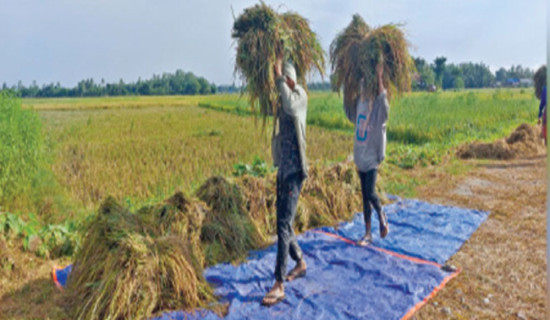
More than one and a half months into the monsoon season, Nepal has been experiencing a significant shortage of rainfall. The deficit is particularly dire in the southern plains with 20-40 per cent below average rainfall occurring in the past two months, according to the Department of Hydrology and Meteorology (DHM). This has adversely affected paddy plantation, which has been completed only in about 77 per cent of the total paddy fields across the country. Plantation season normally ends by the first week of August. While Sudurpaschim Province has seen the plantation of 99 per cent, Karnali 85 per cent and Koshi 84 per cent. For Madhes – a breadbasket of the country – that figure is a mere 59 per cent.
Since most of the fields rely on rains for paddy plantation, the lack of adequate precipitation has left many untilled. This is especially true in Madhes, and should be a cause for concern. That’s because low food production means imminent high food prices, which has already risen since the breakout of the Russia-Ukraine conflict. In many countries, particularly those whose food accounts for the bulk of the import, people are struggling to put food on the table. Nepal too is known to be a food insecure nation and so highly vulnerable to the price rise. Food price hike to unaffordable levels has also been a recipe for instability and the ensuing political upheaval in many countries, which we are well aware of.
What makes things even more worrisome is the fact that our southern neighbour, India, which is a key food producer in the world, is also going through the same monsoon phenomena as Nepal. There too, severe drought has curtailed food production in some states, while extreme floods have washed away planted paddy crops in others. Concerned about the impending food shortage and price hike, the Indian government has banned the export of some varieties of rice. This has triggered so much panic in some countries that the IMF has asked India not to go ahead with its decision.
Like the rest of the world, Nepal has been experiencing below average and erratic rainfall alongside extreme weather events at some places and drought situation at others for the past few years, experts say, and they attribute this to climate change. This year, unlike in the recent past, the monsoon is said to have been weakened by the effects of El Nino – a climate pattern characterised by the unusual warming of surface waters in the eastern equatorial Pacific Ocean – resulting in less rainfall in a host of countries, including India and Nepal.
In the face of irrefutable and growing evidences that the Earth is warming and in the process, threatening everything we depend for survival and livelihood, what are we to do? For sure, we have no option but to adapt though the need to curtail the emissions of greenhouse gasses is there. We need to plant seeds that are both heat and drought resistant. We also need to turn to agriculture practice that consumes less water. Scientists in several universities around the world have been working on this project and a few have come up with promising result.
Green revolution in the 1960s, also known as the third agricultural revolution, greatly enhanced the agricultural productivity with the adoption of high-yielding varieties of rice and wheat, preventing famine even amid population growth. Similar technological breakthrough is said to be in the horizon. We must be careful not to miss out on this opportunity.