- Tuesday, 2 June 2026

Informative Guide For Qualitative Research
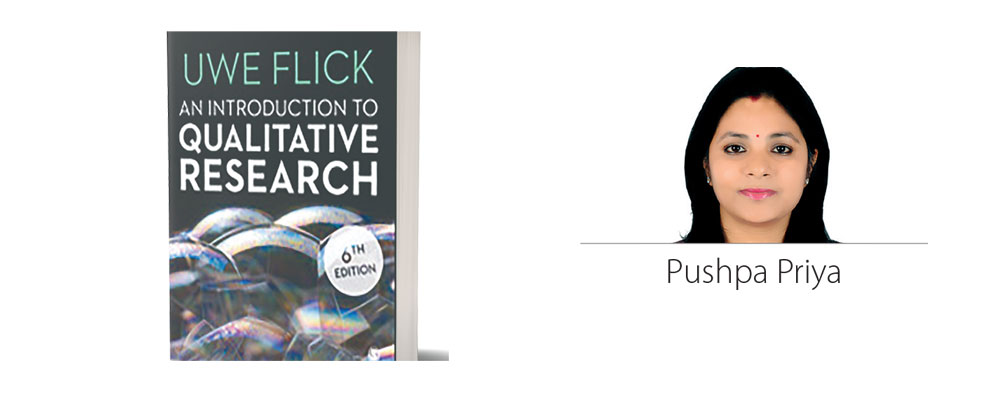

Qualitative research has influenced the humanities and social sciences time and again with new methods. This book is the outcome of being acquainted with new approaches in qualitative research that are revised and updated in 6th edition form. The book was published by Sage Publications in 2018. The author designed the contents of the book in a way that mainly facilitates novice researchers and also experienced quantitative researchers who are new to qualitative research. It is simply a practical guideline to assist readers step by step in making every concept of qualitative research clear.
How to approach qualitative research and how to enhance research skills related to qualitative research are well explained throughout the book. In total, there are 34 chapters in this book that are divided into six sections. Every chapter begins with specific objectives intended to generate awareness among the readers about the upcoming discussion; later, it is followed by a checklist to reinforce the readers’ level of understanding. The first part of the book comprised 1 to 5 chapters that discussed the foundations of qualitative research; the second part covered 6 to 13 chapters that mainly focused on research design; the third part covered 14 to 17 chapters that mainly emphasised data collection; the fourth part contained from 18 to 22 chapters that discussed data beyond talk; the fifth part of the book ranged from 23 to 28 chapters that emphasised ways to data collection; and the sixth part of the book covered chapters from 29 to 31 that emphasised strategies for making reports of the conducted research.
Part 1 of the book entitled "Foundations of Quality Research" ranges from chapters one to five, in which the author discusses in-depth concepts of qualitative research in terms of why and how to conduct qualitative research; focuses on the essential features of qualitative research like the correct choice of appropriate methods and theories; etc.; limitations of qualitative research; theoretical perspectives in the form of a theoretical framework; positivism and constructivism as epistemological assumptions; the effect of a feminist position in qualitative research; and the distinction between qualitative and quantitative research. Part 2, entitled "Research Design," ranges from chapters six to thirteen and mainly discusses practical methodological issues. Formulating the research question, as the whole research revolves around finding an answer to the posed research question for a particular research study; what makes good and bad research questions; and question design are also vital parts of the discussion in this part.
The concept of how to design qualitative research is well elaborated; the concept of ethical considerations is brilliantly shown too; how and when to use existing literature; theories, theoretical literature; empirical and methodological literature; how to search for literature; how to enter the field and gain access to institutions and participants; very well interpreted strategies to gain access to the field for research studies; furthermore, the ways of qualitative research sampling methods are discussed in depth; and the concept of data triangulation in terms of how to do it is also well explained. In brief, the overall research design is well interpreted in this part.
Part 3, entitled "Verbal Data," covers chapters fourteen to seventeen and reveals practical issues relevant to conducting qualitative research. This part discussed the concept of verbal data in terms of its types, aims, and targets. Similarly, the concept of interviews in qualitative research is well presented. Concept of what makes narratives, and focus groups explained. Characteristics are well explained, possible approaches for verbal data collection are interpreted in a meaningful way, different types of conducting interviews like focused group interviews, semi-standardised ethnographic interviews, problem-centered interviews, online interviews, and narrative interviews are explained in depth, and strategies to use narrative data are described. Part 4, entitled "Data Beyond Talk," ranges from chapters eighteen to twenty-two and examines how the data can be collected beyond talk. Observation, visual data, and some related documents have a significant place in qualitative research that is well explained in this part; different ways of data collection and analysis processes are explained in terms of collecting data offline and online along with each method’s advantages and disadvantages; data collection strategies through the interview; using documents, field notes, and analysis of even a document like websites; and social media and digital data are also discussed in terms of how social media like Facebook, Youtube, Twitter, and blogs can be used for studying social issues with qualitative methods. Part 5, entitled "Texts as Data in Qualitative Research," ranges from chapters twenty-three to twenty-eight and discusses qualitative data analysis in terms of establishing relevant theoretical insights from the collected data and further text produced after analysis. In-depth analysing concepts like data management, transcription, coding, thematic coding, and naturally occurring data are explained, as is using software for qualitative data analysis. In brief, this part of the book explained how to analyse data in qualitative research. Part six of the book ranges from chapters twenty-nine to thirty-one, where there is a discussion on the use of traditional quality criteria along with some alternative criteria, and there is also a discussion on the ways of answering questions of quality in qualitative research. Furthermore, there is an explanation of how to report the conducted research, and finally, chapter 31 provides the outline for qualitative research in terms of its further development in the future.
This book presented comprehensive ideas on conducting qualitative research. The ideas are presented brilliantly in simple and understandable language. Chapter contents and objectives are well illustrated, providing the readers with an idea of the intended things to be discussed in the particular chapter. The checklist provided in every chapter reinforces readers’ level of understanding of the particular contents discussed in the chapter.
Features of qualitative research, ethical consideration, data collection methods, and techniques are well elaborated too. This book is beneficial for novice researchers, experienced quantitative researchers who aim to conduct qualitative research, and even experienced qualitative researchers, as it guides the whole process of conducting qualitative research comprehensively.
However, I found only one weakness: the data analysis technique in qualitative research should be more elaborated in terms of giving a comprehensive effect. Apart from this only weakness, I found many strengths in this book; and I recommend it to those who have an interest in conducting qualitative research.
(The author teaches English at Kathmandu-based colleges.)