- Tuesday, 2 June 2026

Public offices mostly inaccessible for differently-abled persons

By A Staff Reporter,Kathmandu, June 13: Many of the buildings of the public service providers are still inaccessible to differently-abled persons even 11 years after the ‘Accessible Physical Structure and Communication Service Directive for Persons with Disabilities-2013’ was introduced.
The existing buildings of the public offices, including those inside Singh Durbar, the central secretariate of the government, are not disabled-friendly.
The Ministry of Women, Children and Senior Citizens prepared the directive in 2013 to ensure the construction of disabled-friendly physical infrastructures.
Accessible Physical Structure and Communication Service Directive for Persons with Disabilities-2013 has a provision of arranging appropriate ramps, doors, windows, tactile blocks and Braille in public physical structures like government offices, schools, colleges, hospitals and other health care facilities, religious monuments, workplaces, public roads, sidewalks, passenger-waiting places, parking lots, recreational places, playgrounds, conference halls, cinema halls and business complexes, hotels and restaurants, ATM services in a manner that they are easily accessible to persons with disabilities.
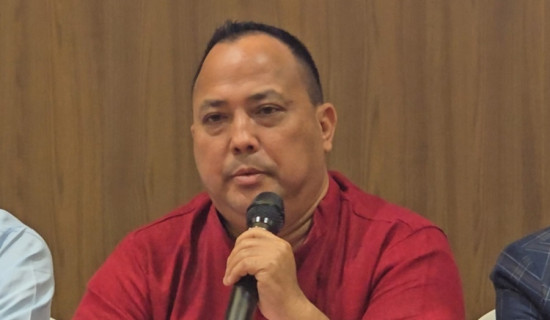
Despite the legal provisions for building disabled-friendly infrastructures and the duty and responsibility of the concerned authorities to fully implement the directive, municipalities and rural municipalities have not yet taken these issues into consideration while granting approval to design and drawings. Even the government-funded buildings and other infrastructures constructed or being constructed are not disabled-friendly, said Kiran Shilpakar, chairperson of National Association of the Physical Disable-Nepal (NAPD).
While talking about the implementation of the ‘Accessible Physical Infrastructure and Communication Service Directive’ even 11 years after its introduction, Shilpakar said that the implementation part of the directive was very poor.
He said that after the formulation of the policy, the government agencies are required to monitor the condition of implementation and the agencies responsible for their proper implementation.
While talking about the implementation of the accessible physical structures and communication services, Manish Prasain, a disability rights activist, said that physical structures and communication systems should be built and developed from the perspective of the human rights of the disabled people.
A 2019 research of the National Federation of the Disabled has shown that 98 per cent of the valley’s physical infrastructures are inaccessible to the disabled persons. Public transportation is zero per cent accessible for disabled people. There is no awareness on accessibility standards, he said.
Despite very weak implementation of the formulated guidelines for disabled people, he said there was good news that the interest of stakeholders was increasing and accessibility audit had come into practice.
He further said that the Urban Development Ministry had taken the initiative to revise its guidelines which was a good aspect that the ministry would work for the proper implementation of the directive implementation in the coming days.
Expressing his hope, he said that the situation might be changed with the implementation of guidelines.
The Ministry of Federal Affairs and General Administration (MoFAGA) had already issued a circular to all local levels, directing them to strictly enforce the existing building code to ensure the construction of disabled-friendly physical infrastructures.
“Local levels should not pass the blueprint of any house or building which is not disabled-friendly,” the MoFAGA told all municipalities and rural municipalities.
The Article 42 (3) of the constitution states that ‘people with physical impairment shall have the right to a dignified way of life and equal access to social services and facilities, along with their diversity identity’. According to the 2022 census, 2.2 per cent of the population of the country have some form of disability.