- Tuesday, 2 June 2026

Embrace Tobacco-free Lifestyle

The complexity of human nature from the anthropological and scientific perspectives, and the interconnection between food and tobacco reveal their profound entrenchment within human cultures, belief systems, attitudes, and social practices. In the realm of public health campaigns in 2023, a comprehensive anthropological analysis offers valuable insights into how the cultural constructions surrounding tobacco and food influence individuals' attitudes and behaviours towards these substances. The World No Tobacco Day is observed on May 31 every year to raise public awareness about the various adverse effects of tobacco use on human health.
Delving into the historical and contextual backdrop of Nepal, we find that both tobacco and food hold cultural significance, transcending their mere nutritional or chemical properties. For centuries, tobacco has served as a ceremonial and social medium in various societies, representing a nexus of communal bonding and symbolic expression.
Complex behaviours
Food emerges as a multifaceted entity, intricately linked to cultural identity, social standing, and emotional encounters. By embracing an anthropological lens, we gain a deeper understanding of the intricate web of meanings woven around tobacco and food, shedding light on their pervasive presence in human societies and the consequential impact on public health endeavours. From the anthropological perspective, tobacco consumption can be understood as a complex cultural behaviour with significant health implications. Anthropology examines the ways in which cultural practices, beliefs, and values shape human behaviours, including the use of tobacco.
It is important to emphasise that tobacco consumption is widely recognised as injurious to health and has been linked to numerous adverse health effects. However, throughout history, tobacco has played a significant role in our society, often deeply rooted in cultural practices, rituals, and social interactions. It has been used for various purposes, including medicinal, spiritual, and social reasons.
But addictive properties of nicotine, the primary psychoactive component in tobacco, and the harmful chemicals present in tobacco smoke have led to serious health consequences. Anthropological research highlights the social and cultural factors that contribute to tobacco consumption. These factors include social norms, cultural beliefs, economic influences, advertising, and peer pressure. For example, in some cultures, smoking is associated with masculinity, social status, or rites of passage, creating social pressure to engage in tobacco use. Anthropology also explores the power dynamics and political-economic forces that shape tobacco production, marketing, and consumption.
The tobacco industry’s influence on cultural practices, from advertising campaigns to lobbying efforts, has contributed to the widespread acceptance and normalisation of tobacco use. However, anthropological research also recognises the negative health impact of tobacco consumption. Smoking tobacco has been scientifically proven a leading cause of preventable diseases such as lung cancer, heart disease, respiratory illness, and other serious health conditions. Secondhand smoking exposure is also harmful to non-smokers, further highlighting the public health risks associated with tobacco. As an anthropological perspective emphasises the study of culture, it is important to critically examine the cultural and social factors that promote tobacco use while recognising the harmful health effects. Understanding the cultural significance of tobacco use does not negate the urgent need to address the health risks and promote tobacco control measures such as public health campaigns, regulation, and support for smoking cessation programs as well as increase tobacco taxation too.
Some of the most common diseases and health problems associated with tobacco use include cancer, cardiovascular diseases, reproductive health problems, oral health issues, eye diseases, among others. It can cause cancer in the lungs, mouth, throat, pancreas, bladder, kidney, and cervix and other organs. No doubt, tobacco use is a major contributor to respiratory diseases like chronic obstructive pulmonary disease (COPD), emphysema, chronic bronchitis, and asthma. It also contributes to cardiovascular diseases such as heart attack, stroke, and peripheral vascular disease. It can also trigger high blood pressure and atherosclerosis. Besides, tobacco consumption also causes infertility, pregnancy complications, and low birth weight in babies. Those consuming tobacco products may also suffer from gum disease, tooth loss, and oral cancer. Tobacco use has been linked to an increased risk of age-related macular degeneration, cataracts, and other eye diseases as well.
Awareness
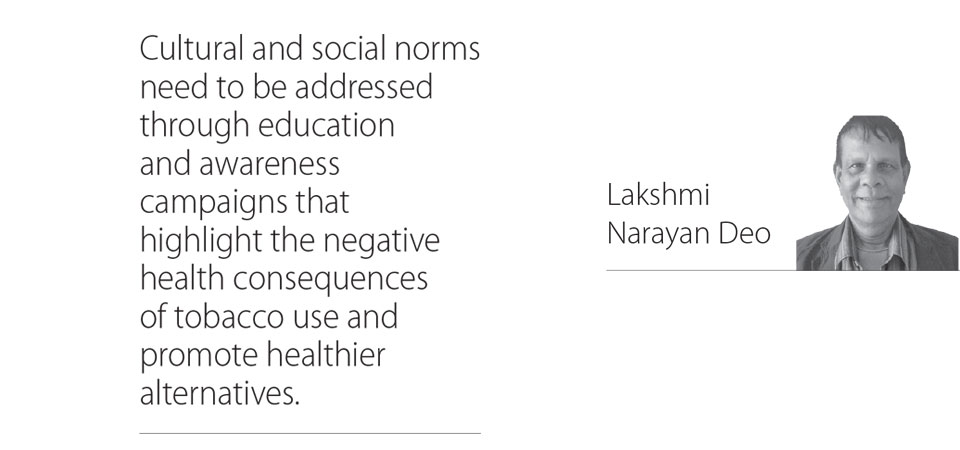
The best measure to control tobacco use and ensure a balanced and adequate food supply for people involves a combination of cultural, social, and policy interventions. Firstly, cultural and social norms need to be addressed through education and awareness campaigns that highlight the negative health consequences of tobacco use and promote healthier alternatives. This includes engaging with communities and their cultural practices to foster a shift towards tobacco-free lifestyles.
Secondly, policy interventions are crucial to control tobacco use and promote balanced nutrition. Implementing strict regulations such as increased taxation on tobacco products, comprehensive bans on tobacco advertising, and smoke-free policies in public spaces can discourage tobacco consumption and create supportive environments for non-smokers. Ultimately, addressing tobacco use and promoting balanced food consumption requires a multifaceted approach that takes into account cultural values, social norms, and policy frameworks to foster healthier behaviours and create an enabling environment for individuals to make informed choices.
(An anthropologist, the author is a former director at National Health Education, Information and Communication Centre, Kathmandu. Twitter: @deo_Lakshmi)