- Tuesday, 2 June 2026

Manage Jumbled Wires


Bini Dahal
As we walk through the major thoroughfares of Kathmandu, we are welcomed by tangled up electric wires all around. Population pressure is quite high in the city and people’s need for different services has posed further problems. From a single house, a number of wires seem to have emerged disorderly, causing an eye sore to everyone. Such wires include those installed by the Nepal Electricity Authority (NEA), internet service providers and television cable networks, among others. In some places, the wires are found disastrously hung on old polls which could fall off at any moment.
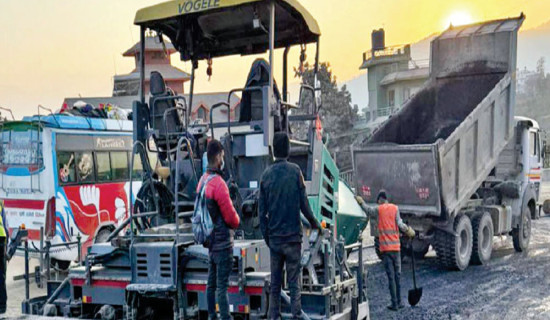
The notion of urbanisation has evolved over the years. We have transitioned from wanting to have the entire necessary physical infrastructure to actually improving it and focussing more on urban beautification. But, the webbed electric lines and other cables have created visual pollution in our surrounding. To tackle this issue, it was in 2020 when the task of laying down cables underground was initiated. The much-hyped project was formally inaugurated by the former prime minister KP Sharma Oli. More than two years have passed since the initiation. However, the NEA has not been able to complete the project yet. Implementing this project is very challenging because it requires multi-agency collaboration.
Now media reports suggest that the NEA and the Ministry of Physical Infrastructure and Transport are at loggerheads over the matter. Apparently, a contract had been signed between the two that the task of laying down electric wires underground would be completed without destroying roads built by the Department of Roads. The Ministry states that the NEA has not been following the contract. It also blames the electricity authority for not cleaning up roads and causing pollution. The NEA is also unhappy that they are not given permission to lay down electric wires underground. Issuing a press statement recently, NEA’s Managing Director Kulman Ghising mentioned that it had been really difficult for the organisation to lay down electricity cables underground because of a lack of permission.
Such differences have triggered an obstacle to the implementation of this important project. It means that the project is getting more expensive and it also requires a lot of effort. So, without proper collaboration and understanding between these two public institutions, we cannot expect the completion of such a vital project. Laying electric cables underground is a beneficial act in many ways. By doing so, it is possible to reduce electricity leakage and prevent other mishaps such as fire associated with it. Likewise, it can help ensure small voltage drop. In the time of natural disasters like lightning strikes and storms, electricity-related hazards can be minimised to a great extent. Benefits as such must not be ignored.
Urban centres like Kathmandu are in need of beautification and change. This cultural centre, which is the most populated in the whole country, is in need of major transformation. While the effects of urbanisation cannot be reversed drastically at once, certain changes can and must be brought about. For this, the line ministries should be more proactive in their actions. There should also be partnership between the public and the private entities namely the internet service providers and the television cable providers to properly manage cables. No more do we want to keep on looking at and suffering from jumbled wires. Infrastructure development and their management is a serious matter, and for the betterment of urban centres like Kathmandu, they should be done at all cost.