- Tuesday, 2 June 2026

Reconstruction Mission

The 2015 Gorkha Earthquake was one of the most devastating natural disasters to hit Nepal. As the 7.8 magnitude tremor left a trail of death and destruction across the country, a pertinent question used to pester us: Can we stand up from the rubble again? If we look back to these eight years, there is a reason to be optimistic about the nation’s progress in resilience, reconstruction and rehabilitation even amid political ups and downs. Over 9,000 people lost their lives, many more were injured and physical property worth over $7 billion was destroyed in the mega earthquake. Hundreds of thousands of private houses, government buildings, schools, hospitals, religious heritage and historical sites were razed to ground, rendering thousands of people homeless. But Nepalis did not stumble but picked up the pieces to build back better. The post-earthquake rescue, reconstruction and rehabilitation works were remarkable. It is a success story worth telling the world. In addition to the people’s endurance and unity among the parties, the international community also came to extend necessary aid in the time of crisis.
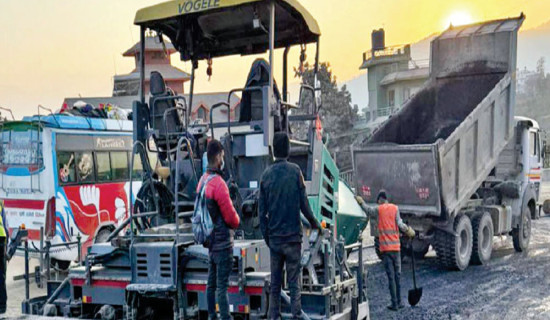
Nepal came through the litmus test and made a feat in the reconstruction works. According to the Central Level Project Implementation Unit (Building), around 88.06 per cent private houses were rebuilt. Of the total 832,585 eligible families for the grants of Rs 300,000, around 733,214 received the full amount to reconstruct their houses. The construction of most of government buildings, health institutions and schools, damaged by the quake, has completed. Of the 1,137 health institutions that were destroyed, 807 were reconstructed and 330 are under construction. Of 7,581 schools, which required reconstruction, altogether 7,190 have been completely rebuilt while 391 are under reconstruction. The quake had damaged or destroyed 920 heritage sites and monuments across the country. Of them, the reconstruction of 703 structures, shrines and temples have been finished. The progress in the construction and improvement of integrated settlements stood at 63.70 per cent at the end of the last fiscal year 2021/22.
The progress in the construction of new Dharahara is 85 per cent. The works of Dharahara project were supposed to be completed by 2020 but the deadline has been extended several times owing to various factors. The retrofitting of the west wing of Singha Durbar has reached its final stage while other parts of the historical buildings, including the Prime Minister’s Office, had already been rebuilt and come into operation. However, the concerned authorities have said that general principles of conservation were not applied while reconstructing the damaged historical structures. In many places, attempts were made to re-erect the collapsed structures as quickly as possible without meticulous study of the original structure.
The devastation of earthquake and reconstruction of destroyed structures show that people have capacity to cope with the natural disasters of large scale and return to normal way of living. Human endurance, courage, knowledge and skills come in handy in managing the consequences of calamities like earthquake, floods, landslides and fire. However, at the same time, there has been a tendency among the people not to take a lesson from the past. One important lesson of the Gorkha Earthquake is that people should reconsider the existing construction practices and go for quake-resistant models as per the building code. As time passes, people seem to have forgotten the destruction of the earthquake and started building houses violating the building code. Of course, it is expensive to build the quake-resistant buildings but one must not forget that the price of building fragile structures is even higher in terms of life and property at risk.