- Wednesday, 1 April 2026

Iraq's crackdown on booze raises alarm
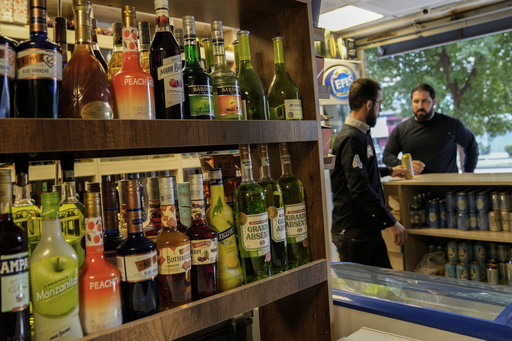

Baghdad, Mar. 11: Only a few months into its term, Iraq’s government is suddenly enforcing a long-dormant law banning alcohol imports and arresting people over social media content deemed morally offensive. The crackdown has raised alarm among religious minorities and rights activists.
Some see the measures as an attempt by Prime Minister Mohammed Shia al-Sudani to head off potential political challenges from religious conservatives and to distract from economic woes, such as rising prices and wild currency fluctuations.
The ban on the import, sale and production of alcohol was adopted in 2016, but was only published in the official gazette last month, making it enforceable. On Saturday, Iraq’s customs authority ordered all border crossings to impose the prohibition.
Although many liquor stores across Iraq continued business as usual — presumably using up their stocks — border crossings went dry overnight, with the exception of the northern, semi-autonomous Kurdish region which hasn't enforced the ban. The price of alcohol, meanwhile, spiked due to tightened supply.
Ghazwan Isso manufactures arak, a popular anise-flavoured spirit, at his factory in Mosul, Iraq's second-largest city. He sells it, along with imported, foreign-made alcohol, at 15 stores in Baghdad.
“There are imported goods at the borders that are not allowed to enter, with a value of tens of millions of dollars,” he said.
Isso said he is also stuck with $3 million worth of goods in warehouses — liquor produced in his factory. It's not clear yet if and when the ban on the sale of alcohol will be enforced as well, but Isso said he won't send his trucks from his Mosul factory to Baghdad for fear they'll get stopped.
For Isso, the ban is a blow to Iraq’s multi-confessional social fabric. He believes it will prompt more non-Muslims to emigrate.
Alcohol is generally prohibited in Islam — the religion of the vast majority of Iraqis — but is permitted and used in religious rituals by Christians, who make up 1% of Iraq's population of about 40 million.
“The law is a narrowing of freedoms,” Isso said, adding the ban would encourage “bribes and blackmail, because alcohol will be sold the same way like illegal drugs.”
Joseph Sliwa, a former Christian lawmaker, blamed the decision to start enforcing the law on extremists within Iraq's Sunni and Shiite Muslim communities. He said alcohol shop owners and producers would become vulnerable, with those in power or armed groups likely trying to squeeze them for bribes.
Like Isso, Sliwa also worried the alcohol ban could increase the use of illegal drugs.
A judge and former lawmaker, Mahmoud al-Hassan, defended the ban as constitutional and argued that it's in line with the beliefs of most Iraqis and therefore would not impact personal freedoms.
“Quite the opposite, the majority of the people of Iraq are Muslim and their freedoms should be respected,” he said. “They make up 97% of the country.”
He downplayed fears that outlawing alcohol would increase trafficking of other drugs. “Drugs already exist, with or without this law,” he said. “Alcohol also causes addiction and social problems.” (AP)

-original-thumb.jpg)