- Wednesday, 8 April 2026

‘Do something:’ Ukraine works to heal soldiers’ mental scars
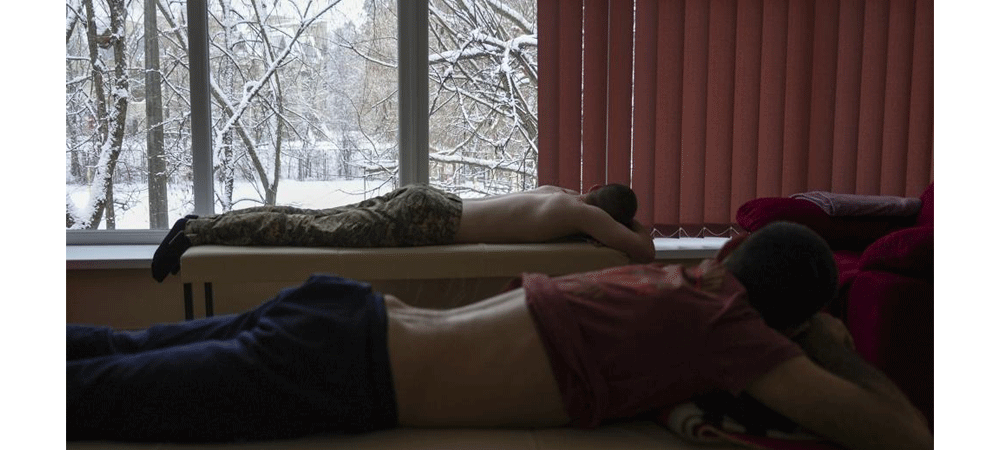

Kyiv, Ukraine, Dec. 2: Sleep plunges the soldier back into the horrors of Ukraine’s battlefields. He can hear bombs falling again and picture explosions. He imagines himself frantically running, trying to save himself and others. The nightmares are so vivid and frightening that he pleads with his doctor for help. “It will blow my mind,” he warns. “So do something.”
“Very, very, very stressful,” Witalij Miskow, 45, says of the night terrors he’s fighting with tranquilizers and therapy at a mental health treatment centre for soldiers on the outskirts of Ukraine’s capital, Kyiv.
When peace eventually returns to Ukraine, many thousands of other soldiers are likely to come home like Miskow with a condition known as post-traumatic stress disorder, or PTSD. Psychologists, veterans affairs officers and former combatants who have struggled with nightmares, distressing flashbacks and other PTSD symptoms are already working to head off a potential mental health crisis among soldiers and their families from the particularly gruesome, intense and grinding war. Whether it’s increasing awareness and funding for mental health care or training counsellors to help soldiers talk through psychological traumas, the goal is to prevent potentially destructive PTSD-related problems, including suicides, family violence, alcohol and drug abuse, from taking root.
Ex-paratrooper Sgt. Maksym Pasichnyk says civilian life was “very complex” for him after years of fighting pro-Russian forces in eastern Ukraine and once Moscow then launched its full-blown invasion, now in its tenth month. His long exposure to combat, death and destruction left the 28-year-old with an array of PTSD symptoms. He fears many other servicemen and their families could likewise suffer.
“The repercussions come later. You have a din in your ears, you start vomiting, you come home and have constant shifts of blood pressure and you lash out at your family members, your kids, your wife,” he says.
”You constantly think that someone is watching you, you overthink, you abuse drugs and drink, you lose yourself,” he adds. “If you want to get help, you are interned in a psychiatric hospital, where they turn you into a vegetable. If you show flashes of anger, they give you tranquilizers and you just sit there.”
Pasichnyk saw his last combat at the very start of the Feb. 24 invasion. His unit was inserted by helicopter at night to defend an airfield on Kyiv’s outskirts. The firefights and ensuing long slog back to the capital butchered his feet. The bleeding, bruising and bone fractures were so severe that he was discharged from further service.
Outwardly, the muscular veteran looks a picture of health. But physical integrity can hide soldiers’ inner suffering, Pasichnyk cautions. (AP )