- Thursday, 28 May 2026

In ‘Ms. Marvel’, Muslim fans see a reflection of their lives
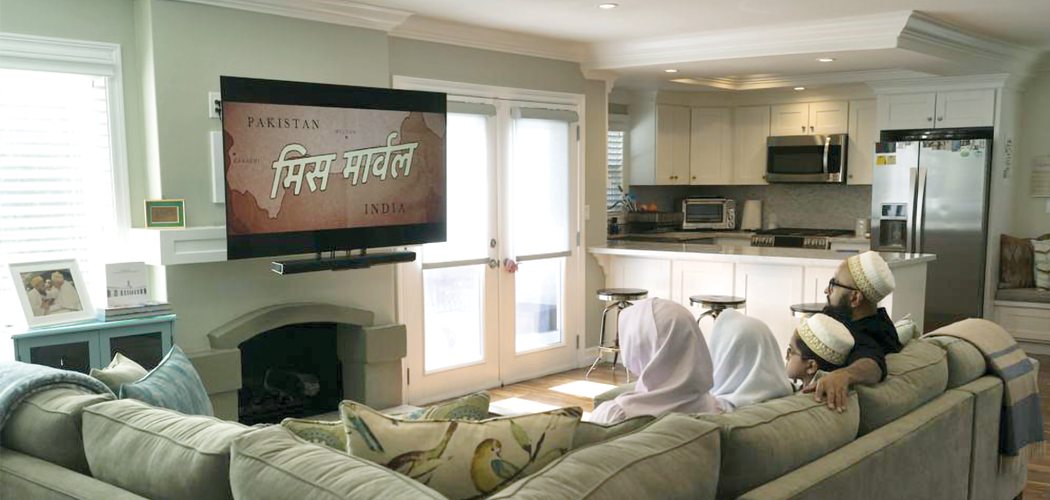

Los Angeles, July 14: Jumana Zakir knows who she is going to be for Halloween this year. Hint: Her new favorite superhero is a lot like her – female, teen, Muslim, American and “totally awesome.”
“Kamala Khan is me,” said the exuberant 13-year-old from Anaheim, California. “She is just like me.”
Khan is the Marvel Cinematic Universe’s first Muslim superhero to headline her own television show. “Ms. Marvel,” which launched on Disney+ June 8, has struck a chord with South Asian Muslims in the West because of its relatability and how it portrays Muslim families.
Advocates for inclusion and representation hope the show will open the door to more nuanced on-screen portrayals of Muslims and their rich diversity.
The show tells the story of Khan, played by Pakistani Canadian actor Iman Vellani, getting her powers from a magical bangle that allows her to walk on air and conjure glowing light shields.
But she is also a regular South Asian Muslim teen who goes to mosque, performs wudu or ritual ablution before praying, sometimes wears traditional attire called shalwar kameez, dances to Bollywood numbers at her brother’s wedding, and breaks curfew to hang out with her buddy Bruno Carrelli at AvengerCon.
The final episode of the series is expected to drop Wednesday.
Munir Zamir, who is British Pakistani and grew up in East London, said seeing a “brown, Pakistani Muslim girl from New Jersey” in the comic books and, now, watching “Ms. Marvel” with his teenage children -- has been powerful. Zamir, 50, has been a Marvel fan since he was 7 and has followed the evolution of Kamala Khan since Ms. Marvel’s inception in comic books in 2014.
“For Muslims in particular, representation matters a lot because, for many years, misrepresentation has mattered too much,” he said.
Zamir points out that there are other Muslim superheroes in the Marvel universe like Sooraya Qadir also known as Dust. She wears a flowing black outfit, covers her hair and face, and can transform her body into a cloud of dust.
“Even in that description there are some classic tropes,” Zamir said. “But Kamala Khan is not some exotic woman from a Muslim country.
That instantly sets her apart in the Marvel universe.”
The diverse experiences of Muslim women in “Ms. Marvel” are among aspects that stand in contrast to findings of a report published last year examining Muslim representation across 200 top-grossing movies from the U.S., the U.K., Australia, and New Zealand that were released between 2017 and 2019.
The study found women were particularly underrepresented, with just 23.6% of Muslim characters in these movies being female. Conducted by the University of Southern California’s Annenberg Inclusion Initiative, with support from others, it also found that 90.5% of these films didn’t feature Muslim speaking characters and yet 39% of “primary and secondary” Muslim characters were perpetrators of violence.
Making Ms. Marvel more relatable was intentional, said Sana Amanat, one of Kamala Khan’s creators and an executive producer on the show. She wanted to portray a Muslim character who “feels like someone you know.”
“She is not put on a pedestal,” she said. “She is awkward. She is funny. She is a sweet person who ultimately wants to do better.”
Amanat and her co-creators felt it was important to show Khan’s everyday life as a Muslim American teen.
That idea of normalcy resonated with Hiba Bhatty, a Pakistani American fan of the show. She particularly liked how Khan’s father, Yusuf, was portrayed as “a loving dad,” as opposed to a scary stereotype.
Bhatty, a Los Angeles-based architect, previously displayed Ms. Marvel comics on her desk at work as conversation starters. Now, she is getting ready to give co-workers a “Ms. Marvel” presentation. To her, it exemplifies how many in her community have moved beyond wanting to just be portrayed as “normal Americans,” to actually telling their own nuanced stories.
“Ms. Marvel” is also “reclaiming language that has been weaponized against Muslims,” said Arij Mikati, managing director of culture change for the Pillars Fund, which supports Muslim civic leaders and artists. AP
-square-thumb.jpg)