- Sunday, 12 April 2026

There is no policy allowing to run shops or business on footpath: KMC

Sharmila Pathak
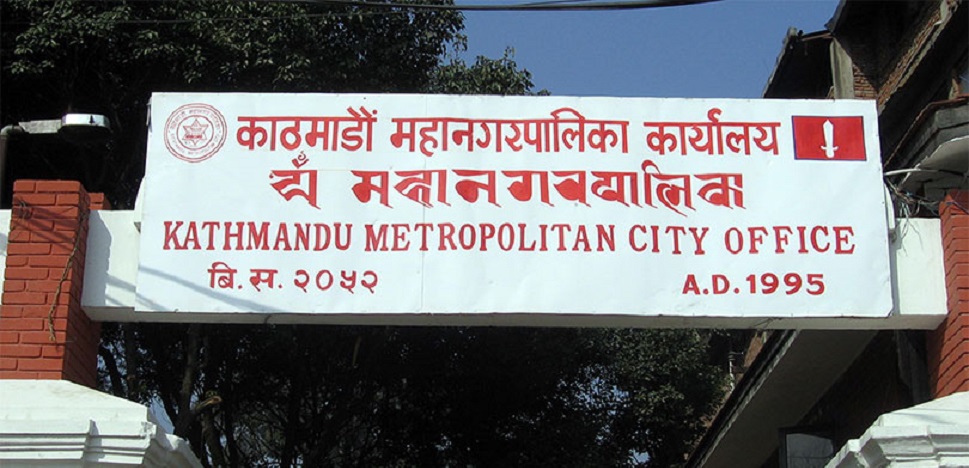
Kathmandu, July 7 : The Kathmandu Metropolitan City (KMC) has made it clear that it does not at all have a policy allowing the operation of any sort of business on the footpath. The KMC policy states that no goods and commodities including foodstuff can be sold and distributed from the roadside or on the footpath at any time.
Talking to the RSS, KMC Police
Chief Dhanapati Sapkota said that managing the footpath is the primary among
the responsibilities given by the KMC to the Metropolitan Police.
"The pavement is for the
pedestrians. It is not made for running shops and stalls.
Those operating shops and stalls without obeying this rule have been hauled and their goods confiscated," the KMC Police Chief said, reminding that newly-elected Mayor Balendra Shah had, during the time of filing his candidacy, announced to manage the businesses run on the footpath. Shah was elected the KMC mayor through the municipal election held a month back.
It is also stated in the Policy and
Programmes for the next fiscal year passed by the KMC municipal assembly on
June 22 that the businesses operating from the footpath would be
controlled.
"We have moved forward the
works as per the decision of the KMC Executive. It is not a matter to protest.
Why protest when we have carried our job in line with the Municipal
Executive's decision? It is also our responsibility to transform the business
operating from the footpath so that they come under the ambit of tax,"
Sapkota elaborated.
Stating that it is but natural for
criticisms while carrying out works, he said the KMC has only been controlling
the encroachment on the road and pavements. As he said, the side running
business on the pavement or roads will be affected when the authorities try to
control the encroachment and these sides tend to make various comments and
criticisms. The KMC Police Chief said he takes such comments and criticisms as
obvious.
He insisted that the work on
managing the footpath has been done in the interest of the general public.
Sapkota said, "Running a
business using street is not positive in any pretext. The policy of the KMC
mentioned that no one is allowed to run business in the street round the clock,
if it has been taking place somewhere, it is being happening clandestinely. The
KMC will take initiative to bring all of them under the ambit of the law in the coming
days."
He opined that city police have
been focusing their attention to bring vendors under the control in the morning
and evening when the movement of people is high.
The KMC was criticized after a video of city police confiscating the goods from a couple selling maize on the street and misbehaving with the couple was uploaded on social media.
The KMC has been working to control
street encroachment by deploying four teams every day. Mostly the street of
Sundhara, New Road, Baneshwor, Koteshwor, Gaushala, Chabahil, New Bus Park,
Balaju, Kalanki, and Kalimati is being encroached.
The KMC was compelled to take such
action after its frequent requests not to run any business encroaching street
were ignored, Sapkota argued. According to the KMC, goods confiscated from the
vendors are put for the auction process.
Similarly, goods that become stale easily as
well as fruits, vegetables, and flammable substances are returned to the
concerned businessman after taking a fine from them.
In the current fiscal year, the
local government has proceeded with the sale of confiscated goods at an auction, and last fiscal year, goods including iron items, hoarding boards, bicycles, and
carts worth Rs 5.2 million were sold at an auction, according to Chief
Sapkota.
Vendors voice for an alternative to the footpath
On one hand, the Metropolis is
seeking to implement its policy, while the stories of street vendors are
different. Manamaya Poudyal, 53, of Ramechhap has been selling garments on
the footpath of Sundhara for the past decade.
As she said, the situation
is different now and they remain watchful to the potential arrivals of town
police to intervene in the business.
It has been already 15 years since
the Poudyal family left the village. Now Manamaya's children are grown and they
are used to the Valley life.
They are reluctant to go back to the village and she is finding it challenging to help her children settle in the Valley. As she opined, the Metropolis should come up with alternatives to street vending before intervening in the business.
Ramjanam Mishra has a similar
story to share with Manamaya. He has been selling fruits at the entrance
of Dallas Bridge for the past 17 years. He has the experience of getting his
goods seized by the town police many times. Each time, he is compelled to pay a fine to get his belongings back.
He is feeding his six-member family from the street vending. He also insists that the local government should provide them alternatives to earning livelihood before it has the policy of vacating the street.
However, the Metropolis says it
presently finds no situation to provide a space or fix a location for footbath
business. As it says, it has no way of controlling it at the moment. (RSS)

-square-thumb.jpg)
-original-thumb.jpg)