- Friday, 22 May 2026

Gulmi Prison houses inmates four times its capacity
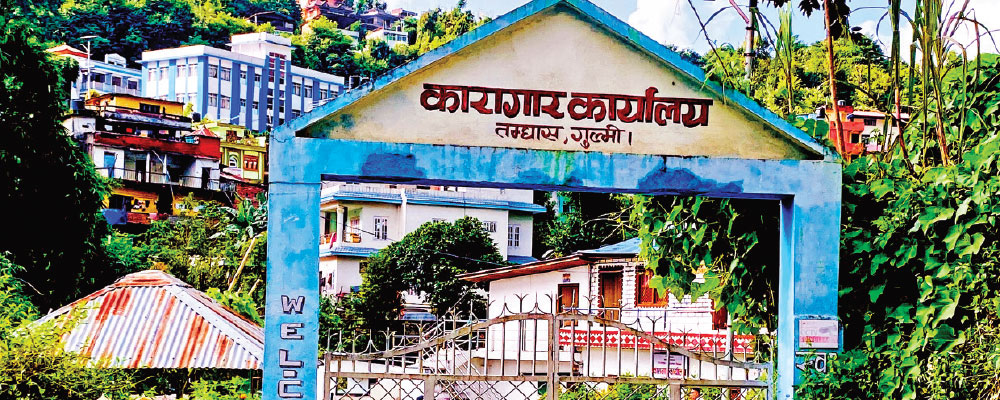

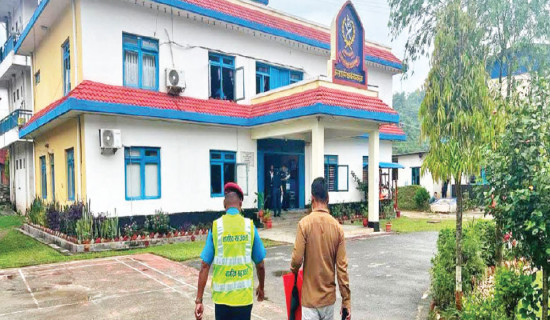
By Ramesh Bishwakarma ,Gulmi, May 22: The District Prison in Gulmi District is currently holding more than four times its intended capacity, with 102 inmates confined in a facility designed to accommodate just 25 prisoners.
Established in 1967 in Tamghas, the prison was originally built to house 20 male and five female inmates. However, decades later, the ageing facility is now struggling under severe overcrowding, according to Chief Jailer of the Prison, Reshmi Raj Panthi.
At present, the prison population includes 95 men, six women and one dependent child. Officials say the institution holds 70 convicted prisoners and 25 undertrial detainees among men, while there are five convicted women and one female undertrial.
The inmate population spans a wide range of offences, reflecting the diverse caseload handled by the district court system. These include 19 perpetrators related to homicide, 57 cases of rape, six road accident killings, seven theft cases, three polygamy-related offences, and individual cases involving arms and ammunition, criminal mischief, unnatural offences, corruption, child sexual abuse, and other homicide-related charges. Additionally, there are isolated cases involving cow slaughter and foreign employment fraud.
Despite the seriousness and diversity of offences, prison authorities report that there are currently no inmates held under charges such as assault, attempted murder, or arson-related criminal damage.
The overcrowding has placed significant pressure on the prison’s already fragile infrastructure. Officials say accommodation shortages remain one of the most pressing concerns, alongside deteriorating buildings and a lack of proper staff housing. Security personnel and administrative staff are also affected by inadequate living facilities within the prison premises.
“The physical infrastructure is far below the required standard, and the increasing number of inmates has made prison management extremely challenging,” Jailer Panthi said.
Beyond its challenges, the prison has attempted to turn jail into an opportunity for rehabilitation. Inmates are engaged in various skill-based income-generating activities, including traditional bamboo crafts such as mat weaving, as well as furniture-making and Dhaka textile production. Over time, the prison environment has taken on the appearance of a small industrial workshop.
However, officials acknowledge that despite these initiatives, the lack of proper training space and limited working facilities continues to restrict the effectiveness of such programmes. Marketing and distribution of inmate-produced goods also remain a challenge, limiting the economic benefits of prison-based enterprises.
To support rehabilitation through education, a small library has been established within the prison. It aims to encourage reading habits and help inmates reshape their thinking. Yet, authorities say the library suffers from a shortage of updated books, limiting its impact.
Sports and recreation have also become an important part of daily prison life. Inmates regularly participate in volleyball, badminton, chess, carrom and ludo, providing a necessary outlet for physical activity and mental well-being.
In recent efforts to improve infrastructure, the prison’s internal compound area has been expanded to support small-scale production activities, said Jailer Panthi. Renovation works have included repainting, carpeting and concreting of rundown buildings, both inside and outside the facility. Triple-decker bunk beds have been installed to manage sleeping arrangements more efficiently for the growing inmate population.
However, even with these improvements, fundamental problems persist. Limited space for sanitation, cooking and vocational training continues to make daily life difficult for inmates and staff alike.
As Gulmi Prison continues to operate far beyond its intended capacity, officials warn that without significant upgrades and expansion, both rehabilitation efforts and basic prison management will remain under increasing burden.