- Wednesday, 20 May 2026

Underground water found in Korala at altitude of 4650 metres
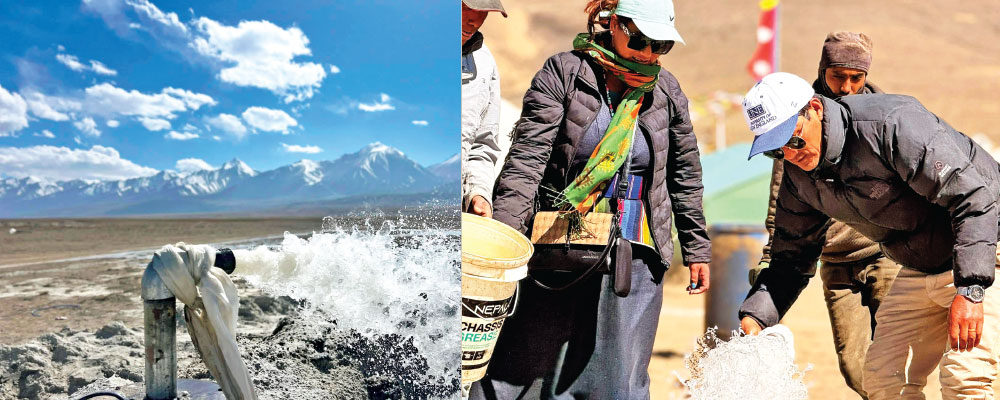

By Hari Krishna Sharma,Mustang, May 20: A successful underground water test has been carried out in the no-man’s land area of the Korala Border Point, which connects Nepal and China in Upper Mustang.
Water was discovered on Sunday during drilling by a technical team after natural water sources were found to be unavailable in the area, which is located at an altitude of 4,650 metres above sea level. Drilling had begun on April 9 using specialised machinery.
Tashi Nharbu Gurung, Chairperson of Lo Manthang Rural Municipality, said water was found at a depth of 120 metres. “Now there will no longer be a drinking water shortage at the border point. We will develop additional infrastructure to use the water properly,” he said.
According to Gurung, efforts are underway to install an electricity meter and build storage tanks and other infrastructure to ensure a regular drinking water supply. He said it would still take some time before potable water facilities become fully operational in the border area.
The underground drinking water project was carried out by Asian Drilling Company for Rs. 3 million, funded by the rural municipality.
Due to a severe shortage of drinking water at the border point, local traders and tourists had previously depended on water supplied by Chinese authorities through tankers or transported by vehicle from the Mustang Customs Office located 14 kilometres away. They had to pay between Rs. 200 and Rs. 300 for 20 to 40 litres of water.
Karma Namgyal, Ward chairperson of Chhoser and coordinator of the municipality’s economic committee, said traders were encouraged by the successful water test. “The biggest problem here was drinking water. Now things will become much easier,” he said.
Around 152 people operating nearly 70 tents for business purposes at Korala have welcomed the development. Local traders also thanked local representatives, including Vice-chairperson Chhumi Bista Gurung.
Previously, the rural municipality had built six temporary toilets at the border point, while the Chinese government had provided materials for four permanent toilets. Drinking water and sanitation had remained the area’s main challenges.
Development work at Korala has also faced difficulties because 600 ropanis of land at the border point fall under the ownership of the Mustang Customs Office.
The border point, which was closed after Tibetan Khampa rebels used Nepali territory during the 1960s following Tibet’s integration into China, was formally reopened on November 13, 2023. It came into commercial operation from September 15 of the current fiscal year.
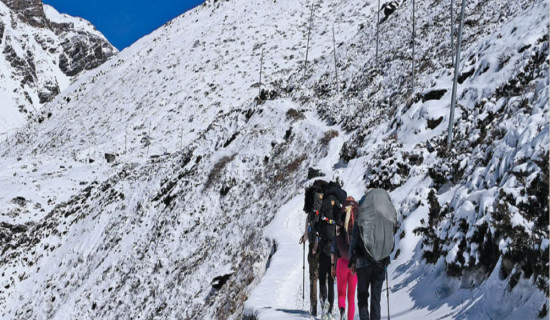
Photo caption: Underground water testing carried out successfully at the Korala border point connecting Nepal and China on Sunday.